Maddy summaryHR 4986, the Parents Opt-in Protection Act, amends federal law to require written permission before schools administer certain student surveys or evaluations. It directly affects students (especially minors) and their parents, requiring schools to obtain prior written consent from the student (if an adult or emancipated minor) or the parent (for minors) for each specific survey. The bill clarifies that schools cannot force participation without this written consent for surveys related to sensitive topics like health or behavior. This change updates existing consent rules from verbal permission to a written requirement for targeted school assessments.
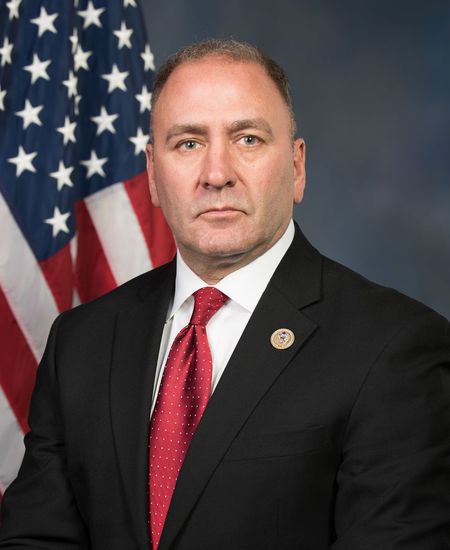
Rep. Clay Higgins
Sponsored bills
Maddy summaryHR 5109 requires the Transportation Security Administration (TSA) to create guidelines helping individuals in federal, state, and local prisons prepare for and apply for Transportation Worker Identification Credential (TWIC) cards *before* their release. The bill directs TSA to develop specific procedures for prison staff to assist inmates in pre-applying for TWIC cards and navigating appeals or waivers if initially denied. This aims to streamline access to TWIC cards - required for many port and maritime jobs - allowing returning citizens to secure employment faster after release. The bill cites that 525,000 jobs in Louisiana alone depend on TWIC access, and faster credential acquisition supports reintegration efforts.
Maddy summaryThis bill temporarily suspends federal excise taxes on certain transportation fuels, such as gasoline and diesel, setting the tax rate to zero for sales occurring between enactment and December 31, 2026. The legislation directly affects consumers by aiming to lower fuel prices at the pump. It mandates that fuel producers and dealers pass the full amount of the tax savings on to buyers immediately. To enforce this requirement, the bill authorizes the Secretary of the Treasury to impose monetary penalties on companies that fail to reduce their prices accordingly.
Maddy summaryThe Make Apportionment Great Again Act would change how U.S. House seats are distributed among states by excluding noncitizens from the population count used for apportionment. It requires the Secretary of Commerce to recalculate state populations using existing federal and state government records, without conducting a new census, and mandates that future censuses include a question on citizenship status. The bill establishes a legal presumption that any resulting changes in seat allocation are valid, allowing courts to overturn them only with clear evidence of statutory or constitutional violations. Additionally, it creates an expedited judicial process for legal challenges, requiring cases to be heard by three-judge panels and permitting direct appeal to the Supreme Court.
National Law Enforcement Officers Remembrance, Support and Community Outreach Act. [ sic ] This bill temporarily directs the Department of the Interior to award a grant to the National Law Enforcement Officers Memorial Fund for the expenses associated with operating and enhancing the community outreach, public education, and officer safety and wellness programs of the National Law Enforcement Museum.
Maddy summaryHR 1869 creates a new DOJ task force within the Criminal Division to investigate and prosecute international trade crimes, such as customs evasion, smuggling, and trade-based money laundering. It requires the DOJ to hire specialized prosecutors, coordinate with agencies like U.S. Customs and Border Protection, and focus on specific violations covered under statutes like 18 U.S.C. §§ 541-546 and 21 U.S.C. § 331. The bill authorizes $20 million in funding for fiscal year 2026 (with 80% dedicated to criminal prosecutions), mandates annual reports to Congress on enforcement activities, and requires the DOJ to develop multi-agency partnerships to address these crimes. This directly affects federal prosecutors, border enforcement agencies, and industries impacted by trade violations.
Maddy summaryThe Title IX Clarification Act of 2026 amends federal education law to explicitly define the terms "sex," "female," and "male" based on biological characteristics. Specifically, it states that "sex" refers to an individual's biologically determined status as male or female, while "female" and "male" are defined by the presence of specific reproductive systems capable of producing ova or sperm, respectively. These definitions apply to all education programs and activities that receive federal financial assistance starting on the date the bill becomes law. The legislation aims to clarify existing statutes by removing ambiguity around biological sex definitions in the context of Title IX protections.
This bill designates the facility of the United States Postal Service located at 1706 South Burnside Avenue in Gonzales, Louisiana, as the "Cpl. Lawrence Brown Post Office Building".
Maddy summaryThe Protecting Elders From Government Error Act limits how the Social Security Administration can recover overpayments from individuals who received old-age benefits due to government error. If an overpayment occurred more than six months before it was discovered and resulted from a mistake by the agency, the government is prohibited from recovering the funds directly from the person. Additionally, when recovery is permitted for errors made by the agency, the bill caps any reduction in monthly benefits at 5 percent of the payable amount to prevent severe financial hardship. These protections do not apply if the recipient has ever committed fraud or similar fault regarding the program.
Maddy summaryThe Janie Wynn Protecting Elders from Financial Exploitation Act requires the Bureau of Consumer Financial Protection to issue rules within 180 days that mandate fraud alerts and enhanced training for financial institutions serving senior citizens. Card issuers must send fraud alerts to both the senior cardholder and a designated adult contact, unless the cardholder signs a waiver acknowledging the increased risk of exploitation. Banks and credit unions are required to train employees on identifying specific account activities indicative of abuse and must notify seniors within 24 hours if such activity is detected. These provisions directly affect financial institutions by imposing new monitoring and communication duties aimed at protecting older adults from financial fraud.