

Maddy summaryThis bill requires the President to develop a National Veterans Strategy every four years to coordinate government, nonprofit, and private sector efforts aimed at improving veterans' well-being across health, economic, education, and social areas. The President must establish specific metrics to measure veteran success in these areas and consult with a wide range of stakeholders including federal agencies, state and local governments, veterans service organizations, and the general public. The bill also includes a provision allowing Congress to disapprove the strategy within 60 days of submission, and mandates annual reports on implementation progress along with quadrennial reviews to assess effectiveness and update the strategy as needed.
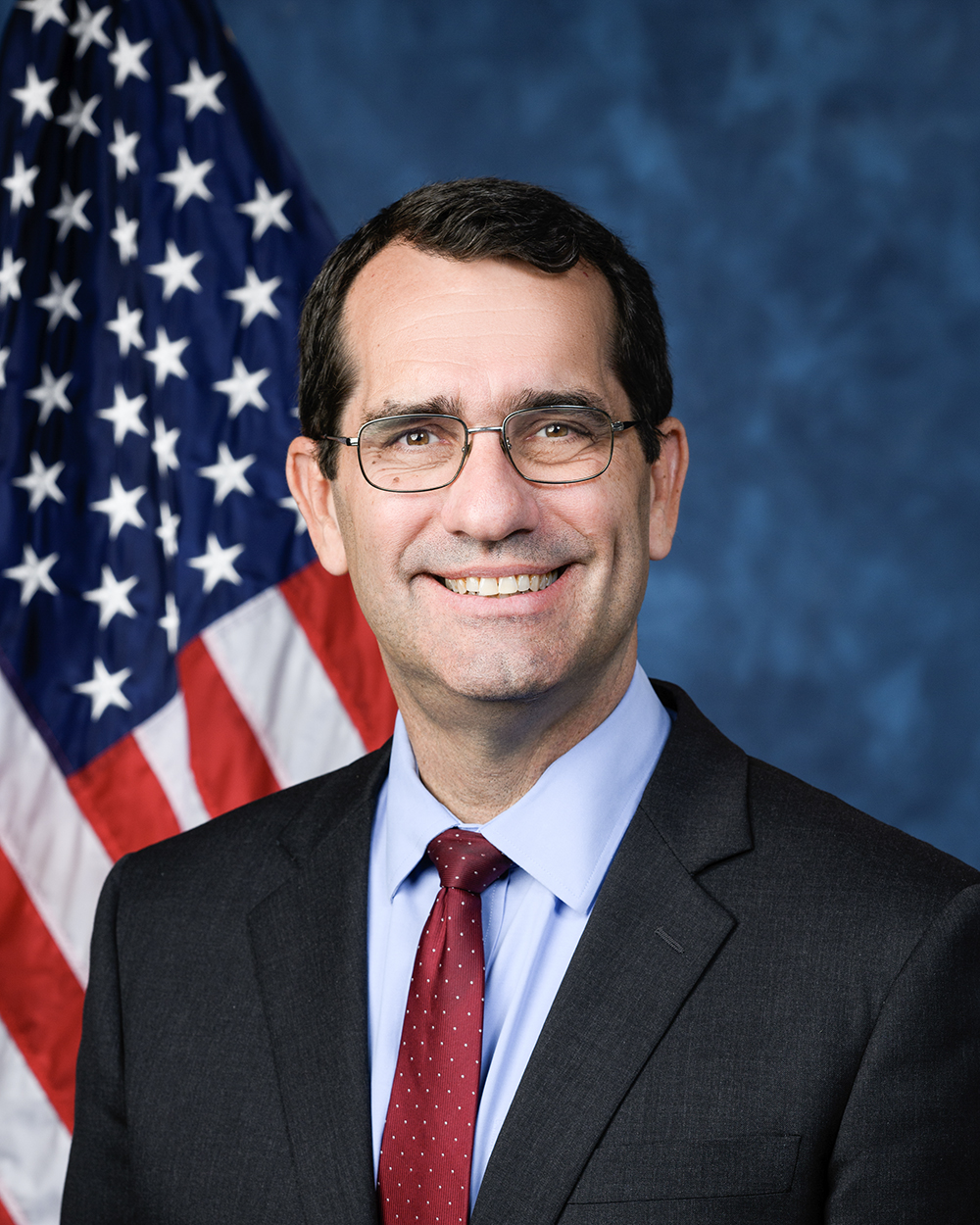
Rep. Derek Schmidt
Sponsored bills
Maddy summaryThis resolution expresses appreciation for the contributions of American cowboys and historic cattle trails to the nation's history, particularly in celebrating the 250th anniversary of the Declaration of Independence. It recognizes the diverse roles of Mexican, Black, Native American, and White cowboys who drove cattle along trails like the Chisholm and Shawnee Trails across multiple states. The bill encourages local celebrations of this legacy as part of the national anniversary observances.
Maddy summaryThis bill would change federal law to give the executive branch more control over how United States Attorneys manage their offices. It directly affects the Department of Justice and the federal prosecutors who work under these attorneys. The key change removes a court rule that currently limits how long a U.S. Attorney can serve after being appointed, and it deletes a provision that restricts the executive branch from overseeing these offices. By making these adjustments to Title 28 of the U.S. Code, the legislation aims to restore what the bill describes as constitutional authority for the executive branch to supervise these legal offices.
Love Lives On Act of 2025 This bill extends entitlement for various benefit programs and services for surviving spouses of deceased members of the Armed Forces or veterans. The bill provides that the remarriage of a surviving spouse must not bar the furnishing of dependency and indemnity compensation or special pension benefits to such spouse. Additionally, the Department of Defense may not terminate the payment of an annuity for a surviving spouse under the Survivor Benefit Plan solely because the surviving spouse remarries. The bill also expands the definition of a dependent under TRICARE to include a remarried widow or widower whose subsequent marriage has ended due to death, divorce, or annulment.
Maddy summaryThis bill, the 287(g) Cooperation Act of 2026, requires state and local law enforcement agencies to sign a formal agreement with the Department of Homeland Security to remain eligible for federal Community Oriented Policing Services grants. The law mandates that agencies must have this written memorandum of agreement in place within 180 days of the bill's enactment, or they will be ineligible to receive funding for the program. The Attorney General and Secretary of Homeland Security must establish procedures to verify that agencies have completed this agreement before approving any grant awards. The changes apply to grant applications starting with fiscal year 2027 and all subsequent years.
Maddy summaryHR 6267, the Aviation Supply Chain Safety and Security Digitization Act of 2025, directs the Comptroller General to study challenges in adopting digital documentation across the aviation supply chain. The study will examine barriers for manufacturers, repair stations, airlines, and brokers in using digital tools like electronic FAA Form 8130-3, as well as the FAA’s transition from paper records and physical signatures to digital systems. It requires a report within one year of enactment, including recommendations to encourage digital adoption industry-wide and accelerate the FAA’s shift to digital documentation. The bill does not create new regulations but aims to identify pathways for modernizing supply chain verification to combat counterfeit parts. The Transportation Secretary must respond to recommendations within 120 days of the report’s submission.
Maddy summaryThis bill establishes new safety and medical requirements for "unified boxing organizations" (UBOs), which are boxing groups that manage title belts and rankings without separate sanctioning bodies. It directly affects UBOs and boxers under their contracts by mandating comprehensive medical screenings (including annual physicals, brain MRIs, and pregnancy tests for female boxers), requiring two ambulances and three physicians at ringside during matches, and providing boxers with mandatory health insurance covering $25,000 in injury costs. Key provisions include strict anti-doping testing protocols (with no cost to boxers), prohibitions on boxers betting on matches, and UBOs covering all medical expenses. The bill also requires UBOs to register publicly with the Federal Trade Commission and adhere to updated industry standards for boxer compensation and safety.
Maddy summaryThis bill modifies tax rules to provide financial incentives for small oil and gas producers operating in marginal or low-production areas. It changes how the percentage depletion tax deduction is calculated, allowing a higher deduction rate based on oil prices and adjusting that rate annually using an inflation measure called the Producer Price Index. The legislation also removes certain income limits that restrict how much of this tax benefit producers can claim and doubles the minimum oil production threshold from 1,000 to 2,000 barrels to qualify for the deduction. These tax changes would take effect for taxable years beginning after December 31, 2026, primarily affecting independent oil and gas companies and rural communities dependent on these industries.
Maddy summaryThis bill establishes a task force to study how artificial intelligence speech-to-text and automatic speech recognition technologies are used in federal and state courts across the United States. The 15-member group, composed of government officials, legal experts, and technology specialists, will examine issues like accuracy, privacy, civil liberties, and costs associated with these AI tools in judicial proceedings. Within 18 months of enactment, the task force must submit a final report to Congress detailing its findings on whether AI affects court record quality, impacts individuals with speech impediments, creates cybersecurity risks, and recommends any necessary policy changes. The task force will also provide quarterly status updates to congressional committees and will dissolve once its final report is submitted.
Deporting Fraudsters Act of 2026 This bill makes certain acts related to public benefits fraud grounds for (1) barring a non-U.S. national ( alien under federal law) from admission into the United States, or (2) deporting the individual. The bill also makes such an individual ineligible for immigration enforcement relief, including relief for an individual in danger of subjection to torture. Specifically, this bill applies to individuals who have been convicted of, admit to having committed, or admit to acts which constitute certain offenses. Offenses covered by this bill include (1) fraud involving Supplemental Nutrition Assistance Program (SNAP) benefits, (2) fraud involving Social Security benefits, (3) fraud involving programs that receive federal funds, and (4) the production of fraudulent identification documents.