

Maddy summaryThis bill requires Medicare Advantage plans to implement electronic pre-approval systems for medical services by 2028 and meet transparency reporting standards starting in 2027. Plans must publicly report data on approval/denial rates, appeal outcomes, response times, and technology use for pre-approval requests, including details on how denials relate to clinical criteria. It establishes a 24-hour response timeframe for certain requests and mandates annual reviews of pre-approval requirements based on data and input from seniors and providers. The law directly affects Medicare Advantage plans, seniors enrolled in these plans, and healthcare providers who submit pre-approval requests. These changes aim to make the pre-approval process faster, more transparent, and more accountable for seniors seeking covered medical services.
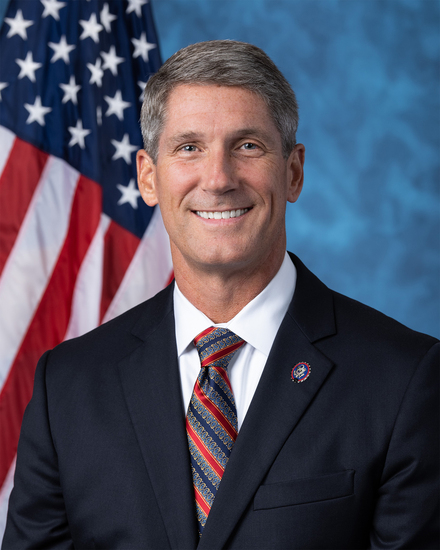
Rep. Scott Franklin
Sponsored bills
Protecting Privacy in Purchases Act This bill prohibits payment card networks from using merchant codes that distinguish firearms retailers from general-merchandise retailers or sporting-goods retailers. The Department of Justice must enforce this bill and report annually on the resulting investigations and cases.
Maddy summaryHR 4398, the Veteran Burial Timeliness and Death Certificate Accountability Act, requires Veterans Affairs (VA) physicians or nurse practitioners to certify the death of a veteran who dies of natural causes within 48 hours of learning of the death. This directly affects veterans' families, who previously faced delays of up to eight weeks in burial and access to survivor benefits due to slow death certifications. The bill mandates annual reports to Congress on VA compliance with the 48-hour rule, including statistics on delays and their causes. The key change is establishing a strict timeline for death certification to prevent unnecessary delays in honoring veterans' final arrangements.
Maddy summaryThe GRACE for Military Survivors Act extends the deadline for contributing military death benefits to Roth IRAs and Coverdell education savings accounts from one year to three years. This change directly benefits families of service members who receive these death benefits, giving them more time to save for retirement or education. The law applies to benefits received after the bill is enacted and includes a special rule allowing contributions made within a specific window for benefits received between 2001 and the enactment date. By amending the Internal Revenue Code, the bill ensures that eligible funds can be deposited into these tax-advantaged accounts without losing their value due to time limits.
Maddy summaryThis bill authorizes Congress to award a Congressional Gold Medal to individuals who fought for or with the United States in the Pacific theater during World War II and subsequently became prisoners of war. The legislation specifically recognizes the service and sacrifice of those who defended locations such as Bataan and Corregidor, including Filipino soldiers and civilians who served alongside U.S. forces. To implement this award, the Speaker of the House and the President pro tempore of the Senate will arrange for the creation of a gold medal by the Secretary of the Treasury, which will be presented to the Smithsonian Institution for display. The act also allows for the production of duplicate bronze medals to cover the costs of the original gold medals, with any proceeds from these sales deposited into the United States Mint Public Enterprise Fund.
Maddy summaryThe AI Security and Innovation Act establishes a new Center for AI Security and Innovation within the National Institute of Standards and Technology to assess risks and improve the security of artificial intelligence systems. This center will evaluate threats such as data leaks and model tampering, develop voluntary safety standards, and conduct research on advanced AI capabilities developed by both U.S. and foreign entities. The bill defines key terms like "artificial intelligence model" and "covered frontier system," and authorizes $20 million annually from 2027 to 2032 to fund the center's activities. While the center director will consult with various federal agencies and AI developers, the legislation explicitly prohibits the center from having regulatory or enforcement powers. The center is authorized to operate for five years before its provisions expire.
Creating Resources for Every American To Experiment with Artificial Intelligence Act of 2025 or the CREATE AI Act of 2025 This bill establishes a national program to provide U.S. researchers, educators, and students with access to artificial intelligence (AI) data, computational resources, educational tools and services, and testbeds. The program, to be known as the National Artificial Intelligence Research Resource (NAIRR), must be established by the National Science Foundation (NSF) to improve U.S. AI research capacity and spur the strategic development of AI capabilities. NAIRR may accept and use donated resources from the private sector and federal agencies. Those eligible to use NAIRR resources are (1) researchers, educators, and students based in the United States and affiliated with a U.S. institution of higher education, nonprofit, executive agency, or other specified entity; and (2) employees of U.S. executive agencies or federally funded research and development centers with a demonstrable mission need. NSF must select a nongovernmental organization to operate NAIRR (i.e., an operating entity ) through a competitive and transparent process. The operating entity must ensure that a significant percentage of the annual allotment of computational resources is provided to projects primarily focused on AI privacy, ethics, safety, security, risk mitigation, or trustworthiness. The operating entity must also establish minimum security requirements for all individuals interacting with NAIRR. The operating entity may establish a fee schedule for access to NAIRR, which must include a free tier of access and must ensure that the primary purpose of NAIRR is to support research.
Maddy summaryThis bill amends the existing Northern Border Security Review Act to update deadlines and requirements for border security assessments. It requires the Department of Homeland Security Secretary to submit a northern border threat analysis by September 2, 2026, and every two years after, with strategy updates due 90 days after each analysis. The bill also mandates classified briefings to congressional committees 30 days after each threat analysis and directs the development of performance measures for Air and Marine Operations within six months of enactment. These changes directly affect the DHS Secretary, congressional committees, and U.S. Customs and Border Protection's operations along the northern border.
Maddy summaryThis bill allows veterans diagnosed with Parkinson's disease or similar movement disorders to access boxing-based exercise classes as part of their medical treatment. Under the new provisions, eligible veterans enrolled in the VA health care system can receive these classes directly at a VA facility or get reimbursement to attend them at a non-VA location. The policy change takes effect 180 days after the bill is enacted, providing a specific therapeutic option for managing the symptoms of these neurological conditions.
Repealing Big Brother Overreach Act This bill repeals the Corporate Transparency Act. The act requires existing companies and newly created companies to report beneficial ownership information to the Department of the Treasury’s Financial Crimes Enforcement Network for purposes of addressing the financing of terrorism and money laundering.