Maddy summaryThis House resolution expresses support for designating the week of September 19 through September 26, 2026, as National Estuaries Week to raise public awareness about the importance of these coastal ecosystems. The bill highlights that estuaries support a significant portion of the U.S. population and economy while providing critical services such as flood control, water filtration, and habitat for fish and wildlife. It acknowledges ongoing threats to estuary health, including pollution and sea level changes, and recognizes the efforts of government agencies, organizations, and individuals working to protect and restore these areas.
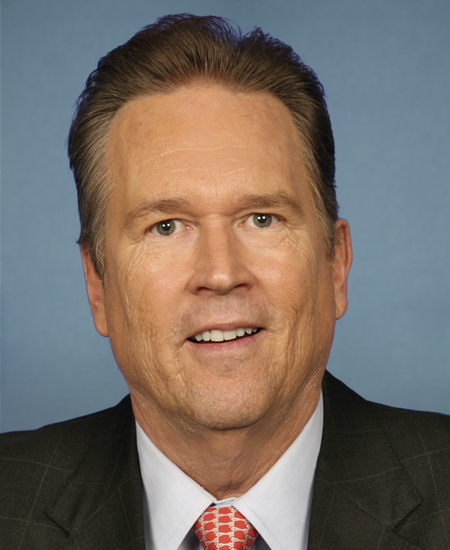
Rep. Vern Buchanan
Sponsored bills
Maddy summaryThe SAFE for Manatees Act directs the Secretary of the Interior to conduct a study identifying potential new habitats for manatees in Florida as industrial sites are decommissioned and water temperatures change. This study must evaluate natural warm-water locations and explore methods for building artificial warm-water refuges in cooperation with the Army Corps of Engineers and Florida wildlife officials. The bill requires the Interior Department to publish a report on these findings within 180 days of enactment to inform future conservation efforts.
Maddy summaryThis bill, titled the Restore Florida Water Independence Act of 2026, aims to streamline environmental permitting for the State of Florida by recognizing a specific federal biological opinion as fully compliant with the Endangered Species Act. By deeming this existing document sufficient, the legislation eliminates the need for additional federal consultations regarding dredge and fill projects under the Clean Water Act. The primary effect is to allow the Environmental Protection Agency to approve Florida's request to manage its own state-level permitting program without further federal oversight on these specific environmental matters.
Maddy summaryThe AI Tax Integrity Act of 2026 directs the Treasury Department to launch a pilot program using artificial intelligence to detect tax fraud, identity theft, and errors in returns prepared by third parties. This initiative is designed to target individual and business taxpayers who may file inaccurate returns, with the program running for a minimum of 18 months and a maximum of two years. Upon completion, the Comptroller General must submit a report detailing the amount of improper refunds recovered, the total government recovery, and the accuracy of the AI tools used during the pilot.
Maddy summaryThis bill designates a 34-mile segment of the Myakka River in Sarasota County, Florida, as part of the National Wild and Scenic Rivers System. It classifies specific river segments as "wild" (11.2 miles), "scenic" (multiple segments totaling 22.9 miles), or "recreational" (1.5 miles), based on their natural character. The bill establishes cooperative management through the existing Myakka River Management Coordinating Council and prohibits the Secretary of the Interior from administering the river as a National Park System unit or using land condemnation. It requires the Secretary to work with Florida and local entities to implement a management plan already developed under state law, without altering current land ownership or management authority.
Maddy summaryThe Critically Endangered Animals Conservation Act of 2026 establishes a dedicated fund within the existing Multinational Species Conservation Fund to provide competitive grants for the protection of animal species classified as endangered or critically endangered by the International Union for Conservation of Nature. The Secretary of the Interior will manage this program, awarding financial assistance to foreign wildlife authorities and qualified organizations to support projects such as habitat restoration, illegal trade enforcement, and scientific research aimed at recovering wild populations outside the United States. To ensure accountability and effectiveness, grant recipients must submit periodic progress reports that are generally made available to the public, while specific restrictions prohibit the use of funds for captive breeding unless it is strictly necessary for releasing animals back into the wild. The legislation authorizes $5 million per year in appropriations from fiscal years 2027 through 2032 and requires the Secretary to report on the program's results to Congress every two years.
Maddy summaryHR 7008, the Stop Insider Trading Act, restricts Members of Congress, their spouses, and dependent children from purchasing certain investments like stocks in publicly traded companies. It requires 7-14 days' advance public notice before selling any such investment, including the sale date, description, and number of shares. Exceptions apply for work-related transactions (e.g., employer compensation) and reinvesting dividends. Violations trigger a fee of $2,000 or 10% of the investment’s value (whichever is greater), plus any net gain, paid from personal funds - not congressional allowances or campaign donations. The bill aims to prevent conflicts of interest by increasing transparency around congressional financial dealings.
Maddy summaryThe Healthy Access for Learning Act requires schools receiving federal education funds to provide students with at least 60 minutes of physical activity time each day. This new requirement includes designated recess periods and physical education classes, aiming to address rising rates of childhood obesity and improve academic performance. The bill amends the Elementary and Secondary Education Act to mandate these activity periods while allowing local school districts to determine the specific methods used to meet the goal. By integrating regular exercise into the school day, the legislation seeks to support student health and learning without reducing instructional time.
Maddy summaryThe Whale CHARTS Act of 2026 establishes a program to protect migratory whales and other large cetaceans through improved mapping, monitoring, and mitigation measures. It requires the creation of detailed, high-resolution maps of whale habitats, including calving grounds and migration routes, which will be integrated into vessel navigation systems to prevent collisions. The bill authorizes $8 million annually through 2030 for mapping, surveys, and a $10 million grant program to fund new detection technologies that reduce harmful interactions between whales and ocean users. It also mandates regular reporting to Congress on the program's effectiveness and progress in filling knowledge gaps about whale habitats.
Maddy summaryHR 2821, the FDA Modernization Act 3.0, requires the FDA to update regulatory language within one year of enactment. It directs the agency to replace all references to "animal tests" with "nonclinical tests" in 22 specific sections of the Code of Federal Regulations related to drug development and approval processes. The bill also adds a definition for "nonclinical test" into relevant FDA regulations to align with prior legislative changes. This update applies directly to pharmaceutical manufacturers and FDA reviewers who follow these regulatory guidelines during drug development. The changes aim to modernize terminology without altering current testing requirements.