Maddy summaryHR 1172 would amend the Social Security Act to prevent undocumented immigrants from earning Social Security credits for work performed in the U.S. without authorization. It specifically excludes wages earned and self-employment income derived during periods when an individual lacked work authorization from counting toward Social Security benefits. This change applies retroactively to all wages earned before, on, or after the law's enactment, affecting future benefit calculations for undocumented workers. The bill directly impacts individuals working without legal status, ensuring such work does not contribute to their Social Security eligibility or future benefits.
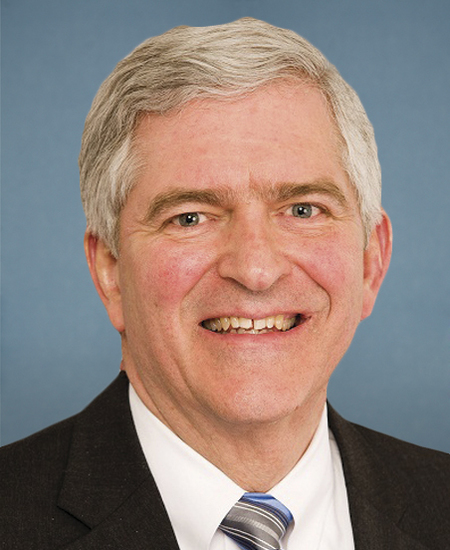
Rep. Daniel Webster
Sponsored bills
Maddy summaryThe HALT Fentanyl Act (HR 27) creates a new category of Schedule I controlled substances for "fentanyl-related substances" defined by specific chemical modifications to fentanyl. This law directly affects researchers, medical professionals, and law enforcement by expanding the legal definition of fentanyl-related substances to include many structurally similar compounds. Key provisions include streamlined registration processes for research on these substances, allowing researchers to conduct studies with expedited procedures if related to FDA-approved drug development or government-funded research. The bill requires the Attorney General to issue implementing rules within six months and includes penalties for violations involving these substances.
Maddy summaryHR 1131 exempts certain family farms and small businesses from being counted as assets when calculating financial need for federal student aid under the Higher Education Act. Specifically, it amends the law to exclude the net value of a family farm where the family resides and small businesses (with ≤100 employees) owned by the family from need analysis calculations. This change directly affects students from qualifying family farm or small business households when applying for federal financial aid. The exemption applies to need analysis conducted for award years beginning after the bill's enactment date. The bill modifies Section 480(f)(2) of the Higher Education Act of 1965 to implement this policy change.
Maddy summaryHR 1119, the Unemployment Integrity Act of 2025, requires unemployed individuals applying for regular benefits to actively engage with job opportunities by responding to work-related requests, attending required interviews, and complying with reasonable assessments like drug tests or skills evaluations. It also mandates the Secretary of Labor to study increasing random audits of unemployment claims and potentially expand these audits to improve program integrity. Additionally, the bill links federal funding for extended unemployment benefits to states adopting these new requirements, stating that states must include the interview and compliance provisions before receiving federal funds for extended benefits. These changes directly affect unemployed workers seeking benefits and state unemployment programs administering the system.
Maddy summaryThis bill expands 529 college savings account flexibility by allowing funds to cover costs for industry-recognized postsecondary credentials, not just traditional degrees. It defines "qualified expenses" to include tuition/fees for recognized credential programs (like certifications or apprenticeships), required testing fees, and continuing education needed to maintain credentials. To qualify, programs must meet specific criteria, such as appearing on state lists under the Workforce Innovation and Opportunity Act or being listed in VA or Defense directories. The change applies to 529 distributions made after the law's enactment, giving families more options to use these accounts for job-focused training.
Cartel And Radical Terrorist Enforcement Log Act of 2025 or the CARTEL Act of 2025 This bill requires U.S. Customs and Border Protection to publish each month statistics related to encounters and arrests. The report must include, for example, the total number of individuals affiliated with transnational criminal organizations who have repeatedly attempted to cross unlawfully into the United States. The Department of Homeland Security must report annually on foreign terrorist organizations and transnational criminal organizations attempting to move their members or affiliates into the United States through the southern, northern, or maritime border.
Maddy summaryHR 1081, the Preventing SBA Assistance from Going to China Act, amends the Small Business Act to bar certain businesses from qualifying as small business concerns for SBA programs. It prohibits businesses located or incorporated in China, or those with over 25% voting stock owned by Chinese affiliates, from accessing SBA loans, contracts, or other assistance. This directly affects U.S. businesses with significant Chinese ownership or ties that would otherwise qualify for federal small business support. The key mechanism is a new definition in the law that blocks eligibility based on foreign ownership or location.
Maddy summaryHR 1046, the Marc Fischer Memorial Act, requires the Bureau of Prisons to implement digital mail scanning technology at all federal prisons to detect fentanyl and other synthetic drugs in inmate mail. It mandates a strategy within 90 days of an evaluation, including 100% scanning of all mail, digital copies of mail to inmates within 24 hours, and physical mail delivery within 30 days for non-contaminated items. The bill directly affects federal prison staff, inmates, and the Bureau of Prisons by aiming to reduce drug-related overdoses and alleviate staff workload tied to mail processing. Implementation must be completed within three years, with annual reports tracking detected drugs and strategy efficiency. The legislation focuses on concrete technological and procedural changes to enhance safety, referencing a successful pilot program at two facilities.
Maddy summaryHR 1095, the Restoring Military Focus Act, eliminates two specific diversity-related positions within the Department of Defense (DoD): the Chief Diversity Officer (repealing Section 147 of Title 10, U.S. Code) and the Senior Advisor for Diversity and Inclusion (repealing Section 913 of the 2021 defense bill). The bill prohibits using federal funds to create any new position "substantially similar" to these roles. This directly affects DoD leadership and staffing by removing existing diversity-focused roles and preventing their replacement. The key mechanism is a federal funding ban on establishing comparable positions, aiming to refocus DoD resources on military operations.
Maddy summaryHR 1040, the Senior Citizens Tax Elimination Act, would stop taxing Social Security benefits for seniors by repealing the current tax rule that includes some benefits in gross income. It directly affects senior citizens who currently pay federal income tax on portions of their Social Security payments. The bill adds a provision stating Section 86 of the tax code (which taxes Social Security benefits) no longer applies after enactment. To offset the lost tax revenue, the bill requires the government to appropriate funds to the Social Security and Railroad Retirement trust funds, ensuring they remain fully funded without requiring tax increases.