

Creating Resources for Every American To Experiment with Artificial Intelligence Act of 2025 or the CREATE AI Act of 2025 This bill establishes a national program to provide U.S. researchers, educators, and students with access to artificial intelligence (AI) data, computational resources, educational tools and services, and testbeds. The program, to be known as the National Artificial Intelligence Research Resource (NAIRR), must be established by the National Science Foundation (NSF) to improve U.S. AI research capacity and spur the strategic development of AI capabilities. NAIRR may accept and use donated resources from the private sector and federal agencies. Those eligible to use NAIRR resources are (1) researchers, educators, and students based in the United States and affiliated with a U.S. institution of higher education, nonprofit, executive agency, or other specified entity; and (2) employees of U.S. executive agencies or federally funded research and development centers with a demonstrable mission need. NSF must select a nongovernmental organization to operate NAIRR (i.e., an operating entity ) through a competitive and transparent process. The operating entity must ensure that a significant percentage of the annual allotment of computational resources is provided to projects primarily focused on AI privacy, ethics, safety, security, risk mitigation, or trustworthiness. The operating entity must also establish minimum security requirements for all individuals interacting with NAIRR. The operating entity may establish a fee schedule for access to NAIRR, which must include a free tier of access and must ensure that the primary purpose of NAIRR is to support research.
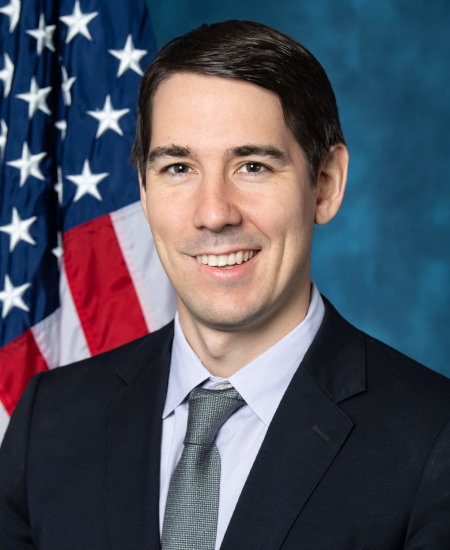
Rep. Josh Harder
Sponsored bills
Maddy summaryThe Support our Firefighters Act establishes a new paid rest and recuperation leave program for federal wildland firefighters working for the Forest Service and the Department of the Interior. Under this law, these employees would receive paid time off immediately after completing a qualifying fire incident, with specific rules requiring a minimum number of rest days following periods of deployment. The bill also allows for the transfer of up to $5 million in funding from the Department of Agriculture to the Department of the Interior to help sustain salary increases for these workers. Additionally, the legislation updates existing overtime rules to remove specific year limits, ensuring that wildland firefighters can work extended hours without hitting caps in future years.
Maddy summaryHR 2978, the GUARD Act, allows state, local, and tribal law enforcement agencies to use existing federal grant funds for investigating elder financial fraud, "pig butchering" investment scams, and general financial fraud. The bill directs these funds toward hiring specialized staff, training on blockchain tools and transnational fraud, purchasing investigative software, improving data collection, and creating financial sector liaisons to coordinate with banks. It requires annual reports from law enforcement on fund usage and outcomes, and mandates federal agencies to submit comprehensive reports to Congress on scam statistics, enforcement actions, and funding allocation. The legislation directly affects law enforcement agencies and aims to strengthen efforts against fraud targeting vulnerable populations, particularly elderly individuals.
Maddy summaryThe Protecting America's Herds Act creates a grant program for cooperative extension services to help prepare for and respond to New World screwworm outbreaks in livestock. Funds awarded through this competitive process can be used to train staff, support animal inspections, educate producers, and provide direct technical assistance on prevention and treatment. The Department of Agriculture must prioritize grants for states and Tribal communities at higher risk of the pest spreading and coordinate closely with veterinary and agricultural experts. This legislation aims to strengthen the nation's ability to detect and manage this specific animal health threat through improved readiness and education.
Maddy summaryThe Romance Scam Prevention Act requires online dating platforms to send immediate notifications to users who message someone banned for scamming. These warnings must include the banned user's profile details, a fraud alert, safety tips to avoid financial scams, and contact information, delivered within 24 hours (with limited exceptions for law enforcement investigations). It directly affects dating apps like Tinder or Bumble and their users by mandating clear, timely fraud alerts to prevent financial exploitation. The law takes effect one year after enactment and shields platforms from liability for following these notification rules.
Maddy summaryThis bill directs the government auditor (Comptroller General) to study how wildfire prevention programs operate across different land ownerships - including federal, state, tribal, and private lands. The study will examine current federal rules, funding access, and specific wildfire mitigation activities from the 2003 Healthy Forests Restoration Act. It will identify barriers and opportunities to improve cross-boundary collaboration, with a report due to Congress within two years. The bill itself does not create new programs or funding, only requiring this analysis.
Maddy summaryThis bill allows the President to declare a smoke emergency in any state facing significant air quality drops due to wildfire smoke, either based on current conditions or future predictions. Once declared, the Federal Emergency Management Agency and other federal agencies can provide grants, equipment, and personnel to help states and local communities set up smoke shelters, air purifiers, and monitoring sites. The legislation also authorizes the Small Business Administration to offer grants to small businesses that suffer major revenue losses because of the smoke. Additionally, the bill adjusts federal budget rules to ensure that money designated for these smoke emergency efforts is not subject to certain deficit reduction measures.
Maddy summaryHR 5408, the Faster Labor Contracts Act, requires employers to begin negotiating a first contract with a newly certified union within 10 days of written request. If no agreement is reached within 90 days, the parties must seek mediation, and if unresolved after 30 days of mediation, the dispute moves to binding arbitration by a three-member panel. The arbitration decision, based on factors like employer finances, industry standards, and cost of living, becomes binding for two years. This bill directly affects newly certified unions and their employers during initial contract negotiations, aiming to reduce delays that currently average 465 days.
Maddy summaryThis resolution expresses support for designating May 2026 as Necrotizing Fasciitis Awareness Month to highlight a rare and severe bacterial infection. The bill encourages federal, state, and local agencies, healthcare providers, and community organizations to promote public education about the disease's symptoms and risks. By raising awareness, the measure aims to encourage early detection and prompt medical treatment, which are critical for improving patient outcomes and survival rates. Additionally, the resolution offers support to patients, survivors, and their families who face long-term physical and emotional challenges from the infection.
Maddy summaryThis bill would add pharmacist services to Medicare Part B coverage for beneficiaries, specifically covering pharmacist-led testing and treatment for illnesses like flu, COVID-19, or strep throat during public health emergencies. It defines covered services as those performed under state law, often requiring collaboration with a physician, and sets payment at 80% of the lesser of the actual charge or 85% of physician payment rates. Pharmacists would be prohibited from balance billing for these services, ensuring Medicare beneficiaries pay only their standard copayment. The changes would take effect January 1, 2026.