

Raise the Wage Act of 2021 This bill increases the federal minimum wage for regular employees over a 5-year period, for tipped employees, and for newly hired employees who are less than 20 years old. The bill sets forth a schedule of annual increases in the federal minimum wage for individuals with disabilities. The Department of Labor shall no longer issue special certificates for the payment of subminimum wages to such individuals after the final wage increase under this bill for such individuals takes effect. Labor shall provide, upon request, technical assistance and information to employers to (1) help them transition their practices to comply with wage increases and other requirements under this bill for individuals with disabilities, and (2) ensure continuing employment opportunities for such individuals. The bill eliminates the separate minimum wage requirements for tipped, newly hired, and disabled employees. After a specified period, these employees shall be paid the same minimum wage as regular employees. Labor must publish any increase in the minimum wage in the Federal Register and on its website 60 days before it takes effect.
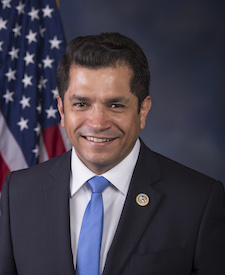
Rep. Jimmy Gomez
Sponsored bills
Access Technology Affordability Act of 2021 This bill allows a refundable tax credit equal to the amounts paid for qualified access technology for use by a blind individual who is the taxpayer, the taxpayer's spouse, or a dependent of the taxpayer. Qualified access technology is hardware, software, or other information technology with the primary function of converting or adapting information that is visually represented into forms or formats useable by blind individuals. The credit is limited to (1) costs that are not compensated by insurance or otherwise, and (2) an aggregate amount of $2,000 per blind individual in any period of three consecutive taxable years. The credit must be adjusted for inflation after 2021 and terminates after 2026.
Federal Adjustment of Income Rates Act or the FAIR Act This bill modifies pay rates for federal employees in 2022. Specifically, the bill increases rates under the statutory pay systems and for prevailing rate employees by 2.2%, and increases locality pay by 1%.
This resolution expresses support for the goals and ideals of Korean American Day and honors the 118th anniversary of the arrival of the first Korean immigrants to the United States.
This resolution expresses the sense of the House of Representatives that Congress should ensure that the U.S. Postal Service is not privatized and remains an independent establishment of the federal government.
SAFE Workers Act or the Secure And Fair Elections for Workers Act This bill requires the National Labor Relations Board (NLRB) to provide employees with the ability to vote remotely by telephone or the internet in union representation elections during the COVID-19 (i.e., coronavirus disease 2019) public health emergency. The bill further permits the NLRB's use of appropriations to issue directives or regulations providing for electronic voting methods.
Officer Eugene Goodman Congressional Gold Medal Act This bill directs the Speaker of the House of Representatives and the President pro tempore of the Senate to arrange for the presentation of a Congressional Gold Medal to U.S. Capitol Police Officer Eugene Goodman for his actions to protect the Senate chamber during the security breach at the U.S. Capitol on January 6, 2021.
This resolution calls upon Vice President Michael R. Pence (1) to immediately use his powers under section 4 of the Twenty-fifth Amendment to convene and mobilize the principal officers of the executive departments to declare that the President is unable to successfully discharge the duties and powers of his office, and (2) to transmit to the President pro tempore of the Senate and the Speaker of the House notice that he will be immediately assuming the powers and duties of the office as Acting President.
Repeal of the Authorization for Use of Military Force This bill repeals the Authorization for Use of Military Force signed into law September 18, 2001.
Executive Branch Conflict of Interest Act This bill expands and establishes new prohibitions related to conflicts of interest involving certain federal government employees. Specifically, the bill prohibits a federal government employee from accepting a bonus from a former private sector employer for entering government service. The bill prohibits certain senior officials from using their position to participate in matters wherein a former employer or client has a financial interest, and it establishes penalties for an official who violates this prohibition. The bill also increases lobbying restrictions to two years for certain senior officials. In addition, the bill expands prohibitions that prevent certain former officials who were responsible for specified government contracts from receiving compensation from a participating contractor, contractor's affiliate, or subcontractor. The bill also prohibits a procurement officer in the federal government from working for a company that received a contract overseen by the procurement officer during the officer's last two years in government service.