

Maddy summaryThe Restoring Justice for Workers Act prohibits employers from forcing workers to agree to arbitration for workplace disputes and bans agreements that prevent employees from joining together to seek legal relief. Under this bill, any contract requiring arbitration before a dispute arises would be invalid, while agreements made after a dispute occurs must be truly voluntary, require plain language explanations, include a 45-day waiting period, and receive explicit written consent from the worker. The legislation also makes it illegal to retaliate against employees who refuse to sign arbitration clauses and ensures that courts, rather than arbitrators, decide whether these arbitration agreements are valid. Additionally, the act amends the National Labor Relations Act to explicitly forbid employers from interfering with employees' rights to engage in collective actions regarding their work. These changes apply to all workers, including independent contractors, and take effect immediately upon enactment.
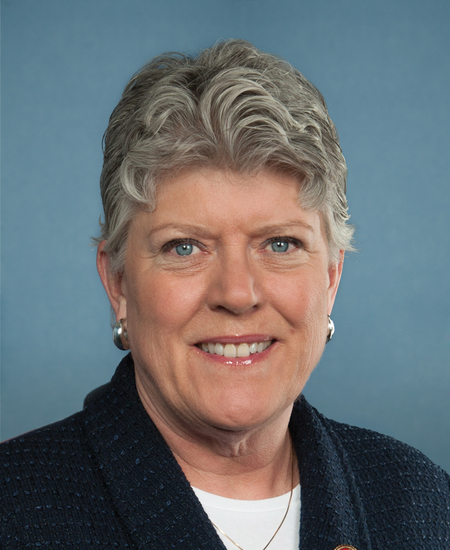
Rep. Julia Brownley
Sponsored bills
Maddy summaryThis resolution expresses the sense of the House of Representatives that Charleston, South Carolina, should proceed with hosting the 2027 annual meeting of the Organization for Security and Cooperation in Europe Parliamentary Assembly. The bill cites Charleston's existing facilities as suitable for the event and notes that hosting the convention in South Carolina honors the legacy of late Senator Lindsey Olin Graham. It also highlights that the United States has not hosted this specific assembly since 2005. The measure does not change any laws or allocate funding but serves as a formal statement of support for the planned event.
Maddy summaryThis bill establishes federal protections and funding to expand access to in vitro fertilization and intrauterine insemination for individuals, military service members, and veterans. It requires most private health plans, Medicaid programs, and Medicare to cover these fertility treatments without imposing higher cost-sharing than other medical services. Additionally, the legislation mandates that the Department of Defense and the Department of Veterans Affairs provide specific fertility preservation and treatment benefits to uniformed service members and eligible veterans. The bill also includes preemption clauses that override state laws restricting these procedures and prohibits discrimination based on marital status, sex, or sexual orientation in the provision of care.
Maddy summaryThis bill designates the United States Postal Service facility at 4640 Cass Street in San Diego, California, as the Mary Wilding Memorial Post Office Building. It directly affects the specific postal location by changing its official name to honor Mary Wilding. The key provision ensures that all future legal documents, maps, and records referring to this building will use the new memorial name. This is a commemorative measure that updates official records rather than changing operational policies or funding.
Maddy summaryThis bill expands federal election laws to prevent foreign nationals from influencing U.S. elections by tightening restrictions on domestic companies with significant foreign ownership or control. It requires businesses that are at least 50% owned by foreign individuals, or those with specific foreign influence, to file a sworn certification proving they are not foreign-controlled before making any political donations or spending money on election activities. Additionally, the law clarifies that these rules apply to state and local ballot initiatives and mandates that corporate political action funds certify their managers and board members are U.S. citizens or permanent residents. The legislation also prohibits recipients of funds from these businesses from using the money for further political contributions unless they receive and verify the required compliance certification.
Maddy summaryThe Tuskegee Airmen Memorial Act of 2026 authorizes the organization Tuskegee Airmen, Inc. to build a commemorative monument on federal land in Washington, D.C., honoring the original Tuskegee Airmen who served in World War II. This legislation allows the group to accept private donations and cover all costs for the project without using federal funds, while requiring any leftover money to be deposited into specific government accounts. The bill also mandates that the memorial be constructed in compliance with existing federal standards for commemorative works.
Maddy summaryHR 4283 designates the U.S. Postal Service facility at 1157 West Mission Avenue in Escondido, California, as the "Captain E. Royce Williams Post Office Building." The bill updates all official references (laws, maps, documents) to this specific post office to use the new name. This is a ceremonial naming bill with no policy changes or direct impact on citizens' rights or obligations. It affects only the postal facility's official designation and related records.
Maddy summaryThis concurrent resolution formally recognizes the persistent wage gap between Black women and white, non-Hispanic men in the United States. It highlights data showing that Black women earn significantly less than their male counterparts and reaffirms Congress's support for existing laws that prohibit pay discrimination based on sex or race. The document does not create new laws or change policy but serves as a symbolic statement to raise awareness about the economic disparities faced by Black women.
Maddy summaryThe 988 Lifeline Location Improvement Act of 2026 directs the Federal Communications Commission to study how to require callers to the 988 Suicide and Crisis Lifeline to send their precise location information to emergency responders. This requirement would primarily affect telecommunications companies, 911 service providers, and crisis centers that currently handle calls from users who may not be able to verbally state their address. The bill also asks the Government Accountability Office to produce a report on the legal, technical, and financial challenges of implementing such a system, including considerations for privacy and accessibility for users with hearing loss. By mandating these studies, the legislation aims to gather necessary data before deciding on a policy to ensure callers can be routed to local help more effectively.
Maddy summaryThe Whale CHARTS Act of 2026 establishes a program to protect migratory whales and other large cetaceans through improved mapping, monitoring, and mitigation measures. It requires the creation of detailed, high-resolution maps of whale habitats, including calving grounds and migration routes, which will be integrated into vessel navigation systems to prevent collisions. The bill authorizes $8 million annually through 2030 for mapping, surveys, and a $10 million grant program to fund new detection technologies that reduce harmful interactions between whales and ocean users. It also mandates regular reporting to Congress on the program's effectiveness and progress in filling knowledge gaps about whale habitats.