

Maddy summaryThis bill, titled the National Security Interstate Pipeline Act, allows the President to designate specific oil and natural gas pipelines as critical to national security, thereby placing them under exclusive federal control for siting and permitting. Once designated, the Federal Energy Regulatory Commission becomes the sole lead agency responsible for approving these projects, bypassing state and local regulations that could delay construction. The legislation also grants pipeline companies the right to use eminent domain to acquire necessary land after a good-faith negotiation attempt and permits the President to waive certain environmental laws if delays threaten national defense. Additionally, the bill sets strict timelines for federal and state agencies to complete reviews, deeming requirements satisfied if actions are not taken within specified periods, while requiring the President to report these designations and waivers to Congress.
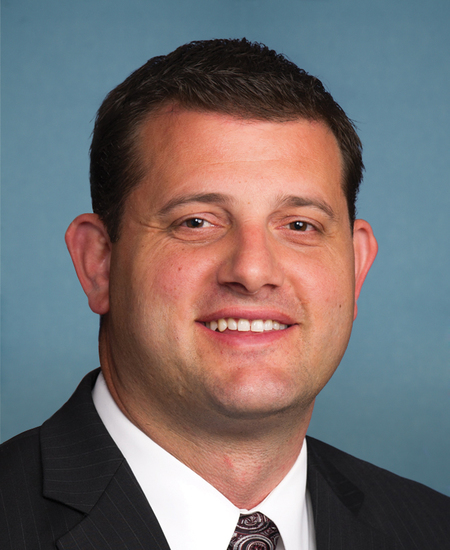
Rep. David G. Valadao
Sponsored bills
Maddy summaryThe Aquatic Invasive Species Control and Prevention Act of 2026 strengthens federal efforts to manage and prevent the spread of non-native aquatic organisms by updating existing laws and creating new funding opportunities. The bill establishes a competitive grant program to research and develop environmentally sound technologies for controlling these species, while also requiring a comprehensive study of federal regulations that might slow down rapid response actions when an invasion is detected. It mandates the creation of a national plan for inspecting and decontaminating watercraft at boat launches to stop the transfer of invasive species, and it authorizes funding to support regional panels and monitoring programs across various waterways. Additionally, the legislation updates the National Invasive Species Council's role to better coordinate federal actions and encourages the adoption of advanced ballast water management systems on ships.
Maddy summaryThis bill reauthorizes the National Earthquake Hazards Reduction Program through fiscal year 2030, providing $83.4 million annually with $30 million each year dedicated to completing the Advanced National Seismic System. It expands the program to include Tribal governments, updates standards to cover building design, evaluation, and post-earthquake recovery (such as minimizing downtime for critical infrastructure), and requires better coordination between federal agencies like the USGS, Federal Communications Commission, and FEMA for earthquake early warnings. The bill mandates that early warning alerts be broadcast in the predominant languages of affected regions and includes new provisions for tsunami response coordination and data sharing.
Maddy summaryHR 2821, the FDA Modernization Act 3.0, requires the FDA to update regulatory language within one year of enactment. It directs the agency to replace all references to "animal tests" with "nonclinical tests" in 22 specific sections of the Code of Federal Regulations related to drug development and approval processes. The bill also adds a definition for "nonclinical test" into relevant FDA regulations to align with prior legislative changes. This update applies directly to pharmaceutical manufacturers and FDA reviewers who follow these regulatory guidelines during drug development. The changes aim to modernize terminology without altering current testing requirements.
Maddy summaryHR 2004, titled "Tyler’s Law," requires the Secretary of Health and Human Services to study how often hospital emergency departments test for fentanyl during overdose cases (beyond standard drug tests), including associated costs, patient benefits/risks, and impacts on privacy and patient-physician relationships. The study must be completed within one year of the bill's enactment. Based on the study results, the Secretary must issue guidance within six months on whether emergency departments should routinely test for fentanyl, how to inform clinicians about test contents, and how such testing may affect future overdose risks and health outcomes. This bill directly affects hospital emergency departments and patients experiencing overdoses by shaping future testing protocols.
Maddy summaryHR 4288 would rename the Department of Veterans Affairs community-based outpatient clinic in San Jose, California, as the "Corporal Patrick D. Tillman VA Clinic." The bill directly affects this specific VA facility, updating all official references to it. The key provision requires the clinic to be designated by this new name in all federal records, documents, and maps following the bill's enactment. This is a procedural naming bill honoring Corporal Tillman, a former NFL player and Army Ranger killed in action in Afghanistan in 2004.
Maddy summaryThis bill amends the Conservation Reserve Enhancement Program to create new "seasonally flooded working lands habitat conservation agreements." It allows farmers to maintain wetland-dependent wildlife habitats on working cropland by permitting seasonal flooding with specific best management practices, while also enabling enrollment of adjacent non-eligible agricultural land critical for habitat goals. The bill establishes regional rental payment rates based on actual habitat maintenance costs and waives matching requirements for these agreements. It directly affects farmers participating in USDA conservation programs who manage lands supporting Pacific Flyway migratory bird habitats.
Maddy summaryThe Medicare Access to Rural Anesthesiology Act changes how Medicare pays for anesthesia services at specific small rural hospitals and critical access hospitals. To qualify for these changes, a hospital must be located in a rural area, have fewer than 800 surgeries requiring anesthesia, and employ or contract with no more than one full-time anesthesiologist who agrees not to bill Medicare separately for those services. Once a hospital meets these criteria, anesthesia care provided by an anesthesiologist there will be paid based on the hospital's actual costs rather than a fixed fee, and it will be classified as part of the hospital's inpatient services instead of a separate billable service. The law also requires the Department of Health and Human Services to update its regulations to reflect these new payment rules.
Maddy summaryThis bill requires Medicare Advantage plans to implement electronic pre-approval systems for medical services by 2028 and meet transparency reporting standards starting in 2027. Plans must publicly report data on approval/denial rates, appeal outcomes, response times, and technology use for pre-approval requests, including details on how denials relate to clinical criteria. It establishes a 24-hour response timeframe for certain requests and mandates annual reviews of pre-approval requirements based on data and input from seniors and providers. The law directly affects Medicare Advantage plans, seniors enrolled in these plans, and healthcare providers who submit pre-approval requests. These changes aim to make the pre-approval process faster, more transparent, and more accountable for seniors seeking covered medical services.
Protecting Privacy in Purchases Act This bill prohibits payment card networks from using merchant codes that distinguish firearms retailers from general-merchandise retailers or sporting-goods retailers. The Department of Justice must enforce this bill and report annually on the resulting investigations and cases.