Maddy summaryThis resolution formally impeaches Peter B. Hegseth, the Secretary of Defense, for six articles of high crimes and misdemeanors. The articles allege unauthorized military actions against Iran without congressional approval, violations of international law regarding civilian casualties, mishandling of classified information, obstruction of congressional oversight, politicization of military decisions, and discriminatory conduct toward service members based on gender, race, and sexual orientation. If the House votes to adopt this resolution, the matter would be sent to the Senate for a trial to determine whether Hegseth should be removed from office.
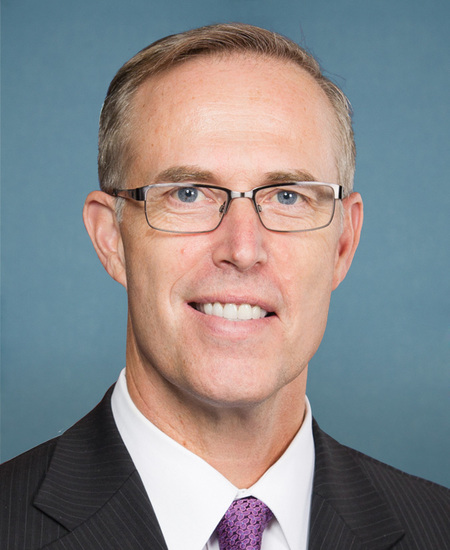
Rep. Jared Huffman
Sponsored bills
Maddy summaryThe ALERT Act (HR 7613) requires the Federal Aviation Administration to improve aviation safety through several key measures. It mandates the evaluation and potential implementation of enhanced collision avoidance systems (ACAS-Xa) for commercial aircraft and ACAS-Xr for rotorcraft, with specific deadlines for rulemaking and installation. The bill establishes committees to develop recommendations for safety technology requirements, requires safety risk assessments for air traffic controllers, and addresses operational procedures at high-traffic airports like Ronald Reagan Washington National. These provisions affect air carriers, air traffic controllers, rotorcraft operators, and Department of Defense aircraft operations. The act aims to enhance situational awareness and reduce midair collision risks through technology upgrades and improved safety protocols.
Maddy summaryThis resolution formally recognizes April 10 as Dolores Huerta Day to honor the civil rights and labor leader's legacy. It does not create a federal holiday or change laws but expresses the House of Representatives' support for the designation. The text highlights Huerta's contributions to farm workers' rights, women's equality, and Latino political representation through a series of "whereas" clauses detailing her achievements. The resolution serves as a commemorative statement rather than a policy change, directing no new actions or funding.
Maddy summaryThis bill establishes a 17-member Commission on Presidential Capacity to Discharge the Powers and Duties of the Office. This commission, composed primarily of medical professionals and former high-ranking executive officials, would be activated by a concurrent resolution of Congress. Its duty would be to conduct a medical examination of the President to determine if they are mentally or physically unable to discharge the powers and duties of the office due to conditions such as illness, disability, or substance use. Following the examination, the commission would report its findings and a declaration on the President's capacity to Congress and the Vice President, with any refusal by the President to undergo examination taken into consideration.
Maddy summaryThe Water Access and Affordability Act establishes a federal program, administered by the EPA, to provide financial assistance to low-income households for their drinking water and sanitary sewer bills. States, large water systems, or Indian Tribes can receive grants to implement these programs, offering aid for bill payments, debt relief, and water efficiency improvements. The bill includes provisions to simplify enrollment, such as automatic enrollment and self-attestation, and prohibits service disconnections for participating households. Additionally, it revises federal State Revolving Loan Fund programs for water infrastructure, requiring states to increase transparency, public engagement, and prioritize assistance for disadvantaged communities. This includes public review of funding plans, reporting on the socioeconomic impact of projects, and expediting aid to communities with affordability challenges.
Maddy summaryThis bill increases the minimum insurance coverage required for commercial trucking companies from $750,000 to $5,000,000 per incident. It also establishes a five-year automatic adjustment mechanism to update these insurance requirements based on medical cost inflation. The changes directly affect motor carriers transporting property and aim to ensure carriers maintain adequate financial responsibility to cover potential crash damages. The new requirements will take effect one year after the bill is enacted.
Maddy summaryThe Maternal Vaccination Act amends the Public Health Service Act to expand a federal campaign focused on increasing vaccination rates among pregnant and postpartum individuals and their children. This legislation directly affects public health programs by updating language to explicitly include these populations and directing funding toward outreach efforts that address disparities among racial and ethnic minority groups. Key provisions modify existing sections of the Public Health Service Act to broaden the campaign's scope and increase the authorized funding amount from $15 million to $17 million per fiscal year for the period 2027 through 2031. The bill aims to improve vaccination equity by ensuring federal resources specifically target maternal and pediatric immunization efforts.
Maddy summaryThis concurrent resolution formally recognizes the ongoing disparity between wages paid to men and women in the United States and reaffirms Congress's commitment to supporting equal pay. It highlights statistical data showing that women earn approximately 81 cents for every dollar earned by men, with significant variations across racial and ethnic groups, and notes that the gender wage gap has widened over the past two years. The document also identifies contributing factors such as occupational segregation, lack of family-friendly workplace policies, and workplace harassment, while emphasizing the economic impact on women's retirement security and family incomes.
Maddy summaryThe Plug Offshore Wells Act requires the Secretary of the Interior to submit an annual report to Congress and make it publicly available. This report will detail the status of decommissioning offshore oil and gas wells, platforms, and pipelines. It must include information on the number of decommissioning applications received, instances where decommissioning deadlines were missed, and the status of enforcement actions by the Bureau of Safety and Environmental Enforcement. The report will also specify the number of wells and platforms approved for decommissioning in place, and the lengths of pipelines either decommissioned in place or fully removed.
Maddy summaryThis bill, titled the "End Polluter Welfare for Enhanced Oil Recovery Act of 2026," eliminates federal tax credits related to enhanced oil recovery (EOR). It directly affects oil and gas companies that utilize or plan to utilize EOR methods. Specifically, the bill strikes Section 43 of the Internal Revenue Code, thereby ending the existing Enhanced Oil Recovery Credit. Furthermore, for new facilities constructed after the bill's enactment, it removes eligibility for the carbon capture tax credit (Section 45Q) when captured carbon oxide is used for enhanced oil recovery. These changes discontinue tax incentives that support specific oil extraction techniques.