

Maddy summaryHR 3071, the "Increasing Penalties for Offshore Polluters Act," increases civil and criminal penalties for violations of oil spill regulations under the Federal Water Pollution Control Act. It doubles fines and prison terms for polluters, such as raising the maximum civil penalty from $2,500 to $5,000 per violation and increasing criminal fines from $250,000 to $500,000 per day for severe offenses, with prison terms doubling to up to 30 years. The bill directly affects offshore oil and gas operators who cause spills by making penalties significantly harsher. Key provisions mandate minimum penalty amounts instead of maximums and explicitly double all existing fine and imprisonment limits for violations. These changes apply to both civil enforcement actions and criminal prosecutions under current federal law.
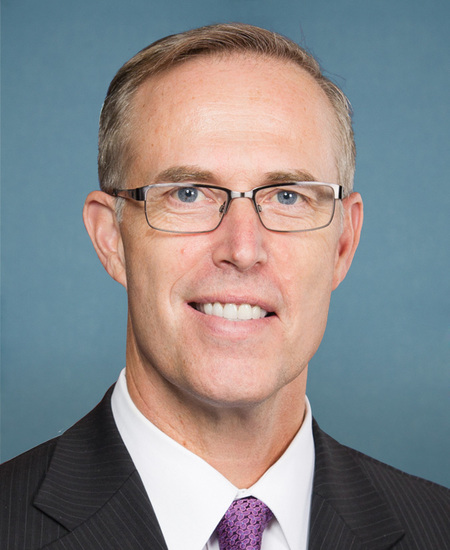
Rep. Jared Huffman
Sponsored bills
Maddy summaryThe Ocean Regional Opportunity and Innovation Act of 2025 establishes regional "Ocean Innovation Clusters" in seven designated areas (including Great Lakes, Gulf of Mexico, and five National Marine Fisheries Service regions) to advance the Blue Economy. These clusters, led by nonprofit organizations and including businesses, academic institutions, Tribal groups, and government agencies, will develop physical "Ocean Innovation Centers" offering shared workspaces, workforce training, and support for sustainable industries like seafood, ocean energy, and coastal resilience. The bill authorizes $10 million annually in grants (2026-2030) to help clusters become self-sustaining, focusing on equitable growth, small business development, and cross-sector collaboration. It prioritizes projects serving underserved communities and enhancing economic opportunities across coastal regions.
Maddy summaryHR 3045, the West Bank Violence Prevention Act of 2025, imposes U.S. sanctions on foreign individuals and entities responsible for violence, displacement, or property destruction in the West Bank. It targets those directly involved in attacks on civilians, forced displacement, or property seizures, including settler leaders or officials of groups engaged in such activities. Key provisions require freezing assets of sanctioned individuals within U.S. jurisdiction and blocking their entry into the United States via visa restrictions. The law applies to foreign nationals meeting specific criteria outlined in the bill, not U.S. citizens or entities.
Maddy summaryThis bill requires the EPA to develop a protocol assessing how multiple pollution sources and climate impacts (like extreme heat, air pollution, and water contamination) affect public health within 180 days, with public input through hearings. It also mandates identifying at least 100 communities with high environmental violations (often low-income or minority areas) and creating action plans to reduce violations significantly below national averages within two years. The EPA must finalize the protocol within a year and fully implement it by year three. This directly affects EPA operations and overburdened communities facing disproportionate pollution exposure.
Maddy summaryHRES 341 is a symbolic House resolution expressing support for Earth Day, not a substantive bill. It urges the President to issue an Earth Day proclamation, encourages Americans to address environmental challenges (like climate change and litter), and calls for rejoining the Paris Agreement - though these are non-binding recommendations with no legal force. The resolution references historical environmental legislation (like the Clean Air Act) but does not create new policies, allocate funds, or change regulations. It directly affects no specific group, as it solely serves to affirm environmental values through symbolic recognition. (Note: The document header incorrectly lists "Federal Water Pollution Control Act" as the bill text, but this is a formatting error; the actual resolution is about Earth Day.)
Maddy summaryHR 2971, the YOUNG Act of 2025, creates a new federal grant program to fund youth biodiversity monitoring projects using modern tools like drones, AI, and environmental DNA analysis. It directly supports schools, nonprofits, tribal governments, and local governments that run projects educating young people about wildlife science and conservation. The program allocates $1 million annually (2026-2032) to cover project costs such as supplies, transportation, and permits, with priority given to projects serving underserved communities facing systemic barriers. Grantees must report on participation and grant usage to Congress within two years of enactment.
Maddy summaryThe Hunger-Free Future Act of 2025 amends the SNAP program to require that any update to the thrifty food plan must not increase food insecurity. It mandates that adjustments to the diet cost must continue following existing rules while explicitly ensuring updates do not worsen food insecurity, defined as households lacking adequate food due to insufficient money or resources. This directly affects SNAP beneficiaries by setting a new standard for how the program's cost calculations are reviewed. The bill changes the procedural requirement for SNAP re-evaluations without altering benefit amounts or eligibility rules.
Hot Foods Act of 2025 This bill expands the Supplemental Nutrition Assistance Program (SNAP) to permit the use of SNAP benefits to purchase hot foods or hot food products ready for immediate consumption.
Maddy summaryHR 2928, the Mortgage Relief for Disaster Survivors Act, provides temporary payment relief for homeowners and renters with federally backed mortgages in areas affected by federally declared disasters. Borrowers with damaged or destroyed properties can request an 180-day pause on mortgage payments (extendable by another 180 days) from their loan servicer by submitting written requests and proof of property damage. During this relief period, no fees, penalties, or additional interest accrue beyond what would have been due under the original loan terms. This applies to loans backed by Fannie Mae, Freddie Mac, or similar programs, including both single-family and multifamily residential properties.
Maddy summaryHR 2912, the "Oligarch Act of 2025," creates a new progressive wealth tax on high-net-worth individuals and certain trusts. It imposes tax rates of 2% to 8% on net taxable assets exceeding a threshold based on median household wealth (starting at $50,000), with higher rates applying to larger wealth brackets. The bill excludes assets under $50,000 that are tangible personal property used in daily life, and includes special rules for married couples, trusts, deceased individuals, and non-residents. It requires new reporting by taxpayers and financial institutions and mandates annual audits of 30% of taxpayers subject to the tax.