

Maddy summaryThe Caring for Survivors Act of 2025 increases monthly dependency and indemnity compensation for surviving spouses of veterans. It changes the calculation method from a fixed $1,154 to 55% of a specific veteran compensation rate, effective six months after enactment. The bill also reduces the required continuous disability rating period for survivors from 10 years to 5 years, and provides a proportional payment for cases where the rating period is shorter than 10 years. Surviving spouses of veterans who died before January 1, 1993, receive the greater of their current benefit or the new calculation. This directly affects surviving spouses eligible for benefits under Title 38, U.S. Code, particularly those with veterans who died prior to 1993.
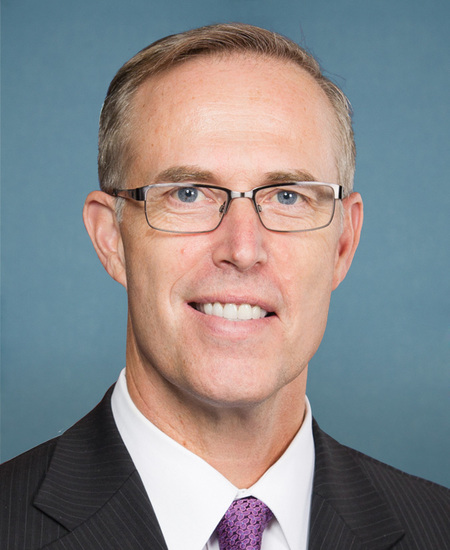
Rep. Jared Huffman
Sponsored bills
Maddy summaryThe Insurrection Act of 2025 would clarify and limit when the President can deploy military forces domestically to address insurrections, rebellions, or widespread violence. It requires state and local authorities to be unable to handle the situation, with specific circumstances including obstruction of voting rights or Federal law, and mandates the state governor's request for assistance. The bill requires the President to consult Congress, issue a proclamation ordering lawbreakers to disperse, and submit a detailed report before deployment, with military action limited to 7 days unless Congress passes a joint resolution approving it for up to 14 days. The bill explicitly prohibits using National Guard members on training duty for these purposes and provides for judicial review of deployments.
Maddy summaryThe MONARCH Act of 2025 establishes the Western Monarch Butterfly Rescue Fund to address the critical decline of western monarch butterflies, which have dropped 99% over 30 years and reached a low of 1,914 in 2020. It authorizes $12.5 million annually for fiscal years 2026-2030 to fund grants for conservation projects led by eligible entities like local governments, tribal agencies, nonprofits, and research institutions within the butterflies' range (California, Arizona, Nevada, Washington, Oregon, Idaho, and Utah). Projects must focus on restoring milkweed, nectar plants, and habitat while coordinating with wildlife authorities and avoiding conflicts with food safety practices. Recipients must report project progress to the Secretary of the Interior and make reports publicly available, with annual updates to Congress on conservation efforts and outcomes.
Maddy summaryHR 4047, the Coastal Communities Ocean Acidification Act of 2025, amends the 2009 Federal Ocean Acidification Research and Monitoring Act to improve collaboration on ocean acidification issues. The bill requires the National Oceanic and Atmospheric Administration (NOAA) to establish ongoing input mechanisms for affected industries, coastal stakeholders, fishery councils, Indigenous groups (including Indian Tribes and Native Hawaiian organizations), and non-Federal scientists. It mandates specific tribal representation on the Advisory Board, directs NOAA to coordinate with tribes on vulnerability assessments and research planning, and prioritizes underserved coastal communities in resource allocation. These changes aim to integrate community and tribal knowledge into federal research and management efforts related to ocean acidification impacts on coastal economies and ecosystems.
Maddy summaryThe Energy Transitions Initiative Authorization Act of 2025 establishes a federal grant program to fund renewable energy infrastructure projects in remote, island, and Tribal communities. It authorizes up to $5 million per project (with grantees covering at least 10% of costs) for initiatives like solar microgrids, hydropower, or energy efficiency upgrades. Eligible entities include states, local governments, Tribal communities, and community organizations serving these areas, with $31 million annually allocated for fiscal years 2026-2030. The bill requires technical assistance for grantees and annual GAO audits to ensure proper fund use. It directly targets communities facing high energy costs, infrastructure vulnerability, and disaster risks due to geographic isolation.
Maddy summaryThis bill requires U.S. Immigration and Customs Enforcement (ICE) agents to visibly identify themselves during enforcement operations in the United States by not wearing facial coverings and wearing garments showing their name and agency affiliation. It directly affects ICE agents conducting activities like arrests, raids, or investigations. Exceptions exist for imminent threats or safety gear, but supervisors must review and document such uses within 48 hours. The bill also mandates annual reports to Congress on disciplinary actions and complaints related to violations.
Maddy summaryHR 3986 exempts small businesses (as defined by the Small Business Act) from import taxes imposed under Executive Order 14257. This means small businesses importing goods for their own use will no longer pay these specific taxes. The bill directly affects small businesses meeting the size standards outlined in the Small Business Act. It removes an existing tax burden without creating new regulations or requirements.
Maddy summaryHR 3946, the FIGHT Act of 2025, amends the Animal Welfare Act to specifically prohibit gambling on animal fighting events and restrict the interstate transport of roosters used in such ventures. It defines "rooster" as male chickens over six months old and makes it unlawful to sponsor, exhibit, attend (for those under 16), or gamble on animal fighting events - whether in-person or broadcast. The bill creates a civil enforcement mechanism allowing any person to file a lawsuit to stop violations after providing 60 days' notice to authorities, with potential fines up to $5,000 per violation. It also establishes seizure of property used to facilitate violations and clarifies that state laws on animal fighting remain in effect unless directly conflicting with federal provisions.
Maddy summaryHR 3975, the Tax Fairness for Disaster Victims Act, adjusts tax credits for individuals affected by federally declared disasters. It allows eligible taxpayers whose income dropped due to a disaster (like a hurricane or flood) to use their *previous year's* earned income and social security taxes instead of their current year's reduced income when calculating certain tax credits, such as the Earned Income Tax Credit (EITC). This applies only to those living in the disaster area on the date FEMA defines as the disaster period and requires them to elect this adjustment. The change ensures disaster victims aren't penalized with lower tax credits because their income temporarily fell due to the disaster.
Maddy summaryThe Domestic Workers Bill of Rights Act (HR 3971) would establish key labor protections for domestic workers, including nannies, housekeepers, and caregivers who work in private homes. The bill requires written agreements for workers employed 8+ hours per week, provides earned sick days (1 hour for every 30 hours worked), mandates fair scheduling practices with 72-hour notice for schedule changes, and extends overtime protections to live-in domestic employees. It also prohibits unfair wage deductions, guarantees meal and rest breaks, and ensures privacy protections including no monitoring in private living spaces. The bill directly affects approximately 2.2 million domestic workers across the U.S., who are disproportionately women of color and immigrants. Enforcement would be handled by the Department of Labor through new complaint resolution mechanisms and oversight.