Maddy summaryThe INSURE Act establishes a federal reinsurance program to help property insurers cover losses from natural disasters like hurricanes, wildfires, and floods. Participating insurers must offer "all-perils" property insurance policies covering these perils and develop loss prevention partnerships with policyholders to reduce disaster risks. The program will be phased in over several years, starting with wind and hurricane coverage, and will be funded by quarterly premiums from participating insurers based on expected losses. This aims to stabilize property insurance markets and ensure coverage remains available in high-risk areas.
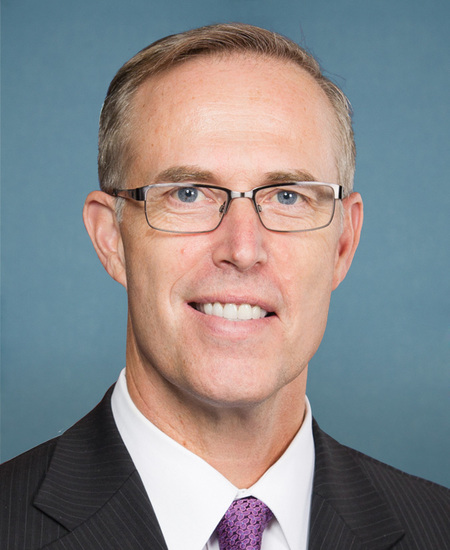
Rep. Jared Huffman
Sponsored bills
Maddy summaryHCONRES 44 is a symbolic resolution recognizing a health and safety emergency for children linked to the Trump administration's climate policies. It claims these policies - unleashing fossil fuel production, blocking renewable energy, and suppressing climate science - disproportionately harm children through increased air pollution, extreme weather, and denied access to climate data. The resolution calls for reversing these policies, restoring the EPA's mission, and ensuring climate action aligns with protecting children's rights. It does not enact new laws or change policy, but serves as a formal congressional statement of concern.
Maddy summaryThis resolution (HRES 585) is a symbolic congressional statement recognizing that extreme weather events - like heatwaves, wildfires, and poor air quality - pose unique health risks to children, including respiratory issues, heat illness, mental health impacts, and disruptions to education. It calls on Congress to prioritize rapid, equitable solutions tailored to children’s needs, such as improved school air filtration, accessible emergency alerts, and child-focused disaster planning. The resolution specifically highlights vulnerable groups like young farmworkers, pregnant people, and children in urban heat islands. As a non-binding resolution, it does not create new laws but urges future legislation and funding to address these climate-related health threats for children.
Maddy summaryThis bill prohibits U.S. Immigration and Customs Enforcement (ICE) from using federal funds to detain or transport U.S. citizens during civil immigration enforcement actions. It directly affects ICE operations by blocking funding for any activity that would hold or move citizens outside the U.S. under immigration laws. The key mechanism is a specific funding restriction in the bill text, stating no funds may be used for detaining or transporting citizens. This applies to all civil immigration enforcement activities defined under the Immigration and Nationality Act. The bill does not create new enforcement powers but limits how existing funds can be spent.
Maddy summaryThis bill establishes federal worker heat protection standards to prevent heat-related illness and injury. It requires employers to provide a workplace free from heat stress hazards, including access to cool water, scheduled rest breaks, shaded cooling areas, and training on heat illness symptoms. The Secretary of Labor must create these standards within one year, incorporating evidence-based practices like engineering controls (e.g., ventilation), administrative measures (e.g., adjusted schedules), and employer-paid personal protective equipment. The law directly affects all employers in high-heat work environments - such as construction, agriculture, and manufacturing - and strengthens whistleblower protections for workers reporting safety violations.
Maddy summaryThe Child Care for Working Families Act creates a federal program to provide affordable, high-quality child care for working families with children under age 6. It would provide direct child care assistance through certificates or grants to parents, with no copayment required for families at or below 85% of state median income. The program requires states to implement quality standards for child care providers, including a tiered quality system and minimum wage requirements for staff (at least a living wage equivalent to elementary educators). The bill appropriates $20 billion for the program over five years, with additional funding for quality improvement initiatives and universal preschool services.
Maddy summaryThis bill would allow states to create their own universal health care systems by applying for waivers that replace federal health programs with state-based coverage. States would need to demonstrate they can cover at least 95% of residents within 5 years, maintain comparable benefits and affordability, and provide comprehensive coverage including reproductive health services. The federal government would redirect funds that would have gone to federal programs like Medicaid and Medicare to the states, with states required to submit regular reports on coverage progress and costs. The bill includes specific protections for Indian health care providers and ensures coverage for vulnerable populations without imposing new costs on them. This framework would apply to states that choose to implement their own universal health care system rather than relying on existing federal programs.
Maddy summaryHR 4382 authorizes the U.S. Mint to produce commemorative coins for the 2028 Los Angeles Olympics/Paralympics and 2034 Salt Lake City Winter Olympics/Paralympics. It specifies gold, silver, and half-dollar coin designs with defined mintage limits (e.g., up to 100,000 $5 gold coins for each event), all bearing inscriptions like "2028" or "2034" and standard coin features. A surcharge ($5-$50 per coin) is added to sales, with all funds directed to the respective Olympic committees to support event hosting and legacy programs like youth sports. The bill ensures no net cost to the government by requiring surcharge revenues to cover all design, production, and marketing expenses before funds are disbursed.
Maddy summaryThe Clean Shipping Act of 2025 sets new federal standards to reduce greenhouse gas emissions from commercial shipping in U.S. waters. It requires vessels over 400 gross tons operating on covered voyages (between U.S. ports or U.S. ports and foreign ports) to gradually lower the carbon intensity of their fuel, aiming for 100% reduction by 2050 through phased targets (e.g., 30% reduction by 2030, 58% by 2034). Ship owners must report annual fuel carbon intensity and emissions data, while the EPA must develop consistent reporting methods aligned with international standards. The law applies directly to commercial shipping companies operating eligible vessels and includes flexibility for feasibility adjustments if technological or economic challenges arise.
Maddy summaryHR 4295, the Wildfire Resilient Communities Act, allocates $30 billion for hazardous fuels reduction projects on federal lands near communities at high wildfire risk and in specific fire-prone areas. It directly affects at-risk communities and local governments by funding vegetation removal, prescribed burns, and thinning to reduce wildfire danger. The bill also adds $3 billion for community wildfire defense grants and reauthorizes forest restoration programs with updated requirements for landscape-scale projects. Key mechanisms include prioritizing work adjacent to high-risk communities, integrating wildfire management strategies, and creating a County Stewardship Fund to distribute 25% of forest contract receipts to local governments for community use. These provisions aim to reduce wildfire risk through proactive land management rather than reactive firefighting.