

Maddy summaryThis bill establishes a compensation fund to provide financial support to law enforcement officers who actively defended the U.S. Capitol on January 6, 2021, and suffered injuries, emotional distress, or death as a result. The program is administered by a Special Master appointed by the Attorney General, who will review individual claims for economic and non-economic losses while ignoring any questions of negligence. Eligible officers can receive specific payments for their injuries or the death of a colleague, with a guaranteed minimum of $4.975 million for death claims, plus an additional equal distribution to all qualifying officers regardless of injury status. The legislation also includes provisions to reduce payouts by any other compensation the claimant has already received and grants the federal government the right to recover funds if they are later paid out in related legal settlements.
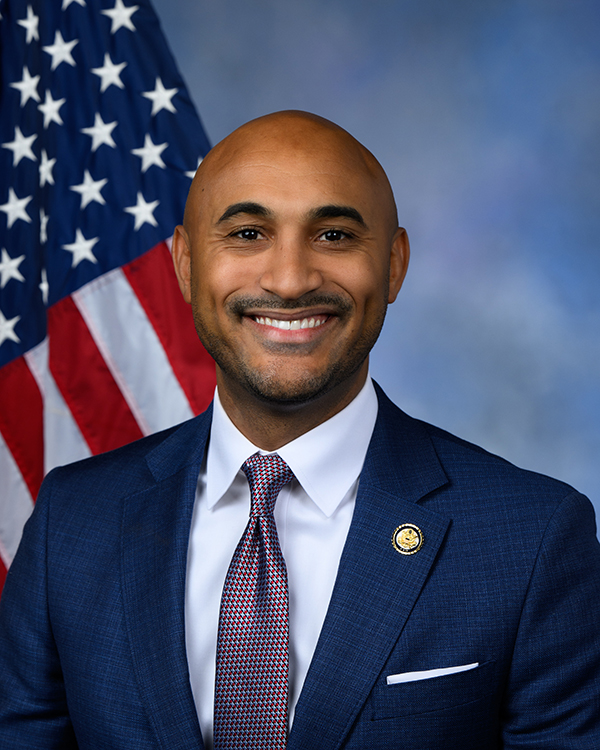
Rep. Shomari Figures
Sponsored bills
Maddy summaryThe IGNITE HBCU Excellence Act authorizes federal grants to Historically Black Colleges and Universities (HBCUs) to fund long-term improvements to their campus facilities and infrastructure. These grants are awarded competitively to eligible HBCUs based on criteria such as the age of their facilities, deferred maintenance needs, financial capacity, and student enrollment levels. Recipients may use the funds to construct or renovate buildings, upgrade technology and broadband systems, improve safety measures, and develop workforce training hubs, while being prohibited from using the money for routine maintenance or athletic facilities. The legislation also includes provisions for reporting on project outcomes and requires institutions to create comprehensive master plans that involve consultation with diverse campus and community stakeholders.
This resolution expresses support for police officers and other law enforcement personnel. The resolution further recognizes law enforcement officers across the United States in the pursuit of preserving safe and secure communities; the need to ensure that such officers have the equipment, training, and resources necessary to protect their health and safety while they are protecting the public; and the law enforcement community for acts of sacrifice and heroism. The resolution expresses condolences and appreciation to the loved ones of each law enforcement officer who has made the ultimate sacrifice in the line of duty.
Maddy summaryThis bill would amend federal law to strengthen penalties for organized retail crime by expanding definitions of theft to include digital goods, gift cards, and setting a $5,000 aggregate value threshold for charges over a 12-month period. It would establish a new "Organized Retail and Supply Chain Crime Coordination Center" under Homeland Security to coordinate Federal, State, local, and Tribal law enforcement efforts against cross-jurisdictional theft groups. The Center would share information with retailers, transportation companies, and law enforcement agencies, track crime trends, and produce annual reports on organized retail crime. This legislation directly affects retailers, supply chain businesses, and law enforcement agencies, while targeting organized crime groups responsible for a 93% increase in larceny incidents and rising safety concerns for retail employees. The bill aims to address significant financial losses and supply chain disruptions noted in the National Retail Federation's 2023 data.
Maddy summaryThis resolution formally recognizes the week of May 4 through May 8, 2026, as "Teacher Appreciation Week" to honor the work of public school educators. It highlights the importance of teachers in the education system and notes that a majority of them support various policies, including protections for students and funding for public schools. The document also expresses the view that teachers should have a direct role in education policymaking at federal, state, and local levels. By issuing this designation, the House of Representatives aims to acknowledge the value of teachers and encourage government leaders to engage with them on issues affecting the classroom.
Maddy summaryThis bill is a non-binding resolution that expresses the House of Representatives' sentiment to honor public servants for their dedication to the United States. It specifically acknowledges the work of federal, state, and local government employees, as well as uniformed service members, who deliver essential services and support the economy. The resolution calls on the American public to observe Public Service Recognition Week with ceremonies and activities that recognize these contributions. Because it is a symbolic expression of the House's feelings rather than a law with enforceable rules, it does not create new policies or mandate specific actions.
Maddy summaryThe Special Election Timeliness Act requires states to hold special elections to fill vacancies in the U.S. House of Representatives within 180 days, unless a regular general election is scheduled during that period. This law directly affects state officials who manage elections and federal representatives who may lose their seats due to death, resignation, or failure to be elected. The bill establishes legal enforcement mechanisms, allowing the Attorney General or aggrieved federal leaders to sue state executives in federal court if these deadlines are missed. By setting a specific timeline, the legislation aims to ensure timely representation in Congress without altering the existing process for nominating candidates.
Maddy summaryThe Rural Animal Shelter Investment Act allows rural animal shelters to apply for federal loans and grants previously reserved for essential community facilities like schools and libraries. By amending the Consolidated Farm and Rural Development Act, the bill officially classifies these shelters as essential community facilities, making them eligible for financial assistance under the Community Facility Direct Loan and Grant Program. The changes will take effect 180 days after the law is enacted, providing a specific timeline for when shelters can begin accessing these funding opportunities.
Maddy summaryThe Veterinary Education Equity Act amends the National Agricultural Research, Extension, and Teaching Policy Act to include 1890 Institutions in a veterinary services grant program. Under this change, the Secretary of Agriculture must give higher priority to grant projects submitted by these historically Black colleges and universities. The bill directly affects 1890 Institutions by increasing their chances of receiving federal funding for veterinary education and research initiatives.
Maddy summaryThe Rural Health Resilience Act of 2026 creates a new program to provide loans and loan guarantees to struggling health facilities in rural areas to prevent them from closing or cutting essential services. This assistance is available to various types of rural hospitals, clinics, and behavioral health centers that demonstrate financial distress through metrics like low operating margins or insufficient cash reserves. The funds can be used for facility repairs, covering operational costs such as payroll and supplies, paying down debt, or bridging gaps in insurance reimbursements. Additionally, the program prioritizes support for sole community providers and areas with high poverty rates, and requires the Secretary of Agriculture to report on the program's outcomes to Congress within 18 months.