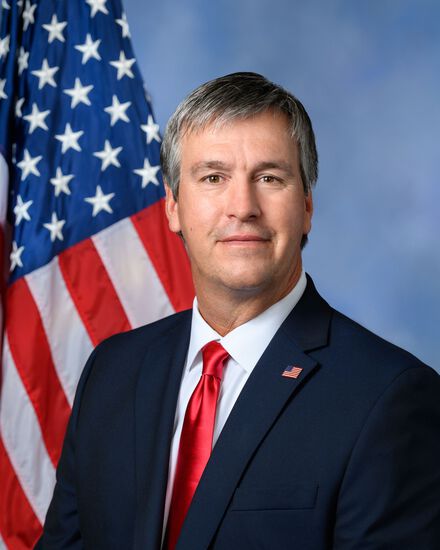
Maddy summaryHR 556, the Protecting Access for Hunters and Anglers Act, prevents federal agencies from banning lead ammunition or tackle on public lands and waters managed for hunting or fishing. It directly affects hunters and anglers using federal lands (like national wildlife refuges, public forests, and BLM lands) by blocking nationwide restrictions on lead products. The bill allows limited exceptions only for specific locations where wildlife decline is directly linked to lead use, and the restriction must align with state law or get approval from the state wildlife agency. This changes how federal land managers can regulate lead, requiring state coordination for any local restrictions.
Sponsored bills
Maddy summaryThis bill creates a new provision (Section 238A) in immigration law requiring the Department of Homeland Security to expedite the removal (deportation) of certain non-citizens. It directly affects individuals who are: (1) criminal gang members or members of a foreign terrorist organization, or (2) convicted of specific serious crimes including felonies, assaults against vulnerable groups (defined as children under 16, pregnant women, disabled individuals, or seniors over 65), sexual offenses, domestic violence, or child exploitation crimes. The bill mandates mandatory detention and faster removal proceedings for these individuals, and explicitly states they cannot seek withholding of removal (a form of protection from deportation). It does not change existing immigration categories but adds these specific grounds for expedited removal.
Maddy summaryHR 5688, the Non-Domiciled CDL Integrity Act, changes rules for issuing commercial driver's licenses (CDLs) to people who don't live in the state where the license is issued. It allows states to issue CDLs to foreign nationals with lawful U.S. immigration status and work-related visas (valid for up to one year or until their stay ends), requiring states to verify status before issuing and keep records for two years. For residents of U.S. territories like Puerto Rico, it requires proof of U.S. citizenship or permanent residency before issuing CDLs, with similar verification and record-keeping rules. The bill directly affects commercial drivers from foreign countries and U.S. territories seeking CDLs in states where they are not residents.
Enhanced Iran Sanctions Act of 2025 This bill imposes sanctions on certain foreign persons (individuals and entities) that are involved in Iran's petroleum sector as well as certain associated persons. The bill also requires or authorizes actions to facilitate the enforcement of sanctions on Iran. Specifically, the bill requires the President to impose visa- and property-blocking sanctions on any foreign person that, after the bill's enactment, knowingly engages in any transaction related to the processing, export, or sale of oil, condensates, gas, liquefied natural gas, or other petrochemical products in whole or in part from Iran. The President must also impose sanctions on certain foreign persons associated with a sanctioned individual or entity. For example, the President must sanction the subsidiaries and corporate officers of a sanctioned business. The bill provides certain exceptions to these sanctions, including specifying that sanctions do not apply to the importation of goods or to conducting or facilitating transactions for humanitarian assistance. The Department of State must establish an interagency working group that shall seek to establish a multilateral contact group to coordinate international efforts to enforce sanctions on Iran. The bill expands the State Department rewards program to authorize a reward payment to any individual who furnishes information leading to the identification of a person (1) subject to sanctions under this bill, or (2) that has attempted or is attempting to evade sanctions under this bill.
Maddy summaryThis bill, titled the National Guard Protective Zone Act, creates a new federal crime for knowingly entering or staying within a designated area around National Guard members during authorized deployments. The law defines a protective zone as a 15-foot perimeter marked by signs, tape, or verbal warnings, making it illegal to enter with the intent to impede, intimidate, or interfere with the Guard member's duties. Penalties include fines and up to one year in prison, increasing to five years if the offender makes physical contact, throws an object, or spits on the service member. The legislation explicitly states that it does not prohibit First Amendment activities conducted outside the established protective zone.
Maddy summaryThis bill, known as the Farm Equipment Safety Act, would remove certain agricultural machinery from federal emission standards under the Clean Air Act. It directly affects farmers and manufacturers of nonroad engines and vehicles used for farming purposes. The key provision adds a specific exemption to Section 213 of the Clean Air Act, allowing agricultural equipment to operate without meeting the emission limits that apply to other nonroad vehicles. The legislation does not change existing rules for other types of engines or vehicles, nor does it alter the overall structure of the Clean Air Act.
Maddy summaryThis bill establishes the Red Star Service Banner as an officially recognized symbol to honor U.S. service members and veterans who died by suicide, as well as first responders who died by suicide. The banner features a white field with a blue border and a single red star, and it may be displayed at private residences, workplaces, public buildings, community spaces, and other appropriate locations to recognize the sacrifice of those who died and support their families. The legislation clarifies that displaying the banner does not create new eligibility for benefits, requires VA approval for individual display, or establish any legal status beyond recognition. It also allows the Secretary of Veterans Affairs to promote awareness of the banner in coordination with the Department of Defense without requiring additional funding.
Maddy summaryThis bill, known as the No Free Rides Act of 2026, would prohibit federal public transportation funding recipients from offering universal free fare policies that allow all riders to use transit services without paying. The law would still permit targeted fare policies that provide free or reduced-cost rides for specific groups such as seniors, low-income riders, students, or employees with employer-paid agreements. Additionally, the Secretary of Transportation could grant waivers if a transit agency can demonstrate a dedicated non-federal revenue source to support universal free fare programs. The measure directly affects public transportation agencies that receive federal assistance under Title 49 of the United States Code.
Maddy summaryThis bill, known as the Halo Act, creates a new federal crime for intentionally approaching or staying within 25 feet of immigration enforcement officers after receiving a verbal warning, if the person intends to interfere with their work, threaten them, or harass them. It directly affects individuals who may attempt to block or disrupt immigration officers performing their duties, such as during arrests or investigations. The law defines harassment as conduct that causes substantial emotional distress to an officer and serves no legitimate purpose, and it carries penalties of up to five years in prison, a fine, or both. This provision adds to existing Title 18 United States Code by establishing specific boundaries for behavior near federal immigration officials.
Maddy summaryThis bill, known as the Promoting Innovation in Blockchain Development Act, modifies federal law to include digital assets like cryptocurrencies within the existing legal framework for money laundering. It directly affects individuals and organizations involved in blockchain technology by expanding the definition of what constitutes currency under the Racketeer Influenced and Corrupt Organizations Act. The key provision adds language recognizing that digital value substitutes for traditional currency, ensuring these assets are covered by current anti-money laundering regulations. This change aims to clarify legal protections and compliance requirements for the growing blockchain industry without altering other parts of the law.