Issue · Criminal Justice

Criminal Justice

Every criminal justice bill, vote, and legislator stance in Nevada, automatically classified by Maddy, our AI policy reader.

Total bills
16
119th Congress
Top supporter
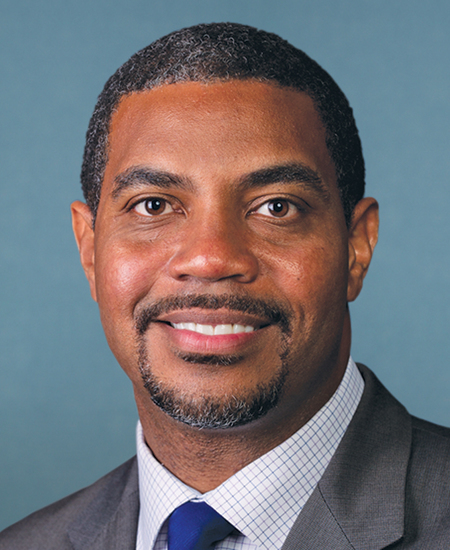
Steven Horsford
55% support rate
Top opponent
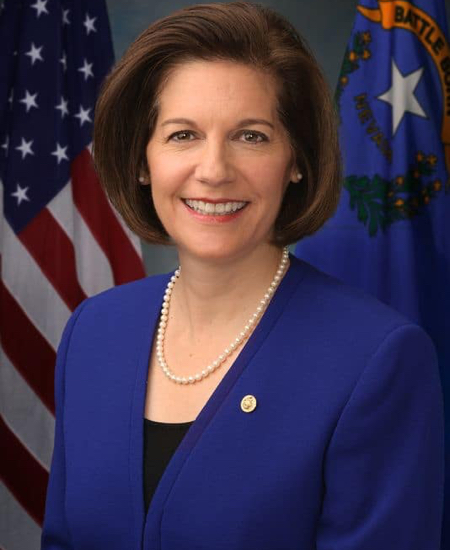
Catherine Cortez Masto
13% support rate
Ranked legislators
6
1 support · 5 oppose
Key legislators

Who's moving criminal justice in Nevada

Legislators moving criminal justice in Nevada
Legislator Party Stance Support rate Votes
Steven Horsford
Steven Horsford House · District 4
D
Mixed
55% 149
Catherine Cortez Masto
Catherine Cortez Masto Senate
D
Strong −
13% 162
Jacky Rosen
Jacky Rosen Senate
D
Strong −
16% 170
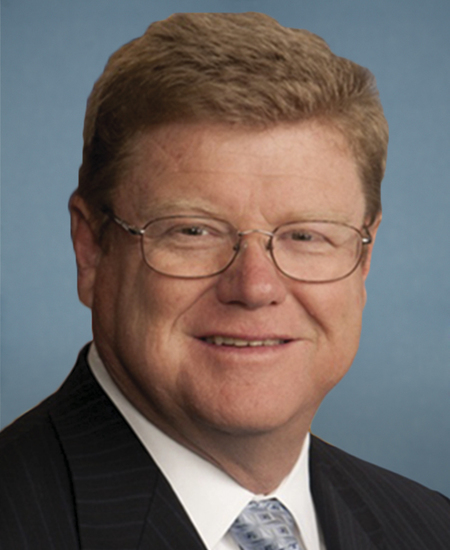
Mark E. Amodei
Mark E. Amodei House · District 2
R
Oppose
38% 151
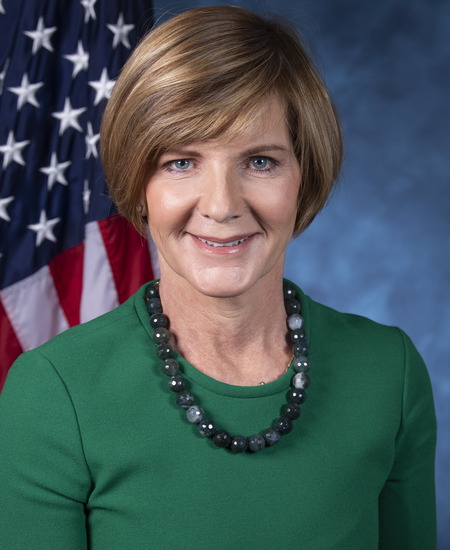
Susie Lee
Susie Lee House · District 3
D
Oppose
40% 152
Dina Titus
Dina Titus House · District 1
D
Mixed −
46% 145
Showing 1–10 of 16 bills

All criminal justice bills

in committee · United States · House Jun 3, 2026

HR 9136: No Taxpayer Bailouts for Insurrectionists Act of 2026

This bill restricts the federal government from paying out $50,000 or more in settlement agreements to high-ranking officials or individuals convicted of crimes related to the January 6, 2021 Capitol attack. It specifically targets the ongoing legal case between former President Trump and the IRS, requiring a detailed report to Congress before any large payment can be made. The required report must list all payments, explain the legal basis for the settlement, and include a certification from the Department of Justice Inspector General confirming the deal is lawful. Additionally, the Government Accountability Office is ordered to conduct a study within 90 days to ensure any fund expenditures comply with federal appropriations laws.
in committee · United States · House May 21, 2026

HR 8955: Bipartisan Transparency for American Taxpayers Act

The Bipartisan Transparency for American Taxpayers Act prohibits the use of federal funds to pay claims submitted to the Anti-Weaponization Fund. This fund was established by the Department of Justice on May 18, 2026, and the bill specifically bars any money from being used for these payments. The legislation directly affects the Department of Justice and any individuals or entities seeking reimbursement from this specific fund. By restricting funding sources, the bill aims to prevent taxpayer money from being spent on claims directed to this newly created entity.
Tags Government Transparency
in committee · United States · House Feb 25, 2026

HR 7678: Gun Owner Registration Information Protection Act

HR 7678, the Gun Owner Registration Information Protection Act, prohibits federal funding for state or local databases that track lawfully owned firearms or their owners. The bill allows federal funding for databases recording lost or stolen firearms but bans it for databases listing legal gun ownership. This means states cannot use federal money to create or maintain systems that compile information about legally owned guns. The bill directly affects state and local governments that rely on federal funds for firearm ownership databases.
Sub-Topics Firearms
in committee · United States · House Feb 4, 2026

HR 7346: Drain ICE Act of 2026

HR 7346, the Drain ICE Act of 2026, repeals specific funding provisions (sections 90003 and 100052) from the "One Big Beautiful Bill Act" and cancels all unspent funds allocated under those sections. This bill directly affects ICE’s detention budget by removing existing financial authority for detention operations. It does not change immigration enforcement practices or directly impact individuals; it solely modifies budgetary allocations. The bill focuses on eliminating funding mechanisms, not on policy changes for migrants or enforcement. (Procedural bill; summary limited to 2 sentences as specified.)
in committee · United States · House Sep 16, 2025

HR 5415: Nitazene Control Act of 2025

This bill permanently bans nitazenes and all structurally related synthetic opioids under federal law, creating a broad definition that covers numerous chemical variations designed to evade current restrictions. It directly affects anyone manufacturing, distributing, or possessing these substances without authorization, including illicit drug producers and users. The key mechanism is a class-wide Schedule I classification that includes specific structural features (like modified benzimidazole rings) and excludes new analogs from legal loopholes. This approach aims to prevent new nitazene variants from entering the illegal market and addresses their role in overdose deaths. Substances previously temporarily banned under similar rules will now be permanently prohibited as of the bill's enactment.
Sub-Topics Drug Policy
passed · United States · House Jan 24, 2025

HR 21: Born-Alive Abortion Survivors Protection Act

HR 21, the Born-Alive Abortion Survivors Protection Act, requires medical staff at abortion facilities to provide the same immediate care and hospital admission to any infant born alive during an abortion as they would for any newborn. It mandates reporting failures to provide this care to law enforcement and imposes penalties of up to 5 years in prison for violations, with harsher penalties for intentional killing. The bill also allows women who undergo abortions to sue for civil damages, including triple the abortion cost, and provides for attorney fees. It defines "abortion" to exclude procedures performed after viability to preserve a live birth. This law directly affects healthcare providers at abortion facilities and creates new federal legal obligations for them.
in committee · United States · House Jul 21, 2026

HR 1266: Combating Illicit Xylazine Act

HR 1266, the Combating Illicit Xylazine Act, adds xylazine - a veterinary sedative increasingly found in illicit drug mixtures - to Schedule III of the Controlled Substances Act, regulating its use and trafficking. It directly affects veterinarians, animal owners, and manufacturers by allowing xylazine to be legally dispensed for animal use under specific veterinary prescriptions, while prohibiting non-veterinary human use. The bill includes transition periods (60 days for practitioners, 1 year for labeling) to ease compliance for manufacturers and practitioners, and requires the DEA and FDA to expedite necessary applications. It also mandates two congressional reports on xylazine's illicit use and trafficking patterns, and directs the Sentencing Commission to review penalties for offenses involving xylazine.
Sub-Topics Drug Policy Sentencing
signed · United States · Senate Jul 16, 2025

S 331: HALT Fentanyl Act

Halt All Lethal Trafficking of Fentanyl Act or the HALT Fentanyl Act This act permanently places fentanyl-related substances as a class into schedule I of the Controlled Substances Act. A schedule I controlled substance is a drug, substance, or chemical that has a high potential for abuse; has no currently accepted medical value; and is subject to regulatory controls and administrative, civil, and criminal penalties under the Controlled Substances Act. Under the act, offenses involving fentanyl-related substances are triggered by the same quantity thresholds and subject to the same penalties as offenses involving fentanyl analogues (e.g., offenses involving 100 grams or more trigger a 10-year mandatory minimum prison term). Additionally, the act establishes a new, alternative registration process for certain schedule I research. The act also makes several other changes to registration requirements for conducting research with controlled substances, including permitting a single registration for related research sites in certain circumstances, waiving the requirement for a new inspection in certain situations, and allowing a registered researcher to perform certain manufacturing activities with small quantities of a substance without obtaining a manufacturing registration. Finally, the act expresses the sense that Congress agrees with the interpretation of the Controlled Substances Act in United States v. McCray , a 2018 case decided by the U.S. District Court for the Western District of New York. In that case, the court held that butyryl fentanyl, a controlled substance, can be considered an analogue of fentanyl even though, under the Controlled Substances Act, the term controlled substance analogue specifically excludes a controlled substance.
passed · United States · House Jan 13, 2026

HR 909: Crime Victims Fund Stabilization Act of 2025

HR 909, the Crime Victims Fund Stabilization Act of 2025, modifies how funds from the False Claims Act are deposited into the Crime Victims Fund. It specifies that from 2025 through 2029, certain False Claims Act proceeds (specifically those for qui tam plaintiff payments and government damage reimbursements) cannot be deposited into the fund. This change directly affects the composition of the Crime Victims Fund by excluding these specific revenue streams during the specified period. The bill does not create new benefits or alter victim services; it only adjusts fund allocation rules for existing False Claims Act revenues.
Sub-Topics Victims' Rights
in committee · United States · House Mar 3, 2025

HR 1773: Federal Firearms Licensee Protection Act of 2025

Federal Firearms Licensee Protection Act of 2025 This bill modifies criminal penalties for an offense involving the theft of a firearm from a licensed importer, manufacturer, or dealer, or from their business premises. Specifically, the bill does the following: increases from 10 to 20 years the maximum prison term, and creates a 3- or 5-year mandatory minimum prison term for an offense that occurs during the commission of a burglary or robbery. An attempt to commit an offense is subject to the same penalties as a substantive offense.
Showing 1 to 10 of 16 bills
1 2 Next