Issue · Criminal Justice

Criminal Justice

Every criminal justice bill, vote, and legislator stance in Nevada, automatically classified by Maddy, our AI policy reader.

Total bills
138
119th Congress
Top supporter
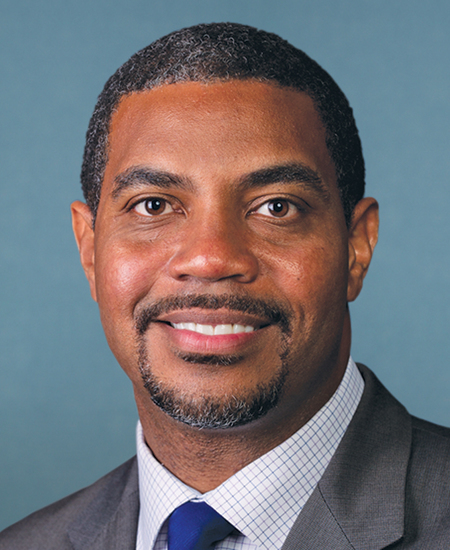
Steven Horsford
55% support rate
Top opponent
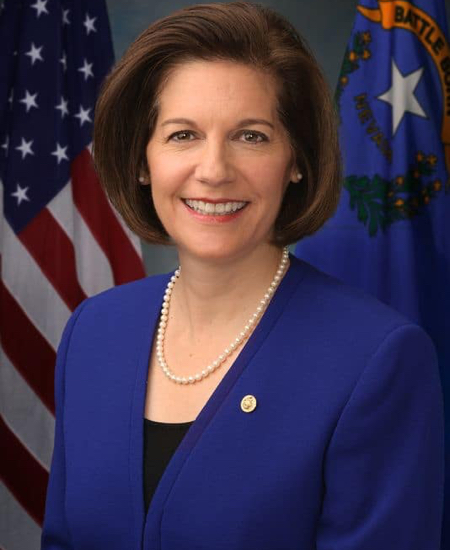
Catherine Cortez Masto
13% support rate
Ranked legislators
6
1 support · 5 oppose
Key legislators

Who's moving criminal justice in Nevada

Legislators moving criminal justice in Nevada
Legislator Party Stance Support rate Votes
Steven Horsford
Steven Horsford House · District 4
D
Mixed
55% 149
Catherine Cortez Masto
Catherine Cortez Masto Senate
D
Strong −
13% 162
Jacky Rosen
Jacky Rosen Senate
D
Strong −
16% 170
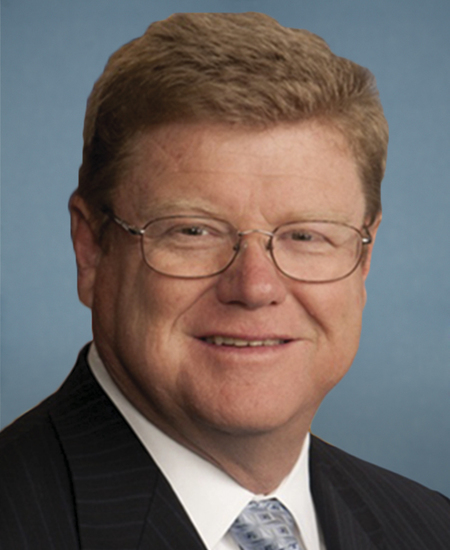
Mark E. Amodei
Mark E. Amodei House · District 2
R
Oppose
38% 151
Susie Lee
Susie Lee House · District 3
D
Oppose
40% 152
Dina Titus
Dina Titus House · District 1
D
Mixed −
46% 145
Showing 1–10 of 138 bills

All criminal justice bills

in committee · United States · Senate Aug 3, 2026

S 5214: Protect and Serve Act of 2026

The Protect and Serve Act of 2026 creates a new federal crime for willfully attempting to kill a law enforcement officer solely because of their status, provided the act involves interstate travel, commerce, weapons, or affects economic activity. This law applies to both state and federal officers and mandates that any federal prosecution must be certified by the Attorney General, who must determine if state charges were insufficient or if federal intervention serves the public interest. The bill defines a law enforcement officer as anyone authorized to prevent, detect, or investigate crimes, or to detain individuals, and sets specific prison terms ranging from years to life depending on whether the attempt results in serious bodily injury.
in committee · United States · House Jul 21, 2026

HR 9817: Justice for Incarcerated Moms Act

The Justice for Incarcerated Moms Act aims to improve maternal health outcomes for pregnant and postpartum individuals in the criminal justice system by restricting financial incentives for states that use restraints on pregnant inmates. Under the bill, states receiving federal justice grants would face a 25 percent funding penalty if they fail to implement laws limiting the use of shackles on pregnant individuals, with those withheld funds redirected to compliant states. The legislation also directs the Bureau of Prisons and the Department of Justice to create and fund programs in at least six federal facilities and across various state and local prisons that provide specialized prenatal care, mental health support, and reentry assistance. These programs are designed to address specific health disparities, particularly for racial and ethnic minority groups, by offering culturally competent care, nutrition counseling, and opportunities to maintain contact with newborn children. Additionally, the act requires an independent oversight organization to monitor program implementation and mandates a Government Accountability Office report to analyze maternal and infant health data within the correctional system.
in committee · United States · Senate Aug 3, 2026

S 5212: No Payoffs for Pardons Act

The No Payoffs for Pardons Act requires individuals who receive presidential clemency to file financial disclosure reports if they provided gifts or payments worth at least $10,000 to the President, their family members, or related political entities in exchange for that clemency. These reports must detail the nature and value of the benefits provided and will be made publicly available by the Department of Justice, with penalties including fines and imprisonment for those who willfully fail to comply or submit false information. Additionally, the bill updates federal bribery laws to explicitly include executive clemency as a bribe and extends the statute of limitations for prosecuting such bribery cases to ten years. By mandating transparency around the exchange of money for pardons, the legislation aims to prevent the misuse of the pardon power while leaving the President's actual decision-making authority on granting clemency unchanged.
in committee · United States · Senate Jul 30, 2026

S 5192: Jimmy Deal Trafficking Survivors Assistance Act of 2026

The Jimmy Deal Trafficking Survivors Assistance Act of 2026 requires the Transportation Security Administration to create a dedicated role called a Trafficking Survivor Point of Contact at airports nationwide. This position is designed to help nonprofit organizations that assist human trafficking victims navigate security screenings and travel procedures for individuals who lack proper identification documents. Under the bill, these contacts would work with service providers to verify identities in a trauma-informed manner, accompany survivors through security checkpoints, and waive specific identity verification fees. The law also mandates that the TSA publish online information about these services and ensures that designated contacts receive training on human trafficking and post-traumatic stress disorder.
Sub-Topics Human Trafficking
in committee · United States · House Jul 30, 2026

HR 10008: Turkey Human Rights Promotion Act of 2026

The Turkey Human Rights Promotion Act of 2026 establishes a formal policy to support democracy and human rights in Turkey while directly affecting U.S. security assistance and diplomatic engagement with the Turkish government. The bill conditions the release of U.S. security funds on the Turkish government certifying that it has reduced the number of political prisoners, stopped using counterterrorism laws to suppress free expression, and complied with European Court of Human Rights rulings. Additionally, the legislation mandates annual reports on human rights conditions in Turkey and authorizes the provision of funding to civil society organizations working to secure the release of detained individuals. If the Turkish government fails to take effective steps to address these violations, the bill directs the President to impose sanctions, restrict visas for responsible officials, and prohibit the export of surveillance technologies to Turkey.
Sub-Topics Courts
in committee · United States · Senate Jun 24, 2026

S 4901: Preventing Crimes Against Veterans Act of 2026

The Preventing Crimes Against Veterans Act of 2026 adds a new federal crime specifically targeting fraud related to veterans' benefits. This law makes it a punishable offense for anyone to knowingly execute a scheme designed to defraud an individual of these benefits or to help them obtain them falsely. Directly affecting fraudsters, the bill establishes that violators could face fines, imprisonment of up to five years, or both penalties. It defines "veterans' benefits" broadly to include any federal assistance provided to veterans, their dependents, or survivors. By amending the United States Code, the legislation creates a distinct legal tool to prosecute such financial deceptions.
in committee · United States · House Jun 24, 2026

HR 9440: State Firearms Dealer Licensing Enhancement Act

This bill creates a federal grant program to help states and tribal governments improve their licensing systems for firearms dealers. To qualify for funding, a state must have laws requiring dealers to hold licenses valid for no more than three years, complete an application process, and allow for inspections with penalties for noncompliance. The Attorney General will award up to $2.5 million per year on a competitive basis to eligible applicants who submit detailed plans for developing or improving their programs. Recipients must provide annual reports on inspection numbers, violations, and license status, while the Attorney General must report grant details and denial reasons to Congress.
Sub-Topics Firearms
in committee · United States · Senate Jun 11, 2026

S 4752: A bill to amend the Internal Revenue Code of 1986 to increase criminal and civil penalties for unauthorized disclosure of taxpayer information, and for other purposes.

This bill increases the penalties for unauthorized disclosure of taxpayer information to strengthen protections for individuals whose tax data is compromised. It raises maximum criminal fines for such violations from $5,000 to $250,000 and extends potential prison sentences from five to seven years. The legislation also introduces a new felony charge specifically for IRS contractors who willfully fail to maintain security safeguards, imposing fines of up to $500,000 or 25 percent of their total contract value with the IRS. Additionally, civil damages for unauthorized disclosures are increased from $1,000 to $5,000, and the bill requires the IRS to notify taxpayers promptly when they are criminally charged for leaking their tax return information.
Sub-Topics Corrections
in committee · United States · House Jun 3, 2026

HR 9136: No Taxpayer Bailouts for Insurrectionists Act of 2026

This bill restricts the federal government from paying out $50,000 or more in settlement agreements to high-ranking officials or individuals convicted of crimes related to the January 6, 2021 Capitol attack. It specifically targets the ongoing legal case between former President Trump and the IRS, requiring a detailed report to Congress before any large payment can be made. The required report must list all payments, explain the legal basis for the settlement, and include a certification from the Department of Justice Inspector General confirming the deal is lawful. Additionally, the Government Accountability Office is ordered to conduct a study within 90 days to ensure any fund expenditures comply with federal appropriations laws.
in committee · United States · Senate May 19, 2026

S 4576: Jewish American Security Act

The Jewish American Security Act aims to combat antisemitism by strengthening protections for Jewish students, securing Jewish communities, and increasing transparency regarding online hate speech. To support Jewish students, the bill requires schools receiving federal funds to designate coordinators for civil rights complaints, issue annual reminders about anti-discrimination policies, and publish detailed data on bias-related incidents. For community safety, the legislation increases funding for security grants for religious institutions and mandates joint annual threat assessments from federal agencies to track domestic and transnational antisemitic violence. Additionally, the act requires major online platforms to submit regular transparency reports detailing how they detect, remove, and moderate antisemitic content on their sites.
Sub-Topics Civil Rights
Showing 1 to 10 of 138 bills
1 2 3 14 Next