This resolution provides for the consideration of the bill (H.R. 2102) to amend title 10, United States Code, to provide for concurrent receipt of veterans' disability compensation and retired pay for disability retirees with combat-related disabilities, and for other purposes.
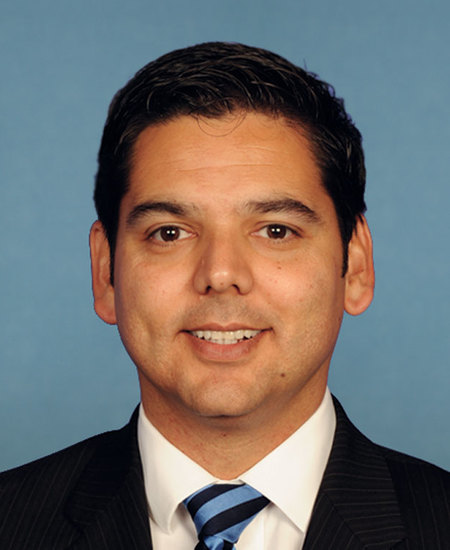
Rep. Raul Ruiz
Sponsored bills
This bill designates the facility of the United States Postal Service located at 6444 San Fernando Road in Glendale, California, as the "Paul Ignatius Post Office".
Maddy summaryHR 2175 designates the U.S. Postal Service facility at 130 South Patterson Avenue in Santa Barbara, California, as the "Brigadier General Frederick R. Lopez Post Office Building." The bill updates all official U.S. government references to this location to reflect the new name. This is a ceremonial naming bill with no policy changes or direct impact on residents or services.
Maddy summaryThis bill resolves water rights claims for the Agua Caliente Band of Cahuilla Indians by confirming their right to use up to 20,000 acre-feet of groundwater annually, held in trust by the U.S. government with priority dating to 1876-1877. It establishes a $500 million settlement trust fund to support water infrastructure projects and authorizes the Tribe to impose water fees while preempting certain local taxes on tribal lands. The bill also transfers approximately 1,500 acres of federal land into tribal trust and requires waivers of legal claims related to water rights between the Tribe and water districts.
Maddy summaryHR 625, titled the Local Access to Courts Act (LACA), is a procedural bill that makes minor technical corrections to the organization of federal district courts. It adds "College Station" to the list of locations for Texas district courts under 28 U.S.C. § 124(b)(2) and inserts "El Centro" after "San Diego" for California district courts under 28 U.S.C. § 84(d). The bill does not create new policies or affect legal rights; it solely updates the official naming of court locations. This change directly affects the administrative designation of federal court districts in Texas and California.
Maddy summaryThis bill directs the Joint Committee on the Library to acquire a statue honoring baseball player and humanitarian Roberto Clemente for permanent display in the U.S. Capitol or on its grounds. The legislation requires that artists from diverse backgrounds, including the Puerto Rican community, be considered for the commission, with public announcements made to reach these candidates. Funding for the project is authorized through transfers from the Capitol Preservation Fund, capped at a total of $500,000.
Maddy summaryThis bill designates the United States Postal Service facility at 4640 Cass Street in San Diego, California, as the Mary Wilding Memorial Post Office Building. It directly affects the specific postal location by changing its official name to honor Mary Wilding. The key provision ensures that all future legal documents, maps, and records referring to this building will use the new memorial name. This is a commemorative measure that updates official records rather than changing operational policies or funding.
Maddy summaryThe Federal Naming Standards Act prohibits the government from naming or renaming federal buildings, facilities, or programs after elected officials or political appointees while they are in office and for ten years after they leave. This restriction also applies indefinitely to individuals who earn more than $1 million annually from commercial use of their name or likeness, though it does not affect deceased individuals or names already established before the law takes effect. To enforce these rules, agency inspectors general must investigate complaints about violations and report their findings to agency heads and Congress within 90 days. The law allows for the incidental use of names in historical or educational contexts, provided the name is not used as the official title of a federal site or program.
Maddy summaryThis bill, known as the HERO Act, creates a federal grant program to help schools purchase opioid overdose reversal drugs and develop emergency response plans and educational resources for students and staff. Schools receiving federal funding would be required to report any distribution of these reversal drugs to federal tracking systems. The grants would be awarded competitively, with priority given to schools in areas with high rates of opioid overdoses, and recipients would need to submit annual reports on how they used the funds and implemented safety measures.