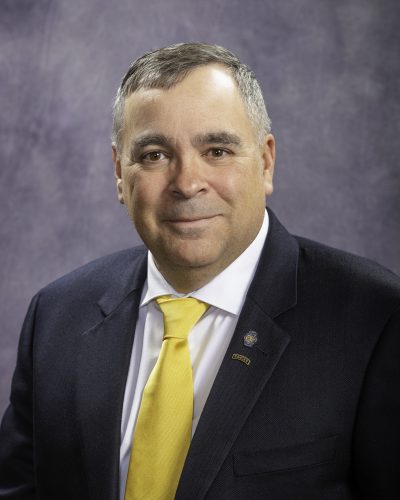
SB 537 revises Montana's marijuana tax revenue distribution, directing funds from the marijuana state special revenue account to new and existing state accounts. It requires transferring excess funds annually to specific accounts, including 12% to the HEART account for addiction treatment and mental health programs, 20% to wildlife habitat projects, and 14% to behavioral health initiatives. The bill also allocates funds for law enforcement canine training, sexual assault evidence kits, and homeless shelter support, while modifying existing transfer rules for agencies like the Department of Fish, Wildlife, and Parks. These changes apply to all state agencies receiving marijuana tax revenue under Montana law.
SB 40 would require Montana's Supreme Court to publicly disclose its deliberations by mandating recordings of closed meetings and making those records available after a case is final. It amends Montana law (sections 2-3-203, 2-3-212, and 2-6-1002, MCA) to ensure closed judicial discussions - currently private - are recorded and accessible to the public once all appeals are exhausted. The bill directly affects the Montana Supreme Court's internal proceedings and expands public access to judicial decision-making. Key provisions include requiring electronic recordings of closed meetings, redacting only confidential information as defined by law, and specifying that cases become final after all review periods expire.
SB 136 amends Montana's criminal code (Section 45-2-211, MCA) to state that a patient's consent to physician aid in dying is not a defense to a homicide charge against the physician. The bill defines "physician aid in dying" as a physician prescribing a lethal medication for the patient to self-administer, excluding standard comfort care or withholding life-sustaining treatment. This directly affects physicians who provide such aid, making their actions prosecutable as homicide if consent is claimed as a defense. The law takes effect July 1, 2025, and does not impact existing practices of comfort care or end-of-life treatment under Montana law.
SB 84 revises Montana's rules for presentence investigations, which are reports courts use to inform sentencing decisions. It requires courts to order these investigations after guilty pleas or convictions for most felonies (unless a recent report exists), sets a 30-day deadline for reports, and adds specific requirements: mental health evaluations for defendants claiming mental impairment at the time of offense, and psychosexual evaluations for certain sex offense convictions. The bill directly affects courts, probation officers, and defendants, particularly those with mental health considerations or sex offense convictions. It clarifies when investigations are mandatory, streamlines reporting timelines, and ensures key evaluations are included in sentencing considerations.
SB 312 removes time limits for victims to file lawsuits related to childhood sexual abuse in Montana. It allows victims to sue until age 27 or within 3 years of discovering the abuse, whichever comes later. The bill also creates new pathways to revive expired claims if the abuser admitted guilt (in writing, court, or plea) or if an organization knew about past abuse by its staff but failed to act. This directly affects survivors of childhood sexual abuse and entities like schools or religious groups that may have neglected to prevent abuse.
SB 164 amends Montana's endangering the welfare of children law to prohibit specific medical treatments for children under 16. The bill bans surgical procedures, puberty blockers, and hormone therapies (like estrogen or testosterone) when used to alter a child's appearance or affirm a gender identity inconsistent with their biological sex. Violating this prohibition is classified as a felony, carrying up to five years in prison and a $10,000 fine, with harsher penalties if the child suffers serious injury. The law would take effect on January 1, 2026, directly affecting medical providers, caregivers, and children under 16 who might receive these treatments.
SB 491 creates a new Sexual Assault Medical Forensic Examination Fund to cover costs for sexual assault evidence collection. It shifts responsibility from local law enforcement agencies to this state fund, requiring the fund to provide free evidence kits to medical facilities, reimburse providers up to $800 per exam, and support a secure electronic system for claims. The fund will be primarily financed by redirecting $800,000 annually from the marijuana fund (starting July 2025) to cover these expenses. The bill also amends related laws to clarify payment responsibilities and establish the fund, though it died in committee on May 23, 2025, and is not currently law.
SB 370 increases daily compensation for Montana jurors: $25-$60 per day for attending jury duty and an additional $25-$60 per day if selected for a specific case. It directly affects individuals summoned for jury service in criminal cases, providing higher pay than current rates. The bill establishes a funding mechanism where counties submit invoices to the Office of Court Administrator for reimbursement of these costs. This replaces the existing fee structure under Section 3-15-201, MCA, specifically for criminal trials or settlements requiring jury service.
SB 324 revises vehicle registration fees for high-end vehicles, adding a 1% fee based on the vehicle's manufacturer's suggested retail price (MSRP) for the first year of registration after January 1, 2026, for cars over $150,000 and motorhomes over $300,000. It directly affects owners of these high-value vehicles, replacing a flat annual add-on fee with the percentage-based assessment. Revenue from these fees will fund two specific programs: grants for bridge projects through the Department of Transportation and services for crime victims via the Board of Crime Control. The bill also updates related sections of Montana law governing registration fees and special revenue accounts.
This resolution from the Montana House of Representatives urges specific actions regarding Derek Chauvin, a former Minneapolis police officer. It calls on President Donald J. Trump to grant a full pardon for Chauvin's federal convictions and Governor Tim Walz of Minnesota to grant a full pardon for his state convictions. Additionally, the resolution urges the City of Minneapolis to demand the return of the $27 million settlement paid to George Floyd's family. Finally, it requests that Congress and the Minnesota Legislature initiate investigations into the handling of Derek Chauvin's prosecutions.