Maddy summaryThe Reverse Big Ugly Tax Breaks for Data Centers Act removes specific tax incentives for large-scale data centers and artificial intelligence facilities. It excludes these facilities from bonus depreciation, a provision that currently allows businesses to deduct the full cost of certain equipment in the year it is purchased. Additionally, the bill prevents these properties from qualifying as opportunity zone business property, which would otherwise offer significant tax benefits for investments in designated areas. The legislation targets structures with a power capacity exceeding 50 megawatts that are dedicated to data storage, processing, or AI operations.
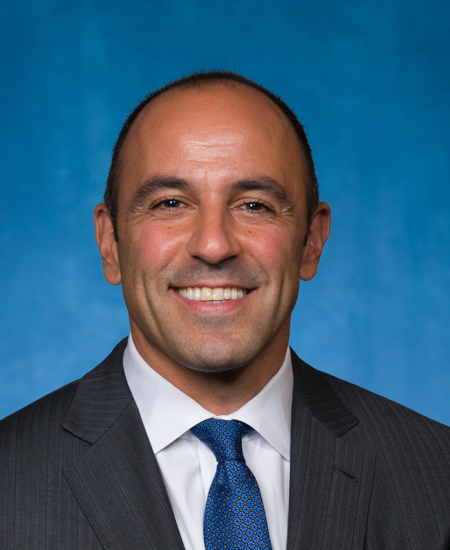
Rep. Jimmy Panetta
Sponsored bills
Maddy summaryThe Food for Thought Act of 2026 establishes a competitive grant program administered by the Department of Agriculture to provide free meals and snacks to low-income college students at eligible institutions, including community colleges, historically Black colleges and universities, and other minority-serving schools. To qualify, an institution must have at least 20 percent of its undergraduate students eligible for Federal Pell Grants, and grants are awarded for a maximum duration of two years with funds restricted to meal preparation, outreach, and limited equipment purchases. Recipients are required to prioritize students who receive Pell Grants or report food insecurity, while also evaluating institutional policies that may create barriers to enrollment and referring students to other federal benefit programs like SNAP. The bill authorizes appropriations for fiscal years 2027 through 2032 and mandates that the Secretary of Agriculture submit reports to Congress on the program's impact on student retention and completion rates.
Maddy summaryThe EFIN Verification Act of 2026 requires tax preparers to validate their Electronic Filing Identification Numbers (EFINs) before electronically submitting federal tax returns or other documents on behalf of taxpayers. The bill mandates that the Treasury Secretary establish a real-time validation system capable of processing high-volume requests from large-scale tax preparation software and financial institutions. This system will confirm whether an EFIN is active, authorized, or compromised at the moment a filing attempt is made. Additionally, the legislation permits the disclosure of specific information to approved third-party validators to facilitate this verification process, with these requirements taking effect for taxable years beginning two years after enactment.
Maddy summaryThis concurrent resolution directs the President to withdraw U.S. military forces from hostilities with Iran. It invokes Section 5(c) of the War Powers Resolution, which allows Congress to end ongoing military engagements. The bill permits keeping troops only if they are needed to defend the U.S. or its allies from an immediate attack, provided the President follows specific reporting rules. All other forces must be removed unless Congress has passed a formal declaration of war or a specific authorization for using military force against Iran.
Maddy summaryHR 6152, the Foreign Robocall Elimination Act, establishes an interagency task force to address foreign robocalls entering the United States. The task force, composed of the FCC, FTC, DOJ, and private sector representatives, will study the origins, impacts, and potential solutions to foreign robocalls and must submit a report to Congress within 360 days. The bill also modifies existing law to require FCC notices about robocall mitigation every three years instead of annually, and introduces a bond requirement for providers using the Robocall Mitigation Database. This legislation affects telecommunications providers, federal agencies, and all U.S. telephone users who receive unwanted calls. The bill aims to improve coordination between U.S. agencies and foreign countries in combating illegal robocalls through concrete policy changes.
Maddy summaryThis bill would require Medicare to cover early detection screening tests for Alzheimer's disease and related dementias starting January 1, 2028. It defines eligible tests as FDA-cleared genomic blood tests, blood product analyses, or equivalent medical imaging methods (like protein expression or whole genome sequencing) that detect pre-symptomatic or early-stage conditions. Medicare beneficiaries would receive this coverage without cost-sharing for these specific screenings. The bill amends Medicare coverage rules to explicitly include these tests under Section 1861(nnn) of the Social Security Act.
Save Our Sequoias Act This bill provides for the conservation of giant sequoia trees ( Sequoiadendron giganteum ) in California. Specifically, it provides statutory authority for the Giant Sequoia Lands Coalition and outlines the coalition's duties. The coalition must submit a Giant Sequoia Health and Resiliency Assessment and annually update it. The information from the assessment must be made available so the information can be integrated into certain other plans. The coalition must also create and maintain a website that contains the assessment, educational materials, searchable information about individual giant sequoia groves, and a searchable database to track the status and costs of reforestation and rehabilitation activities. In addition, the bill declares an emergency on certain public lands and allows officials to carry out protection plans during the emergency to respond to the threat of wildfires, insects, and drought. The emergency expires after seven years. The Department of the Interior must develop and implement a Giant Sequoia Reforestation and Rehabilitation Strategy. Finally, the bill establishes a variety of programs and funds to support the conservation of giant sequoias.
Maddy summaryThe BELO'S Act (HR 1682) amends the Federal Lands Recreation Enhancement Act to provide free lifetime access to federal recreation sites (like national parks and forests) for survivors of military personnel. Specifically, it extends this benefit to individuals already receiving death gratuities under 10 U.S.C. §1475 or dependency and indemnity compensation under 38 U.S.C. Chapter 13. These survivors typically include spouses, children, or other dependents of service members who died while on active duty. The bill directly affects military families who have lost a loved one in service, adding them as a new eligibility category for recreation passes without altering existing benefits for veterans or other groups.
Maddy summaryHR 1266, the Combating Illicit Xylazine Act, adds xylazine - a veterinary sedative increasingly found in illicit drug mixtures - to Schedule III of the Controlled Substances Act, regulating its use and trafficking. It directly affects veterinarians, animal owners, and manufacturers by allowing xylazine to be legally dispensed for animal use under specific veterinary prescriptions, while prohibiting non-veterinary human use. The bill includes transition periods (60 days for practitioners, 1 year for labeling) to ease compliance for manufacturers and practitioners, and requires the DEA and FDA to expedite necessary applications. It also mandates two congressional reports on xylazine's illicit use and trafficking patterns, and directs the Sentencing Commission to review penalties for offenses involving xylazine.
Maddy summaryThis bill requires all new passenger vehicles manufactured for sale in the U.S. to include AM radio as standard equipment (not an optional add-on) by 2027-2028, depending on manufacturer size. It mandates that AM radio receivers must be easily accessible to drivers and allows compliance through digital AM broadcast technology. During a transition period, manufacturers must clearly label vehicles without AM radio but cannot charge extra for this feature. The bill also mandates a GAO study on AM radio's role in emergency alerts and includes a 10-year sunset provision for the rule. It preempts state laws regarding AM radio access in vehicles.