

Maddy summaryThe Hazardous Materials Transparency Act requires the Secretary of Defense to establish guidelines for private industrial facilities that manufacture, store, or process hazardous materials under Department of Defense contracts. These guidelines mandate that such facilities maintain regular coordination with local emergency responders, designate community liaisons, and provide public access to information regarding emergency procedures and protective actions. Additionally, the bill requires facilities to conduct periodic outreach to local stakeholders and establish channels for residents to submit questions about facility operations. The Secretary of Defense must also submit annual reports to Congress for five years detailing the implementation of these guidelines, significant incidents, and corrective actions taken.
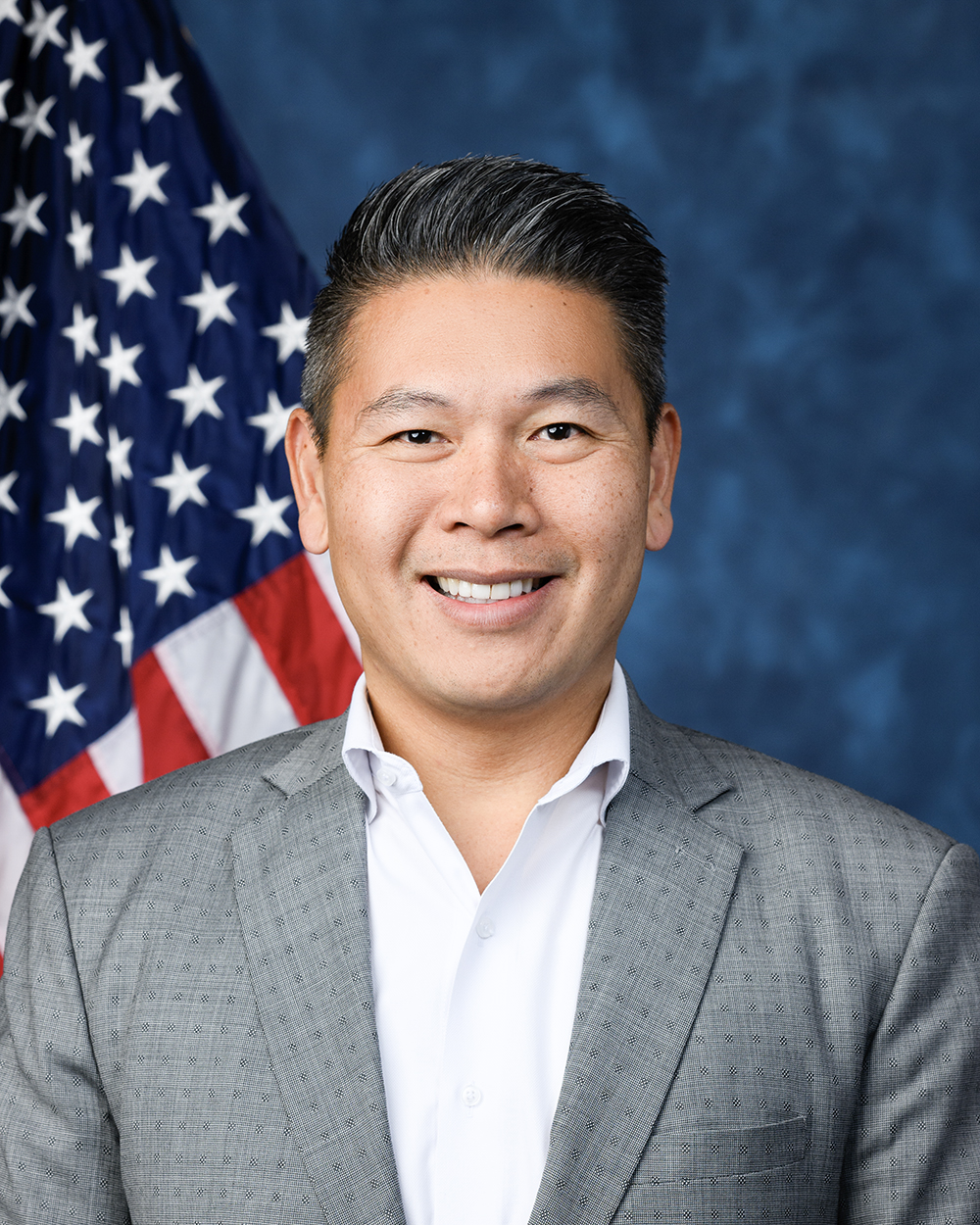
Rep. Derek Tran
Sponsored bills
Maddy summaryThis bill establishes federal protections and funding to expand access to in vitro fertilization and intrauterine insemination for individuals, military service members, and veterans. It requires most private health plans, Medicaid programs, and Medicare to cover these fertility treatments without imposing higher cost-sharing than other medical services. Additionally, the legislation mandates that the Department of Defense and the Department of Veterans Affairs provide specific fertility preservation and treatment benefits to uniformed service members and eligible veterans. The bill also includes preemption clauses that override state laws restricting these procedures and prohibits discrimination based on marital status, sex, or sexual orientation in the provision of care.
Maddy summaryThis bill designates the United States Postal Service facility at 4640 Cass Street in San Diego, California, as the Mary Wilding Memorial Post Office Building. It directly affects the specific postal location by changing its official name to honor Mary Wilding. The key provision ensures that all future legal documents, maps, and records referring to this building will use the new memorial name. This is a commemorative measure that updates official records rather than changing operational policies or funding.
Maddy summaryThis bill establishes financial liability for private detention centers and their employees if they cause the wrongful death of a person held there. It allows families of deceased individuals to sue in federal court for at least $5 million in statutory damages plus economic and punitive damages. The law removes the ability of detention staff to use immunity defenses to avoid responsibility and holds the facility itself responsible for the actions of its workers. These rules apply specifically to private companies contracted by the federal government to detain people accused of breaking civil, criminal, or immigration laws.
Maddy summaryThe AADAPT Act reauthorizes and expands Project ECHO grants to improve Alzheimer’s and dementia care through technology-enabled training. It specifically funds grants for healthcare providers in rural, frontier, or medically underserved areas to enhance early diagnosis, quality care, and provider retention for dementia patients. The bill authorizes $1 million annually (2027-2032) for these dementia-focused training programs, requiring funds to supplement - not replace - existing resources. This directly supports primary care providers licensed to serve underserved communities, using collaborative online learning to address care gaps.
Maddy summaryHR 4288 would rename the Department of Veterans Affairs community-based outpatient clinic in San Jose, California, as the "Corporal Patrick D. Tillman VA Clinic." The bill directly affects this specific VA facility, updating all official references to it. The key provision requires the clinic to be designated by this new name in all federal records, documents, and maps following the bill's enactment. This is a procedural naming bill honoring Corporal Tillman, a former NFL player and Army Ranger killed in action in Afghanistan in 2004.
Maddy summaryHR 5880, the "Fight Illicit Pill Presses Act," requires manufacturers and distributors of pill-making machines (like tableting machines) and their critical parts (such as punches and dies) to affix permanent serial numbers to these items. It mandates that these businesses report transactions involving such machines to the Attorney General and maintain records of the serial numbers. The law prohibits tampering with or knowingly distributing machines with removed or altered serial numbers. This directly affects manufacturers, distributors, and sellers of these specific pill-production machines and parts, aiming to improve tracking of equipment used in illicit drug manufacturing.
Maddy summaryThe GRACE for Military Survivors Act extends the deadline for contributing military death benefits to Roth IRAs and Coverdell education savings accounts from one year to three years. This change directly benefits families of service members who receive these death benefits, giving them more time to save for retirement or education. The law applies to benefits received after the bill is enacted and includes a special rule allowing contributions made within a specific window for benefits received between 2001 and the enactment date. By amending the Internal Revenue Code, the bill ensures that eligible funds can be deposited into these tax-advantaged accounts without losing their value due to time limits.
Maddy summaryThis bill authorizes Congress to award a Congressional Gold Medal to individuals who fought for or with the United States in the Pacific theater during World War II and subsequently became prisoners of war. The legislation specifically recognizes the service and sacrifice of those who defended locations such as Bataan and Corregidor, including Filipino soldiers and civilians who served alongside U.S. forces. To implement this award, the Speaker of the House and the President pro tempore of the Senate will arrange for the creation of a gold medal by the Secretary of the Treasury, which will be presented to the Smithsonian Institution for display. The act also allows for the production of duplicate bronze medals to cover the costs of the original gold medals, with any proceeds from these sales deposited into the United States Mint Public Enterprise Fund.
Maddy summaryThe LIFT AI Act (HR 5584) provides federal funding through competitive grants to develop AI literacy programs for K-12 education. It directly affects elementary and secondary schools, teachers, and students by supporting the creation of AI-focused curricula, teacher training on responsible AI use, and hands-on learning tools. Key provisions include funding for project-based learning materials, professional development for educators, and evaluation methods to assess student AI proficiency. The bill aims to integrate practical AI skills into classrooms while ensuring content adapts to evolving technology. It does not fund direct student programs but enables schools to build foundational AI education through grant-supported resources.