Maddy summaryThis bill requires the United States Postal Service to assign a single, unique ZIP Code to each of 80 specific communities across various states within one year of enactment. The legislation directly affects residents and businesses in these listed areas by ensuring they have their own distinct postal identifier rather than sharing codes with neighboring regions. The primary mechanism is a mandatory directive for the USPS to update its coding system to reflect these individual community boundaries.
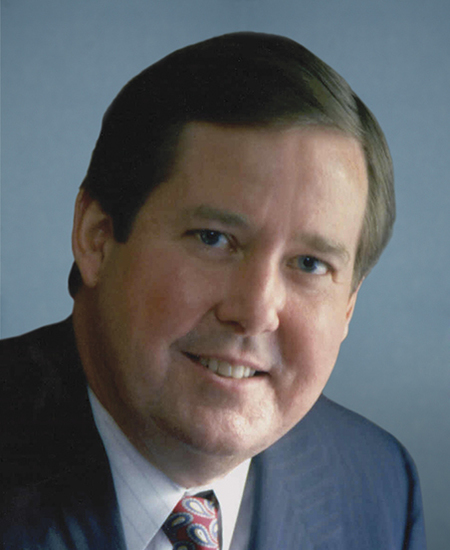
Rep. Ken Calvert
Sponsored bills
Maddy summaryH.Res. 1497 is a House resolution that commemorates the fifth anniversary of the Abbey Gate bombing, in which 13 U.S. servicemembers were killed during the withdrawal from Afghanistan. The bill lists the names of the fallen soldiers and formally condemns the Biden-Harris administration for what it describes as dereliction of duty and the forfeiture of military property to the Taliban. It asserts that the withdrawal was a disastrous failure that ignored security warnings and left Americans at risk, while also criticizing the lack of accountability from officials involved in the decision-making process.
Maddy summaryThe Fair Treatment of Religious Organizations Act of 2026 changes how the IRS determines if a group qualifies for tax-exempt status based on its religious beliefs. Specifically, it ensures that beliefs regarding marriage, sexuality, or gender identity are not automatically considered illegal or against public policy when evaluating a religious organization's purpose. Additionally, the bill clarifies that a belief does not need to be central to a religion to be recognized as a valid religious belief for tax purposes. These rules will apply to tax years starting after December 31, 2025, affecting how various faith-based groups are assessed under the Internal Revenue Code.
This bill designates the facility of the United States Postal Service located at 15642 Sand Canyon Avenue in Irvine, California, as the "Mary Kageyama Nomura Post Office Building".
Maddy summaryThis House resolution formally honors the life and legacy of the late Representative Kay Granger from Texas, recognizing her historic achievements in public service. The bill highlights her roles as the first woman elected mayor of Fort Worth, the first Republican woman to represent Texas in the U.S. House, and the first Republican woman to chair the House Committee on Appropriations. It also acknowledges her contributions to national defense, including her work on the F-35 fighter jet program and the naming of a Navy ship for Fort Worth. The resolution expresses sympathy to Granger's family and directs the Clerk of the House to send an official copy of the document to her loved ones.
Maddy summaryThis joint resolution seeks to overturn an Environmental Protection Agency rule that granted California permission to enforce its own stricter pollution standards for small off-road engines. If enacted, the measure would revoke this waiver, effectively preventing California from implementing regulations that exceed federal requirements for equipment such as lawn mowers and generators. The bill operates under congressional review authority to nullify the agency's decision, ensuring that national uniformity is maintained for these specific engine emissions standards.
Maddy summaryThe Lindsey O. Graham Sanctioning Russia and Iran Act of 2026 imposes comprehensive economic restrictions on the Russian Federation, including blocking assets of government officials, state-owned financial institutions, and entities supporting the defense sector. The bill prohibits new U.S. investments in Russia, bans the purchase of Russian sovereign debt, and restricts the importation of uranium and energy products from the country. Additionally, it authorizes the imposition of tariffs up to 500 percent on goods imported directly from Russia and up to 100 percent on goods from foreign nations that continue to purchase significant volumes of Russian crude oil or natural gas. The legislation also extends the Iran Sanctions Act through 2031 and includes a five-year sunset provision for the new measures, subject to specific humanitarian and safety exceptions.
Maddy summaryThe RESCUE Act of 2026 updates how the federal government reimburses ground and air ambulance services by changing the payment schedule and data collection rules. Starting in 2028, the Secretary of Health and Human Services will adjust payment rates every three years based on new data regarding costs, labor, and uncompensated care, while years in between will see payments increase only by the standard inflation rate. The bill also requires air ambulance providers to submit cost information to the government at least once every three years, aligning this process with existing rules for ground ambulance services. Additionally, the law mandates a review by 2029 to gather expert recommendations on whether further changes are needed to ensure ambulance providers are paid appropriately. These changes directly affect ambulance companies and the federal programs that fund emergency medical transport.
Maddy summaryThis resolution formally recognizes the 100th anniversary of the Golf Course Superintendents Association of America, honoring its century-long contribution to the golf industry. The bill does not change any laws or allocate funds; instead, it serves as a symbolic commendation for the organization's work in advancing greenkeeping standards, promoting environmental stewardship, and supporting education and workforce development. By acknowledging the association's role in managing golf courses and its impact on the economy and communities, the measure highlights the professional achievements of its members without imposing new regulatory requirements.
Maddy summaryThis bill, known as the No Leniency for Fentanyl Dealers Act, aims to increase penalties for trafficking fentanyl and other synthetic opioids while enhancing detection efforts by the U.S. Postal Service. It lowers the quantity thresholds required for federal felony charges and mandates that sentencing guidelines be updated to reflect these stricter penalties. Additionally, the legislation directs the Postmaster General to purchase more chemical screening devices and hire scientists to identify illegal drugs in mail shipments, authorizing $9 million in funding to support these interdiction activities.