Maddy summaryS 1399, the Health Tech Investment Act, creates a new Medicare payment category for algorithm-based healthcare services (like AI tools used in diagnosis or treatment) starting January 1, 2026. It requires Medicare to pay based on manufacturer costs (including software, staff, and overhead) and protects these services in the special payment category for at least five years, preventing reassignment without sufficient claims data. This directly affects Medicare beneficiaries receiving these AI-driven services and healthcare technology companies developing them. The bill also codifies existing Medicare payment rules for software-as-a-service starting January 1, 2023.
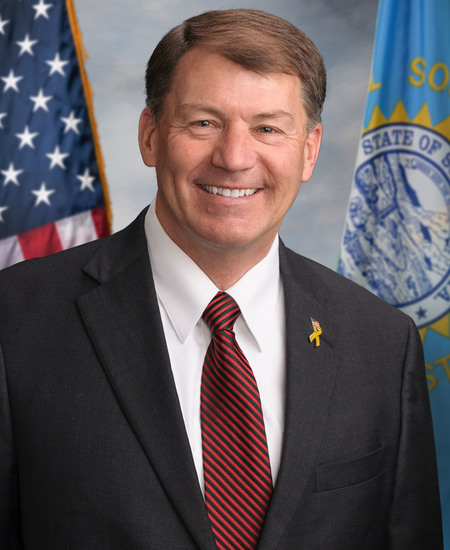
Sen. Mike Rounds
Sponsored bills
Maddy summaryThe Returning Education to Our States Act would terminate the U.S. Department of Education and transfer its functions to other federal departments, including moving elementary and secondary education block grants to the Department of Health and Human Services, student financial assistance to the Department of Treasury, and career and technical education programs to the Department of Labor. The bill would repeal most of the General Education Provisions Act but preserve FERPA (Family Educational Rights and Privacy Act) protections for student records. Specific programs like Native American education would transfer to the Department of Interior, while special education programs would move to the Department of Health and Human Services. The transfer would occur one year after enactment, fundamentally reorganizing federal education administration by shifting oversight from the Department of Education to other executive branch departments.
Maddy summaryThis bill, S 1326 (Food Security and Farm Protection Act), prohibits state and local governments from imposing additional production standards on agricultural products sold across state lines. It directly affects farmers, food producers, and businesses involved in interstate agricultural trade by preventing states from creating new rules for farming that occurs in another state, unless federal or the producing state's rules already cover it. Key mechanisms include banning such extra state rules and creating a federal court process for affected parties (like producers or distributors) to challenge those rules and seek damages. The law also requires courts to issue temporary injunctions against enforcement of challenged regulations while cases are resolved, unless the state proves it will likely win and would suffer severe harm without the rule.
Maddy summaryThe BRAIN Act creates new research initiatives to improve brain tumor treatment and care. It establishes a searchable database of NIH-funded brain tumor biospecimens, funds a Glioblastoma Therapeutics Network with $50 million annually, and supports cellular immunotherapy research with $10 million annually. The bill also mandates a national awareness campaign about clinical trials and biomarker testing, and funds pilot programs to improve care coordination for brain tumor survivors. These provisions directly affect over 1 million Americans living with brain tumors and aim to improve research coordination, treatment options, and quality of life through concrete funding and policy changes.
Maddy summaryThe Cybersecurity Information Sharing Extension Act (S 1337) extends the expiration date of a key provision in the Cybersecurity Act of 2015 from 2025 to 2035. This provision enables private companies and government agencies to share cybersecurity threat information without legal liability. The extension ensures the current information-sharing framework remains active until 2035, providing ongoing legal certainty for participants. It directly affects organizations that rely on this program to enhance their cyber defense capabilities.
Maddy summaryThis resolution (SRES 159) is a ceremonial Senate measure honoring the late Senator John Bennett Johnston, Jr. (1932-2024), who represented Louisiana in the U.S. Senate from 1972 to 1997. It commemorates his career, including his work on energy policy, flood control, and Louisiana conservation efforts, and requests the Senate adjourn in his memory while sending condolences to his family. As a non-binding resolution, it has no policy impact or direct effect on any individuals or laws.
Maddy summaryS 1312 establishes a new Office of the Special Investigator within the USDA to investigate competition violations in the meat and poultry industry. The Special Investigator, appointed by the Secretary, will investigate packers and live poultry dealers for violations of the Packers and Stockyards Act (7 U.S.C. 181 et seq.) using tools like subpoenas and can bring civil or administrative actions against these regulated entities. The office must coordinate with the Department of Justice, Federal Trade Commission, and Homeland Security on competition and security matters within the food sector. This bill directly affects meat and poultry processors and dealers regulated under the Packers and Stockyards Act, creating a dedicated USDA office with specific investigative and prosecutorial authority for competition issues.
Maddy summarySRES 156 is a Senate resolution commemorating the 50th anniversary of the Indian Self-Determination and Education Assistance Act (ISDEAA), signed into law on January 4, 1975. It recognizes how ISDEAA has enabled federally recognized tribes to administer federal programs - including healthcare, education, and public safety - for their communities, with 92% of tribes using its authorities as of 2024. The resolution is purely ceremonial and does not create new policy or alter existing law, instead affirming congressional support for tribal self-governance.
Maddy summaryThe Rural Development Hospital Technical Assistance Program Act of 2025 establishes a new program within the Department of Agriculture to provide tailored technical assistance to eligible rural hospitals and clinics. It directly affects facilities like critical access hospitals, rural health clinics, and other designated rural health care providers in underserved areas, particularly those facing financial challenges or located in health professional shortage zones. The program helps these facilities identify development needs (such as facility upgrades, telehealth expansion, or health IT systems), improve financial management, and access USDA loan and grant programs. Authorized funding is $2 million annually for fiscal years 2025-2029, with mandatory annual reports to Congress on program outcomes and effectiveness.
Maddy summaryS 1289 authorizes the U.S. Mint to produce and sell commemorative $5 gold and $1 silver coins to mark the 25th anniversary of the September 11, 2001, terrorist attacks. The bill specifies coin specifications (e.g., 90% gold/silver content, design requirements including "Never Forget"), sets a one-year issuance window (January 1, 2027-2028), and requires surcharges of $35 per gold coin and $10 per silver coin. These surcharges will be paid directly to the National September 11 Memorial and Museum to support its operations and maintenance, with coins sold at a price covering face value, surcharge, and production costs. The legislation does not impose new regulations or affect public policy but focuses on commemoration and funding for the museum.