

This joint resolution proposes a constitutional amendment prohibiting total outlays for a fiscal year from exceeding total receipts for that fiscal year unless (1) Congress authorizes the excess by a three-fifths vote of each chamber, and (2) total outlays do not exceed a specified percentage of the estimated gross domestic product of the United States. The prohibition excludes outlays for repayment of debt principal and receipts derived from borrowing. The amendment requires a three-fifths vote of each chamber of Congress to increase revenue or increase the limit on the debt of the United States. The amendment also requires the President to submit an annual budget in which total outlays do not exceed total receipts. The President's budget must also include justifications and specified details regarding funding proposed for departments and agencies. Congress may waive the requirements due to a declaration of war, a military conflict, an event that causes an imminent and serious military threat to national security, or a natural disaster.
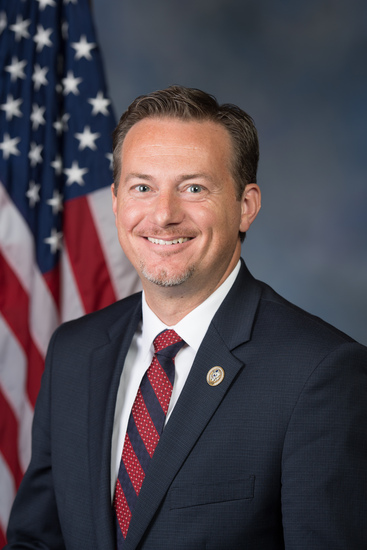
Rep. Michael Cloud
Sponsored bills
Maddy summaryHJRES 17 is a congressional resolution disapproving the District of Columbia Council's approval of the Local Resident Voting Rights Amendment Act of 2022 (D.C. Act 24-640), which the Council enacted on October 18, 2022. If passed by Congress and signed into law, this resolution would block the local voting rights amendment from taking effect. The bill directly affects the District of Columbia government by preventing implementation of the amendment, which aimed to address voting rights for residents. This resolution follows the District of Columbia Home Rule Act's requirement for congressional disapproval of certain local laws.
Small Business Emergency Savings Accounts Act of 2023 This bill allows a new tax deduction from gross income for amounts paid into a small business emergency savings account. Such savings accounts are established exclusively to pay the qualified disaster and public health emergency expenses of the account beneficiary. The bill defines qualified disaster and public health emergency expenses as disaster loss replacement expenses, disaster recovery operations expenses, and public health emergency expenses.
Emergency Savings Accounts Act of 2023 This bill allows an individual taxpayer occupying a residence a deduction from gross income for up to $5,000 of amounts paid into such taxpayer's emergency savings account. The bill defines emergency savings account as an account established exclusively to pay the qualified disaster and public health emergency expenses of the account beneficiary. The bill defines qualified disaster and public health emergency expenses as disaster mitigation expenses, disaster recovery expenses, public health emergency expenses, and unemployment-related expenses.
Protect Our Military Families' 2nd Amendment Rights Act This bill broadens the scope of allowable firearms transactions involving active duty service members and their spouses. Specifically, the bill allows a licensed gun dealer, importer, or manufacturer to sell or ship a firearm or ammunition to the spouse of a member of the Armed Forces on active duty outside the United States. Current law already allows a licensed dealer, importer, or manufacturer to sell or ship a firearm or ammunition to a member of the Armed Forces on active duty outside the United States. The bill also specifies that, for purposes of federal firearms laws, a member of the Armed Forces on active duty, or his or her spouse, is a resident of the state in which (1) the member or spouse maintains legal residence, (2) the permanent duty station of the member is located, and (3) the member maintains a home from which he or she commutes to the permanent duty station.
Maddy summaryHR 345, the TRUST in Congress Act, requires Members of Congress, their spouses, and dependent children to place certain investments into a "blind trust" within 90 days of taking office or after the bill's enactment. It directly affects current and future lawmakers and their immediate family members by mandating that covered investments - such as stocks, commodities, or derivatives (excluding Treasury bonds and some mutual funds) - be placed in a trust they cannot manage. Members must certify the trust setup to House or Senate officials within 15 days, and trusts cannot be dissolved until 180 days after leaving office. The law excludes investments providing primary income (e.g., from a spouse's job) but requires transparency through public website disclosures of certifications.
Maddy summaryThis bill prohibits senior federal employees (those in Senior Executive Service roles), their spouses, and dependent children from holding most stocks, bonds, or derivatives during their federal service. It exempts diversified mutual funds, Treasury securities, and investments held in qualified blind trusts. Employees must annually certify compliance with these rules to their ethics office, and violations can result in fines (up to 10% of the investment's value) or requiring profit disgorgement. The law applies 12 months after enactment, with a 180-day divestiture period for existing holdings.
Maddy summaryHR 311, the Cost Estimates Improvement Act, requires the Congressional Budget Office (CBO) and Joint Committee on Taxation (JCT) to include debt servicing costs in their budget estimates where practicable and to list duplicative federal programs covered by legislation. The bill mandates that all CBO and JCT cost estimates must identify overlapping or redundant agency programs, initiatives, or activities within the proposed legislation. This change aims to improve transparency in federal budget analysis by providing clearer data on long-term debt impacts and program efficiency for lawmakers. The bill directly affects the CBO and JCT as they prepare budget estimates for Congress.
Maddy summaryHR 297 requires the military Secretary to reinstate service members who were involuntarily separated solely for refusing a COVID-19 vaccine. It applies specifically to those separated only due to vaccine refusal, not other reasons. If a covered member chooses reinstatement, they must be returned to their previous rank and branch of service. The bill mandates this action without requiring the member to receive the vaccine.
Maddy summaryThe Less is More Resolution (HRES 18) amends House rules to require that any bill funding a new federal program must include reductions in funding for at least two existing programs (each reduction equal to or greater than the new program's funding). It mandates that the introducing member submit a written certification confirming this offset, which must be made public. This procedural rule applies to all House members and aims to enforce budgetary offsets for new spending proposals without creating new fiscal obligations.