

Maddy summaryHR 82, the Social Security Fairness Act of 2023, repeals two provisions that reduce Social Security benefits for certain government workers. It eliminates the Government Pension Offset (GPO), which cuts spousal or survivor benefits for people with pensions from jobs not covered by Social Security (like federal or state government roles), and the Windfall Elimination Provision (WEP), which lowers retirement benefits for those with similar pensions. The law takes effect for benefits paid after December 2023, requiring the Social Security Administration to adjust benefit calculations to remove these reductions. This change directly affects public-sector employees who previously had their Social Security benefits reduced due to their government pensions.
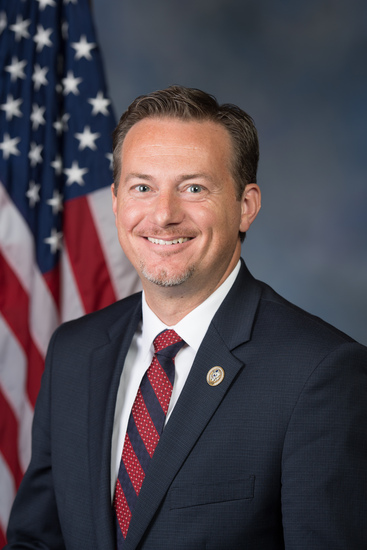
Rep. Michael Cloud
Sponsored bills
Maddy summaryThis bill renames a U.S. Postal Service facility in Corpus Christi, Texas (located at 802 North Tancahua Street) as the "Captain Robert E. 'Bob' Batterson Post Office." It affects only the official naming of this specific post office and all related federal references. The bill requires that any future federal document, map, or record referencing the location must use the new name. It does not create new policies, allocate funding, or impact postal services. This is a purely commemorative measure with no substantive policy changes.
Maddy summaryHJRES 11 proposes a constitutional amendment requiring the federal government to maintain a balanced budget by ensuring annual spending does not exceed revenue, with specific spending limits tied to gross domestic product (GDP). It mandates that every federal agency and department must justify each line item in its budget request, including how funding supports its mission and its impact on GDP, and provide a reduced funding alternative for critical functions. The amendment includes exceptions for declared wars, military conflicts, or major natural disasters, requiring a two-thirds congressional vote for waivers. This would directly affect all federal agencies by imposing new budget justification requirements and spending caps, though it remains a proposed amendment awaiting state ratification.
Freedom from Mandates Act This bill nullifies certain executive orders regarding COVID-19 safety and prohibits the Departments of Labor and Health and Human Services (HHS) from taking specified actions with respect to vaccination against COVID-19. Specifically, the bill nullifies Executive Order 14042 (relating to ensuring adequate COVID-19 safety protocols for federal contractors) and Executive Order 14043 (requiring COVID-19 vaccination for federal employees). Labor may not issue any rule requiring employers to mandate vaccination of employees against COVID-19 or requiring testing of employees who are unvaccinated. HHS may not (1) require a health care provider, as a condition of participation in the Medicare or Medicaid program, to mandate vaccination of employees against COVID-19 or require testing of employees who are unvaccinated; or (2) otherwise penalize such a provider for failure to mandate such vaccination or require such testing.
Maddy summaryThis bill blocks the Federal Housing Finance Agency (FHFA) and mortgage enterprises (like Fannie Mae and Freddie Mac) from implementing specific mortgage fee changes announced in January 2023. It specifically revokes the FHFA's updated single-family mortgage pricing framework and related guidance documents. The bill does not affect the existing practice of risk-based pricing for mortgage credit fees, which remains permitted. It directly impacts mortgage lenders and borrowers by halting the 2023 fee changes without altering current risk-based fee structures.
Maddy summaryHR 24, the Federal Reserve Transparency Act of 2025, mandates a comprehensive audit of the Federal Reserve Board and Federal Reserve banks by the Government Accountability Office (GAO) within 12 months of enactment. The bill requires the GAO to submit a detailed report to Congress within 90 days of completing the audit, including findings, conclusions, and recommendations for legislative or administrative action. This audit replaces current limitations on reviewing Federal Reserve operations, particularly regarding entities like special purpose vehicles not previously subject to standard audits. The bill directly affects the Federal Reserve System by increasing congressional oversight of its financial activities and reporting mechanisms.
Stopping Border Surges Act This bill modifies immigration law provisions relating to unaccompanied alien minors and to asylum seekers. The bill requires the Department of Homeland Security (DHS) to repatriate certain unaccompanied, inadmissible alien children, generally those not at risk of being trafficking victims nor having a fear of persecution. Currently, only inadmissible unaccompanied aliens from neighboring countries are subject to repatriation, and DHS has discretion whether to repatriate. When the Department of Health and Human Services releases an unaccompanied child to an individual, it shall provide DHS with certain information about that individual, including Social Security number and immigration status. The bill requires a stricter standard to find a credible fear of persecution and imposes additional rules on credible fear interviews. If an alien is granted asylum because of fear of persecution in a country, the alien shall be deemed to have renounced asylum status by returning to that country, if there has been no change in the country's conditions. The bill also (1) expands the definition of what constitutes a frivolous asylum application, (2) imposes additional limitations on eligibility for asylum, (3) shortens the deadline for applying for asylum, and (4) extends the time period an alien seeking asylum must wait before receiving employment authorization. Any individual who knowingly and willfully makes materially false statements or uses fraudulent documents in asylum-related proceedings shall be fined or imprisoned up to 10 years, or both.
Maddy summaryHR 162, the First Amendment Accountability Act, creates a legal right for individuals to sue federal employees who violate their First Amendment rights (such as free speech or assembly) while acting under government authority. It directly affects citizens whose rights are infringed and federal employees (excluding the President/Vice President) who may face lawsuits. The bill allows victims to seek redress through court action, with courts having discretion to award attorney fees to the winning party. It explicitly excludes lawsuits against the federal government or employer for conduct within the scope of employment.
Maddy summaryHR 191, titled "Inflation Reduction Act of 2025," is a procedural bill that repeals the Inflation Reduction Act of 2022 (Public Law 117-169) and rescinds its unobligated funds. It directly affects the implementation of the 2022 law by nullifying its provisions and redirecting any remaining unspent budget authority. The bill contains no new policy mechanisms or direct impacts on citizens or programs; its sole action is to undo the previous legislation. This is a straightforward repeal measure with no new funding or regulatory changes. The title is misleading, as the bill does not create a new inflation reduction policy but instead reverses the prior law.
Maddy summaryHR 45 (FIND Act) requires federal government contractors to certify they do not discriminate against firearm businesses (including manufacturers, dealers, and trade associations) in their policies or practices. The bill mandates that contractors and subcontractors (for contracts over 10% of the prime contract value) certify they have no discriminatory policies and will not adopt them during the contract term. Violations could lead to contract termination and potential debarment. This applies to all federal procurement contracts awarded after the bill's enactment, excluding sole-source contracts. The law aims to ensure firearm businesses are treated equally in government contracting without restricting legitimate business criteria like creditworthiness or legal compliance.