

Maddy summaryHR 7599 creates a federal framework for extreme risk protection orders (ERPOs), allowing family members or law enforcement to petition courts to temporarily prohibit individuals from possessing firearms when they pose a risk of harm to themselves or others. The bill establishes a process for issuing ex parte orders (up to 14 days) followed by a hearing within 72 hours to determine if a longer-term order (up to 180 days) should be issued, requiring respondents to surrender firearms to U.S. Marshals or designated law enforcement. Courts must consider specific factors like recent threats, violence, substance abuse, or cruelty to animals before issuing orders, with no fees for petitioners. The law requires law enforcement training to address bias, includes annual reporting requirements, and ensures firearms are returned once the order expires and the individual is eligible to own firearms under federal law.
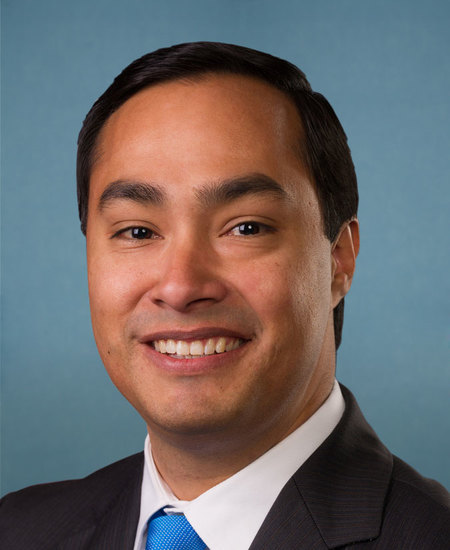
Rep. Joaquin Castro
Sponsored bills
Maddy summaryHR 7543, the Plastic Pellet Free Waters Act, prohibits plastic pellets and pre-production plastic materials from being discharged into waterways through wastewater, spills, or runoff from specific facilities. It directly affects plastic manufacturing, molding, packaging, and transportation facilities regulated under existing environmental rules. Within 60 days of enactment, the EPA must issue a rule banning these discharges and update all relevant wastewater, stormwater, and performance standards in permits. The law requires all permits and standards for these facilities to reflect the new ban, ensuring plastic pellets cannot enter water systems. This is a concrete regulatory change to prevent plastic pollution at its source.
Maddy summaryH.J. Res. 72 is a proposed joint resolution that would terminate a national emergency declared by the President on February 1, 2025, under Executive Order 14193. The resolution invokes Section 202 of the National Emergencies Act (50 U.S.C. 1622) to formally end the emergency status, which would remove the special authorities and powers granted to the President during that emergency. This action directly affects the executive branch’s ability to use emergency powers related to the declared emergency, ending the legal basis for those specific emergency measures.
Maddy summaryThis bill requires most employers to provide workers with earned paid sick leave. Employees would earn 1 hour of paid sick time for every 30 hours worked, up to 56 hours per year, which can be used for their own illness, medical care, caring for family members (including children, parents, spouses, domestic partners, or other family-like relationships), or addressing domestic violence, sexual assault, or stalking situations. The bill prohibits employers from retaliating against workers who use this leave and requires employers to inform employees about their rights. It ensures that workers who leave and return to the same employer within a year can reinstate their unused sick leave. This law would not override more generous state or local paid leave policies.
Maddy summaryHR 7541, the U.S. Farmworker Protection Act, sets a 400,000 annual cap on H-2A visa positions for temporary agricultural workers, with exceptions for jobs covered by union collective bargaining agreements. This directly affects agricultural employers seeking H-2A workers and U.S. farmworkers who may face wage or job competition from the program. The key mechanism limits total certified H-2A positions per fiscal year (excluding union-represented roles), addressing concerns about the program's rapid growth - from 82,099 jobs in 2008 to 384,865 in 2024 - potentially impacting U.S. farmworker wages and conditions. The bill does not change existing H-2A rules but adds this numerical restriction to Congress's stated policy concerns.
Maddy summaryHR 7498, the After Hours Child Care Act, creates a new Child Care and Development Innovation Fund to expand child care access for parents working nontraditional hours (like evenings, nights, or weekends). The bill directly affects working parents with young children who struggle to find care outside standard 9-to-5 hours, aiming to help them stay employed and advance in their careers. It authorizes $25,000-$500,000 grants for up to 5 years to eligible entities (such as child care providers or partnerships with businesses) to expand existing programs, establish new onsite workplace child care, or improve facilities and staff training. Grantees must cover 25% of costs, and the Secretary of Health and Human Services must report every two years on the program’s impact, including children served and changes in child care availability.
Maddy summaryHJRES 147 is a joint resolution to terminate a national emergency declared by the President on July 30, 2025, which authorized additional duties on imports from Brazil. Ending this emergency would remove the legal basis for those extra tariffs, eliminating the additional import costs for Brazilian goods. The resolution relies on Section 202 of the National Emergencies Act to formally end the emergency declaration. This change directly affects U.S. importers of Brazilian products and Brazilian exporters by removing the extra duties imposed under the emergency authority.
Maddy summaryHR 7297, the "ICE and CBP Constitutional Accountability Act," creates a direct legal path for individuals harmed by ICE or CBP officers to sue the U.S. government for constitutional violations. The bill amends the Federal Tort Claims Act to allow lawsuits when officers violate rights like due process, privacy, or free speech - without requiring proof that a government policy caused the harm. Monetary damages would come from specific federal appropriations, and the government waives its usual immunity from such lawsuits. This directly affects people subjected to unlawful immigration enforcement actions by these agencies. The bill does not change agency operations but provides a new civil remedy for victims.
Maddy summaryHJRES 144 is a congressional disapproval resolution targeting a specific rule issued by the Department of Veterans Affairs (VA) on December 31, 2025, which addressed "Reproductive Health Services" (90 Fed. Reg. 61310). This resolution directs Congress to disapprove the VA rule under Chapter 8 of Title 5, U.S. Code, meaning the rule would have no legal effect if passed. The bill directly affects the VA's implementation of reproductive health services for veterans, as it seeks to nullify the agency's existing policy. This is a procedural measure, not a substantive policy change, aimed solely at blocking the VA's rule through congressional action.
Maddy summaryHR 7271, the Evan Anzoo Memorial Act, requires the Comptroller General to produce a report investigating deaths linked to USAID service cuts. The bill mandates a one-year report estimating 2025 deaths and five-year future deaths due to USAID stop-work orders, plus an assessment of whether specific individuals (like Evan Anzoo, 5, South Sudan, who died after losing HIV treatment) died because of lost USAID services. It also requires an interim update within 180 days and a list of other verified deaths tied to these service disruptions. The act does not change USAID policy but directs a factual review of impacts from prior USAID service reductions.