Maddy summaryThis bill would require Medicare to cover early detection screening tests for Alzheimer's disease and related dementias starting January 1, 2028. It defines eligible tests as FDA-cleared genomic blood tests, blood product analyses, or equivalent medical imaging methods (like protein expression or whole genome sequencing) that detect pre-symptomatic or early-stage conditions. Medicare beneficiaries would receive this coverage without cost-sharing for these specific screenings. The bill amends Medicare coverage rules to explicitly include these tests under Section 1861(nnn) of the Social Security Act.
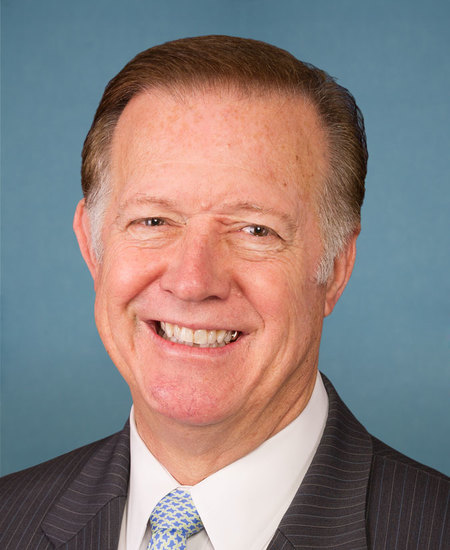
Rep. Randy K. Weber, Sr.
Sponsored bills
Maddy summaryThis bill amends the existing Northern Border Security Review Act to update deadlines and requirements for border security assessments. It requires the Department of Homeland Security Secretary to submit a northern border threat analysis by September 2, 2026, and every two years after, with strategy updates due 90 days after each analysis. The bill also mandates classified briefings to congressional committees 30 days after each threat analysis and directs the development of performance measures for Air and Marine Operations within six months of enactment. These changes directly affect the DHS Secretary, congressional committees, and U.S. Customs and Border Protection's operations along the northern border.
Maddy summaryThis bill prevents public colleges receiving federal funding from denying religious student groups access to campus facilities and official recognition - same as other student organizations. It requires equal treatment for religious groups regarding meeting spaces, events, and institutional support, prohibiting discrimination based on religious beliefs or practices. The law directly affects all public universities participating in federal student aid programs (over 400 institutions). It mandates policy changes to ensure religious groups receive the same access and benefits as secular clubs.
Maddy summaryThe TRAPS Act establishes a federal Task Force on Payment Scams, chaired by the Treasury Secretary, to coordinate efforts across agencies like the FTC, Federal Reserve, and consumer groups. The Task Force will study current scam tactics (such as fake text messages or fraudulent payment platforms), evaluate prevention strategies, and develop recommendations to help consumers avoid and report scams. It must submit an initial report within one year and annual updates, focusing on improving federal-state coordination and education programs. This bill directly affects government agencies and stakeholders participating in the Task Force, with the goal of protecting consumers from evolving payment scams.
Maddy summaryThe BOP Direct-Hire Authority Act allows the Bureau of Prisons (BOP) Director to directly hire qualified candidates for competitive service positions at BOP facilities without following standard federal hiring rules, such as competitive exams or public announcements. This change applies only to BOP facilities and aims to speed up staffing for critical roles. The authority expires once 96% of the competitive positions (as of the bill’s enactment date) are filled. The bill directly affects BOP hiring processes and does not alter existing pay or benefits for positions.
Maddy summaryHR 2004, titled "Tyler’s Law," requires the Secretary of Health and Human Services to study how often hospital emergency departments test for fentanyl during overdose cases (beyond standard drug tests), including associated costs, patient benefits/risks, and impacts on privacy and patient-physician relationships. The study must be completed within one year of the bill's enactment. Based on the study results, the Secretary must issue guidance within six months on whether emergency departments should routinely test for fentanyl, how to inform clinicians about test contents, and how such testing may affect future overdose risks and health outcomes. This bill directly affects hospital emergency departments and patients experiencing overdoses by shaping future testing protocols.
Maddy summaryHR 1266, the Combating Illicit Xylazine Act, adds xylazine - a veterinary sedative increasingly found in illicit drug mixtures - to Schedule III of the Controlled Substances Act, regulating its use and trafficking. It directly affects veterinarians, animal owners, and manufacturers by allowing xylazine to be legally dispensed for animal use under specific veterinary prescriptions, while prohibiting non-veterinary human use. The bill includes transition periods (60 days for practitioners, 1 year for labeling) to ease compliance for manufacturers and practitioners, and requires the DEA and FDA to expedite necessary applications. It also mandates two congressional reports on xylazine's illicit use and trafficking patterns, and directs the Sentencing Commission to review penalties for offenses involving xylazine.
Maddy summaryThis bill requires all new passenger vehicles manufactured for sale in the U.S. to include AM radio as standard equipment (not an optional add-on) by 2027-2028, depending on manufacturer size. It mandates that AM radio receivers must be easily accessible to drivers and allows compliance through digital AM broadcast technology. During a transition period, manufacturers must clearly label vehicles without AM radio but cannot charge extra for this feature. The bill also mandates a GAO study on AM radio's role in emergency alerts and includes a 10-year sunset provision for the rule. It preempts state laws regarding AM radio access in vehicles.
Maddy summaryHR 5745, the Marine Fisheries Habitat Protection Act, allows oil and gas operators to convert decommissioned offshore platforms and pipelines into artificial reefs instead of fully removing them. It establishes a process where operators can apply to leave structures in place (called "Reefing in Place") after completing assessments of marine habitat benefits and economic costs. The bill requires the Director to determine if a structure qualifies as an "Eligible Structure" based on habitat potential and safety, with a three-year window for approval after qualification. It also prohibits federal removal orders during key application and assessment periods and permits states to assume liability for reef sites. This directly affects operators of inactive offshore structures and aims to create new marine habitats while streamlining decommissioning.
Maddy summaryThe Pray Safe Act of 2025 establishes a federal Clearinghouse within the Department of Homeland Security to provide houses of worship, faith-based organizations, and nonprofit groups at risk of threats with evidence-based safety resources. The Clearinghouse will publish online best practices for security planning, facility safety, and incident response, while listing existing federal and state grant programs to help these organizations implement these measures. It requires annual updates based on user feedback and includes a centralized resource section for contacts like Protective Security Advisors and Fusion Centers. The program expires four years after enactment and does not create new funding but coordinates existing federal and state safety resources.