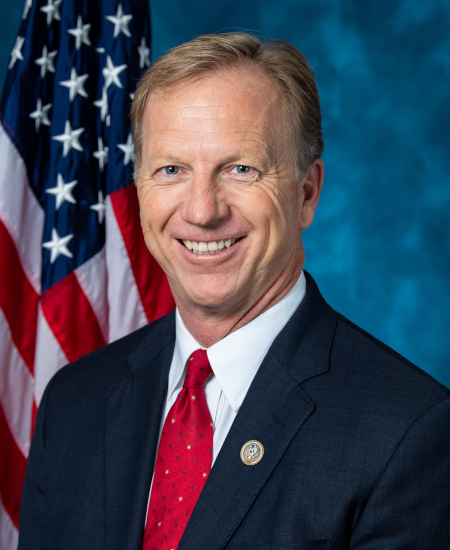
Photo of Kevin Hern
R United States House · District 1 · Oklahoma

Rep. Kevin Hern

Compare
Total votes
2,837
all sessions
Attendance
98%
48 missed
Near the chamber average
With party
92%
of cast votes
Near the chamber average
Bipartisan score
4%
crosses aisle rarely
Near the chamber average
Sponsored
531
bills & resolutions
Lower than 91% of chamber peers
Committees
3
assignments
531 bills and resolutions

Sponsored bills

Total
531
Primary
55
Co-sponsor
476
This page
531
matching current filters
Co-sponsor HR 2423
In committee · Minnesota House · Co-sponsor
Unfair Tax Prevention Act

Maddy summaryHR 2423, the Unfair Tax Prevention Act, amends the U.S. tax code to modify how the base erosion tax applies to certain foreign-owned businesses. It directly affects foreign-controlled entities operating under specific foreign tax systems that impose taxes based on ownership chains, such as those linked to foreign corporations. Key provisions include treating these entities as "applicable taxpayers" for tax purposes, changing a deadline from December 31, 2025, to the bill's enactment date, and counting 50% of their cost of goods sold as a tax benefit while excluding certain other tax rules. The changes apply to taxable years beginning after the bill becomes law.

In committee Mar 27, 2025 1 co-sponsor
Co-sponsor HR 2191
In committee · Minnesota House · Co-sponsor
Physician Led and Rural Access to Quality Care Act

Maddy summaryThis bill modifies Medicare's physician self-referral rules to improve access for rural communities. It creates a new exemption for "covered rural hospitals" (defined as facilities in rural areas more than 35 miles from another hospital or critical access hospital) from certain restrictions on physicians owning hospitals. The bill also removes a prohibition on expanding existing physician-owned hospitals, allowing such expansions after the law's enactment. These changes directly affect rural hospitals seeking Medicare participation and physicians who own or operate hospitals in underserved areas.

In committee Mar 18, 2025 1 co-sponsor
Co-sponsor HR 2198
In committee · Minnesota House · Co-sponsor
To amend the Internal Revenue Code of 1986 to restore the taxable REIT subsidiary asset test.

Maddy summaryThis bill changes a tax rule for Real Estate Investment Trusts (REITs) that use taxable subsidiaries. It increases the percentage limit for assets held in these subsidiaries from 20% to 25% of a REIT's total assets, directly affecting REIT companies that operate through such subsidiaries. The key provision amends the Internal Revenue Code to restore this higher asset threshold, which had been reduced earlier. The change applies to taxable years starting after December 31, 2025.

In committee Mar 18, 2025 1 co-sponsor
Co-sponsor HR 2126
In committee · Minnesota House · Co-sponsor
FOCA Act of 2025

Maddy summaryThe FOCA Act of 2025 prohibits federal agencies from requiring or banning contractors from using union agreements in construction project bids or contracts. It directly affects federal agencies, contractors, and subcontractors working on federally funded or assisted construction projects (like buildings or infrastructure). The law requires bid documents to not favor or penalize contractors based on whether they have union agreements, aiming to promote open competition and prevent discrimination. This changes how agencies structure bids but does not affect union agreements themselves. The bill applies to all new contracts and subcontracts after enactment, with limited exemptions only for public health/safety emergencies or national security.

In committee Mar 14, 2025 1 co-sponsor
Co-sponsor HR 1156
Passed · Minnesota House · Co-sponsor
Pandemic Unemployment Fraud Enforcement Act

Maddy summaryHR 1156, the Pandemic Unemployment Fraud Enforcement Act, extends the time limit for prosecuting fraud related to pandemic unemployment programs. It adds a 10-year window for criminal or civil actions against individuals who falsely claimed benefits under Pandemic Unemployment Assistance (PUA), Federal Pandemic Unemployment Compensation (FPUC), or Mixed Earner Unemployment Compensation (MEUC). The law applies only to fraud committed during these specific pandemic-era programs and does not revive cases where the original statute of limitations had already expired before this bill passed. This change gives authorities more time to pursue fraud cases without altering the programs' core eligibility rules.

Passed Mar 13, 2025 1 co-sponsor
Co-sponsor HR 1990
In committee · Minnesota House · Co-sponsor
American Innovation and R&D Competitiveness Act of 2025

Maddy summaryHR 1990, the American Innovation and R&D Competitiveness Act of 2025, amends tax rules for businesses to make research and development (R&D) costs more flexible. It allows companies to deduct R&D expenses immediately as business costs (instead of capitalizing them) or to spread these costs over a minimum 60-month period. The bill clarifies which R&D expenses qualify, excludes land improvements and mineral exploration costs, and ensures companies can claim R&D tax credits without conflict with expense treatment. This directly affects businesses that conduct R&D, changing how they account for these costs on tax returns starting for 2022 taxable years.

In committee Mar 10, 2025 1 co-sponsor
Co-sponsor HR 1940
In committee · Minnesota House · Co-sponsor
Tanning Tax Repeal Act of 2025

Maddy summaryHR 1940, the Tanning Tax Repeal Act of 2025, removes a federal excise tax on indoor tanning services. It directly affects tanning salons and businesses providing these services by eliminating the tax they previously paid. The bill repeals Chapter 49 of the Internal Revenue Code, which imposed the tax, and the change takes effect for services provided after the bill becomes law. This is a straightforward tax repeal with no new requirements or funding mechanisms.

In committee Mar 6, 2025 1 co-sponsor
Primary HR 1924
In committee · Minnesota House · Lead sponsor
Securing Access to Care for Seniors in Critical Condition Act of 2025

Maddy summaryThis bill amends Medicare payment rules for long-term care hospitals to ensure they receive full payments for treating seniors in critical condition. It adds a new "high acuity criterion" requiring discharges to be assigned to a specific Medicare payment category (MS-LTC-DRG) with a relative weight of at least 0.8, effective October 1, 2026. Hospitals meeting this criterion for eligible discharges will avoid reduced payments ("site-neutral payments") that would otherwise apply. The change directly affects long-term care hospitals treating Medicare patients with high-acuity conditions and ensures these facilities receive full reimbursement for critical care services.

In committee Mar 6, 2025 0 co-sponsors
Co-sponsor HR 1851
In committee · Minnesota House · Co-sponsor
Fighter Force Preservation and Recapitalization Act of 2025

Maddy summaryHR 1851 increases the minimum required fighter aircraft inventory for the Air Force and its reserve components to 1,900 total and 1,200 for the reserve by October 2030, up from current levels (Section 2). The bill allows temporary reductions below these totals for recapitalization, but only for up to two years and with a floor of 1,800 aircraft, requiring congressional notification (Section 2). It mandates quarterly reports to Congress detailing new aircraft acquisitions, assignments, retirements, and recapitalization plans for both active and Air National Guard units (Section 3). The bill specifically protects 25 existing Air National Guard fighter squadrons from fleet reductions until 2030 and requires new aircraft to be assigned to service-retained units at a 3:1 ratio with legacy aircraft retirements (Sections 5, 6).

In committee Mar 5, 2025 1 co-sponsor
Primary HR 1867
In committee · Minnesota House · Lead sponsor
To amend title XVIII of the Social Security Act to remove in-person requirements under Medicare for mental health services furnished through telehealth and telecommunications technology.

Maddy summaryThis bill removes the requirement for an initial in-person visit before Medicare beneficiaries can receive mental health services via telehealth. It eliminates geographic restrictions that previously limited telehealth access, allowing services to be provided from home or other locations without travel. The change applies immediately to mental health care and substance use disorder treatment, and permanently removes a 2025 deadline that would have ended expanded telehealth access for rural clinics and health centers. This directly affects Medicare patients seeking mental health support, particularly those in rural areas or with mobility challenges.

In committee Mar 5, 2025 0 co-sponsors
Showing 71 to 80 of 531 bills
Previous 1 … 7 8 9 … 54 Next