

Railway Safety Act of 2025 This bill addresses safety requirements for rail carriers and trains transporting hazardous materials. Specifically, the Department of Transportation (DOT) must issue safety regulations for trains carrying hazardous materials to require that rail carriers or shippers (1) provide state emergency response commissioners with advance notice and information about the hazardous materials; (2) reduce blocked rail crossings; and (3) comply with certain requirements regarding train length and weight specifications, track standards, speed restrictions, and response plans. DOT must also establish requirements for wayside defect detectors. These are used by railway systems alongside the tracks to detect defects and failures (e.g., wheel bearing failures). Current federal regulations do not require their use, but federal guidance does address their placement and use. Under the bill, DOT must issue regulations establishing requirements for the installation, repair, testing, maintenance, and operation of wayside defect detectors for each rail carrier operating a train carrying hazardous materials. The bill also increases the maximum fines DOT may impose on rail carriers for violating safety regulations; requires DOT to update rail car inspection regulations and audit the federal inspection programs; establishes a statutory requirement for freight trains to have at least two crew members, with exceptions; phases out certain railroad tank cars by May 1, 2027; expands training for local first responders; imposes a new fee on certain rail carriers; and authorizes grants to improve railway safety.
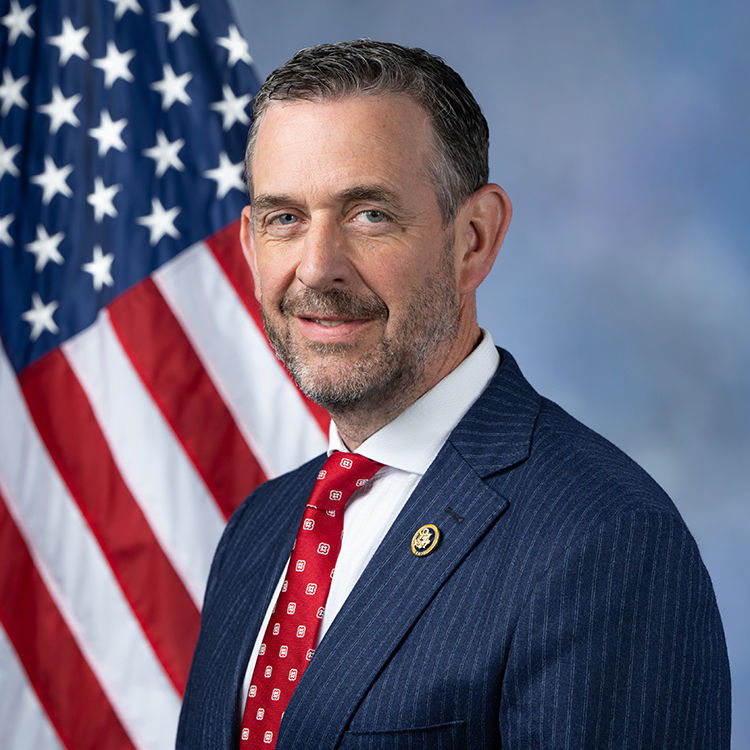
Rep. Michael A. Rulli
Sponsored bills
Maddy summaryThis bill, the RAIL Act, establishes new safety requirements for rail carriers transporting hazardous materials. It requires rail carriers to provide advance notification and safety planning to emergency responders, implement stricter inspection protocols for railcars and locomotives, and increase civil penalties for safety violations. The bill also sets a 2030 deadline for phasing out older DOT-111 tank cars and mandates minimum 2-person crews for most freight trains. These provisions directly affect rail carriers operating trains with hazardous materials, particularly Class I railroads. The legislation aims to enhance rail safety through comprehensive regulatory updates and enforcement mechanisms.
Maddy summaryHR 943, the "No User Fees for Gun Owners Act," bans states and local governments from requiring insurance, taxes, or user fees as conditions for owning, buying, or selling firearms. It specifically prohibits these fees for firearm manufacture, importation, acquisition, transfer, or continued ownership, except for general sales taxes applied equally to all goods. The bill amends federal law to prevent states from imposing such conditions on gun ownership or commerce, while allowing standard sales taxes to apply uniformly. This directly affects gun owners, dealers, and manufacturers by removing mandatory fees tied to firearm transactions. The law does not restrict general sales taxes but eliminates state-specific fees as a prerequisite for firearm-related activities.
Maddy summaryHR 925, the "Dismantle DEI Act of 2025," would eliminate diversity, equity, and inclusion (DEI) programs across federal government operations. The bill requires federal agencies to close DEI offices, rescind related executive orders, and prohibit the use of federal funds for DEI training, offices, or initiatives. It defines "prohibited diversity, equity, or inclusion practice" as any activity that discriminates based on race, ethnicity, religion, biological sex, or national origin, or requires employees to complete training asserting that certain groups are inherently superior or inferior. The legislation also prohibits requiring employees to sign statements about race, ethnicity, or gender, and establishes private lawsuits for violations with potential damages of $1,000 per violation per day. This bill would directly affect federal agencies, contractors, grantees, and advisory committees receiving federal funding.
Maddy summaryHR 886, the "Beat Bad Bureaucrats Act," prevents the Small Business Administration (SBA) from withholding Social Security payments to repay certain business loans when identity theft is confirmed. It specifically protects victims of identity theft who fraudulently obtained SBA loans under Sections 7(a) or 7(b) of the Small Business Act (including pandemic-era loans). The law requires the SBA to update its regulations within 30 days to include clear instructions for reporting identity theft through its public website. This policy change directly affects individuals who report fraud via SBA's designated process, blocking garnishment of their Social Security benefits for those specific loans.
Maddy summaryHR 833 creates a federal tax credit for individuals and corporations that contribute to scholarship granting organizations (SGOs) providing scholarships for elementary and secondary education. The credit allows taxpayers to deduct up to 10% of their adjusted gross income or $5,000 (whichever is less) for contributions to SGOs serving students from households with income up to 300% of the area median income. The bill establishes a $10 billion annual cap on the tax credit program, requires SGOs to verify student eligibility and maintain separate accounts, and prohibits government control over SGOs or private schools. It ensures scholarships can be used at public, private, or religious schools without discrimination based on religious character. The tax credit would be available for contributions made after December 31, 2025, with annual volume cap increases based on usage.
Maddy summaryThe RULES Act requires asylum seekers to apply only at official U.S. ports of entry, not elsewhere in the country. It prohibits releasing applicants into the United States while their asylum application is pending. This directly affects individuals seeking asylum who cross the border without entering through designated ports. The law does not apply to people already inside the U.S. without authorization or who overstayed their visa.
Maddy summaryHCONRES 4 is a symbolic resolution expressing Congress's support for tax-exempt fraternal benefit societies (like mutual aid organizations). It recognizes these groups, which have over 7 million members nationwide, as historically and currently providing critical community benefits - including life/health insurance, charitable work, and volunteer services - valued at over $3.8 billion annually. The resolution affirms that their tax-exempt status under Section 501(c)(8) of the Internal Revenue Code remains beneficial and should continue to be promoted. This is a non-binding expression of congressional sentiment, not a policy change.
Maddy summaryHJRES 30 is a congressional resolution seeking to block an Environmental Protection Agency (EPA) rule that implements the American Innovation and Manufacturing (AIM) Act of 2020. The resolution targets the EPA's specific rule (published in the Federal Register on October 11, 2024) which establishes a phasedown schedule for hydrofluorocarbons (HFCs) used in refrigeration, air conditioning, and other applications. If approved, this resolution would formally disapprove the EPA rule under the Congressional Review Act, preventing it from taking effect and halting the agency's implementation of the HFC phase-down. The resolution directly affects the EPA’s regulatory authority and the timeline for reducing HFC use, which impacts industries relying on these chemicals.
Maddy summaryHR 735, the United States Reciprocal Trade Act, would give the President authority to impose tariffs on imports from countries that maintain higher tariffs on U.S. goods than the U.S. imposes on their goods, or that apply significant nontariff barriers. The bill requires the President to consider multiple factors before taking action, including tariff classifications, trade impacts, and competitive relationships, and mandates consultation with Congress before imposing new tariffs. It establishes a 3-year timeframe for these tariff actions with a potential 3-year extension, while providing Congress with a process to disapprove tariffs through a joint resolution requiring a two-thirds vote. The law aims to address perceived trade imbalances by promoting reciprocal trade practices between the U.S. and its trading partners.