Maddy summaryThis bill limits the amount of Post-9/11 GI Bill benefits available for flight training at public colleges and universities. It sets a $100,000 maximum total benefit for such training (adjusted annually for inflation), affecting veterans pursuing flight programs at public institutions. The inflation adjustment uses the Consumer Price Index, increasing the cap each year based on prior cost-of-living changes. The limit applies only to veterans starting flight training on or after August 1, 2026. This is a direct change to benefit eligibility under the VA's education program.
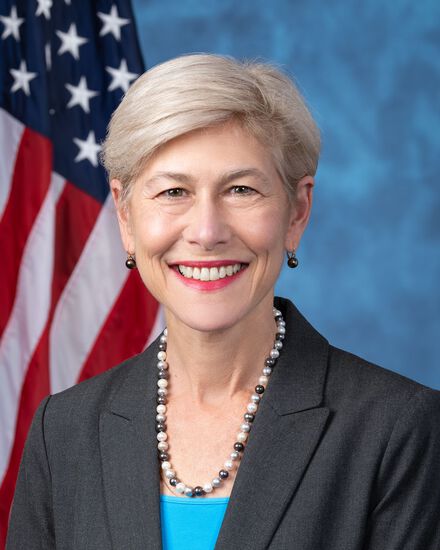
Rep. Deborah K. Ross
Sponsored bills
Maddy summaryThe SERVICE for America Act creates a new W visa category that allows certain individuals, including Deferred Action for Childhood Arrivals recipients and those who entered the U.S. as dependent children of nonimmigrant workers, to live and work in the country if they are employed in public service jobs. These positions include roles in emergency management, law enforcement, public health, education, and social work, with visa status granted for three years and renewable once while employment continues. The bill also provides a pathway to permanent residency for these individuals after they have held W visa status for at least two years and maintained physical presence in the United States for seven years. Additionally, it expands eligibility for AmeriCorps service programs to include DACA recipients and other qualifying nonimmigrant dependents.
Maddy summaryThe End Tuberculosis Now Act of 2026 amends the Foreign Assistance Act to designate ending the global tuberculosis emergency as a major objective of U.S. foreign policy and authorizes the President to provide funding for prevention, diagnosis, and treatment programs worldwide. The bill sets specific targets to be achieved by 2030, including an 80 percent reduction in new infections and a 90 percent reduction in deaths compared to 2015 levels, while also requiring that 30 million individuals receive preventive treatment. Key provisions mandate the use of innovative diagnostic tools, support for drug-resistant TB care, and coordination with private sector partners to develop vaccines and lower treatment costs. The legislation requires annual reports to Congress detailing program progress and expenditures, and it includes a sunset clause that terminates these specific authorities on January 1, 2033.
Maddy summaryThe Public Transit Mental Health Awareness Act requires public transit agencies that receive federal assistance to display information about the national suicide prevention hotline in areas visible to passengers. This information must state that the service is free, confidential, and available around the clock. Agencies can meet this requirement by placing the notice on all their vehicles or in all their transit facilities, provided it does not block existing revenue-generating advertising space. The law includes a provision allowing agencies to remain compliant if they make reasonable efforts to restore displays that are damaged or removed, with the mandate taking effect one year after enactment.
Maddy summaryThe NSF REU Act of 2026 reauthorizes and expands the National Science Foundation's program that funds summer and academic-year research experiences for undergraduate students in STEM fields. The bill requires that at least half of the participants at each funded site be recruited from institutions with limited research opportunities, such as community colleges, minority-serving institutions, and rural schools. It authorizes $100 million annually for fiscal years 2027 through 2032 to support these grants, which must cover student stipends, travel, housing, and mentor training. Additionally, the legislation mandates that the NSF track student outcomes for at least three years after their degree and submit a report to Congress on program effectiveness and recruitment strategies.
Maddy summaryThe Virtual-Based Opioid Treatment for Veterans Act directs the Department of Veterans Affairs to launch a two-year pilot program aimed at expanding access to virtual opioid treatment for enrolled veterans who face barriers to in-person care. This initiative requires the VA to conduct outreach, build referral networks, and coordinate with other federal agencies to connect veterans with telehealth programs that combine medication and counseling in a single visit. The bill also mandates a study on treatment barriers and requires annual reports to Congress on the program's progress until the opioid crisis is no longer considered a public health emergency.
Maddy summaryThe Lori Jackson-Nicolette Elias Domestic Violence Survivor Protection Act aims to reduce intimate partner homicides by strengthening federal laws that prevent abusers from accessing firearms while restraining orders are active. It expands the definition of "intimate partner" to include dating partners and clarifies that emergency or temporary restraining orders must also trigger gun restrictions. The bill requires courts to automatically issue firearm surrender orders when a protection order is granted, mandating that abusers turn in their guns within 24 hours and prohibiting them from buying new ones for the duration of the order. Additionally, the legislation creates a new grant program to help states and local governments implement these surrender procedures and partner with domestic violence service providers.
Maddy summaryThe Advancing International and Foreign Language Education Act amends the Higher Education Act to support research, innovation, and professional training in global education. It allows universities, libraries, and nonprofits to receive competitive grants for studying the capacity and demand for foreign language programs, as well as for developing new teaching methods and digital resources. The bill also expands funding for global business and professional education to help students gain international skills in fields like science, engineering, and law, while creating a national database to track education trends. Additionally, the legislation updates definitions to include community colleges and heritage students, and repeals certain existing programs to streamline requirements.
Maddy summaryHR 4541, the EARLY Act Reauthorization of 2025, extends the funding period for the Young Women’s Breast Health Education and Awareness program. It amends the Public Health Service Act to update the program’s expiration date from 2026 to 2031. The bill directly affects young women aged 15-25 by ensuring continued access to breast health education and awareness resources. The key provision is a simple extension of the existing program’s authorization period, without altering its scope or requirements. This is a procedural reauthorization to maintain current services through 2031.
Maddy summaryThe Temporary Protected Status Review Act restores the ability of courts to review decisions by the Department of Homeland Security to end Temporary Protected Status (TPS) designations for foreign nationals. Under this bill, the government must publish detailed written findings explaining why a country no longer qualifies for TPS protection, and these decisions would be subject to a legal challenge in federal court. If a TPS designation is terminated, the affected individuals would remain in the United States with their current status and work authorization intact while the legal challenge is pending. Additionally, the legislation requires the government to follow specific administrative procedures, such as considering all available evidence and avoiding bias, before making any termination decisions.