Maddy summaryThe Community Housing Act of 2026 aims to increase the supply and affordability of housing by directing significant new federal funding to programs like the Housing Trust Fund and the Capital Magnet Fund. It establishes a new Office of Community Land Use and Zoning within HUD to help states and localities reform restrictive zoning laws that limit housing development. The bill also expands financial support for rural areas, creates a new fund to promote shared equity and community land trusts, and removes a legal cap on the number of public housing units agencies can manage. Additionally, it provides grants to protect tenants from eviction and authorizes low-cost financing options for affordable housing projects.
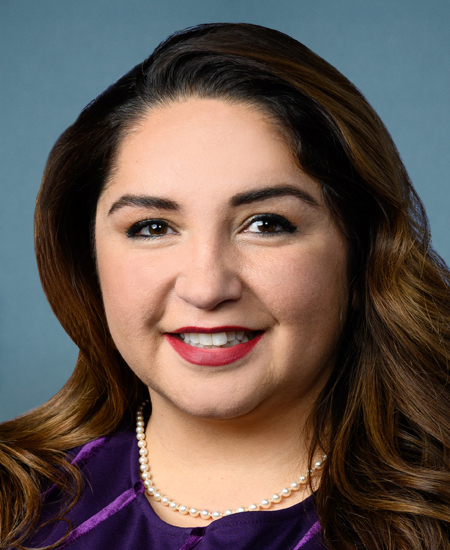
Rep. Delia C. Ramirez
Sponsored bills
Maddy summaryThe LIFT the BAR Act aims to restore access to federal benefits for lawfully present noncitizens by repealing several restrictions imposed by the 1996 welfare reform law and a 2024 reconciliation bill. Specifically, it would allow eligible noncitizens to receive SNAP food assistance, Medicaid, CHIP, and child nutrition programs, while also updating legal terminology to refer to "noncitizens" rather than "aliens" in relevant statutes. The legislation includes provisions to ensure these individuals can qualify for premium tax credits and would require federal agencies to issue implementation guidance within 180 days of enactment.
Maddy summaryThis concurrent resolution directs the President to withdraw all U.S. armed forces from hostilities in Lebanon within seven days of the bill's adoption. It uses the War Powers Resolution to mandate this withdrawal while explicitly allowing continued security cooperation with Lebanese forces and the protection of diplomatic facilities. The measure clarifies that it does not authorize the use of military force, serving as a specific instruction to end active combat operations in the region.
Maddy summaryThe Diversity Visa Protection and Modernization Act limits the executive branch's ability to completely stop the Diversity Visa Program, which provides immigration opportunities to applicants from countries with low rates of migration to the United States. Instead of allowing indefinite or broad pauses, the bill permits only targeted restrictions on specific countries, individual security denials, or temporary suspensions lasting no more than 60 days. Any such limitation requires the relevant government officials to notify Congress and publish details about the threat and legal basis at least seven days in advance. Additionally, the law ensures that individuals who have already received a Diversity Visa cannot lose their eligibility due to a temporary program-wide suspension.
Maddy summaryThe Right to Vote Act establishes legal protections against government actions that make it more difficult for citizens to vote in federal elections. It prohibits any rule or practice that diminishes voting ability unless the government proves it is the least restrictive way to achieve an important interest, and it similarly blocks substantial impairments unless they significantly further a specific government goal. The bill creates a new legal pathway for voters to challenge these restrictions in federal court, requiring judges to expedite these cases and shifting the burden of proof to the government to justify any voting barriers. These protections apply to all U.S. states, territories, and the District of Columbia for elections occurring on or after September 1, 2026.
Maddy summaryThe Open Meetings Act of 2026 requires the Judicial Conference to publish notice of its meetings at least 30 days in advance on its official website. It mandates that these meetings be live-streamed with audio accessible to the public without charge or registration, and the recordings must be archived and published online within seven days. The bill allows for exceptions to public access when matters are legally prohibited from disclosure or when a majority vote determines a session should be closed for sensitive reasons, provided the reason is stated publicly. These changes directly affect the transparency and public accessibility of proceedings within the federal judicial system.
Maddy summaryThis House resolution reaffirms the United States' commitment to protecting refugees and displaced persons by calling for the restoration of the Refugee Admissions Program and asylum protections. It urges federal officials to lift current bans on refugee entry, resume vetting for approved applicants, and increase humanitarian aid to host countries. The measure highlights the economic contributions of refugees and emphasizes the need for fair, humane policies that align with international obligations and domestic law.
Maddy summaryThis resolution expresses support for designating June 2026 as Black Music Month to honor the historical and cultural significance of Black contributions to American music. It acknowledges the wide-ranging influence of Black music across various genres and its central role in the nation's history, including the civil rights movement. The bill calls on the public to celebrate this month by promoting diversity, performing Black music, and spreading awareness of its legacy.
Maddy summaryThis bill, known as the Supreme Court Justice Circuit Riding Act, would require Supreme Court justices to travel across the country to serve as judges in federal appeals courts, a practice that had ended in 1911. Under the new rules, justices must sit on at least one panel of an appeals court for a minimum of 10 days of oral arguments each year, while also being eligible to vote on panel rehearings but barred from participating in full court en banc reviews. The legislation mandates that these appearances occur in person rather than via video or teleconference and establishes a system for reimbursing travel and lodging expenses. Additionally, the bill adds a disqualification provision to prevent a justice from voting on any case after they have already participated in it as a circuit judge. Finally, the Chief Justice is tasked with creating regulations within 180 days to manage the assignment of justices to specific circuits.
Maddy summaryThe Keep Public Funds in Public Schools Act of 2026 eliminates a federal tax credit that allowed parents to deduct contributions to scholarship granting organizations from their income. By removing these specific tax breaks, the bill prevents the use of public tax dollars to support private school vouchers and scholarship programs. This change directly affects families who currently rely on these tax incentives to fund education outside the public school system. The provisions take effect for taxable years beginning after December 31, 2026.