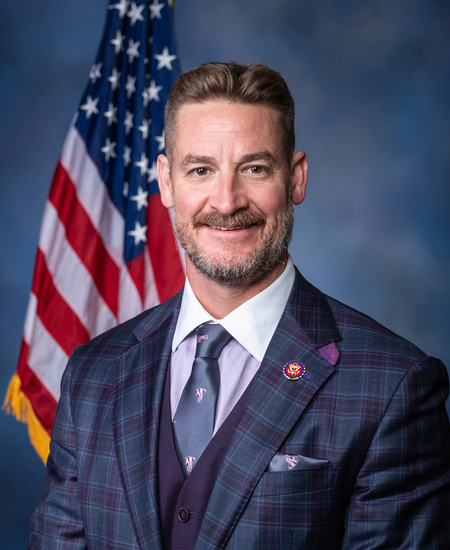
Photo of W. Gregory Steube
R United States House · District 17 · Florida On the 2026 ballot

Rep. W. Gregory Steube

Compare
Total votes
2,837
all sessions
Attendance
94%
175 missed
Near the chamber average
With party
87%
of cast votes
Lower than 94% of chamber peers
Bipartisan score
7%
crosses aisle rarely
Higher than 93% of chamber peers
Sponsored
1,510
bills & resolutions
Near the chamber average
Committees
7
assignments
1,510 bills and resolutions

Sponsored bills

Total
1,510
Primary
236
Co-sponsor
1,274
This page
1,510
matching current filters
Primary HR 10104
In committee · Minnesota House · Lead sponsor
Restoring Economic Diesel Fuel Act of 2026

Maddy summaryThe Restoring Economic Diesel Fuel Act of 2026 eliminates federal penalties for selling and using dyed diesel fuel in taxable situations. By removing Section 6715 from the Internal Revenue Code, the bill allows individuals and businesses to use this specific type of fuel without facing fines, provided they pay the required taxes. This change directly affects entities that currently rely on or consider using dyed fuel for on-road vehicles or other taxable applications. The provision is set to take effect for any fuel sold or used after December 31, 2025.

In committee Aug 13, 2026 0 co-sponsors
Primary HR 10078
In committee · Minnesota House · Lead sponsor
Dollar-for-Dollar Deficit Reduction Act

Maddy summaryThe Dollar-for-Dollar Deficit Reduction Act requires that any legislation to raise or suspend the federal debt limit include spending cuts equal to at least the amount of the new borrowing over a ten-year period. This bill directly affects the President and Congress by mandating that formal requests for higher debt limits be accompanied by specific plans to reduce government expenditures, with savings calculated against a standard budget baseline. To enforce these requirements, the legislation creates procedural hurdles in both chambers of Congress, making it out of order to consider debt limit changes unless they meet the spending reduction criteria. In the Senate, bypassing these rules would require a three-fifths supermajority vote, while the Congressional Budget Office must publicly release cost estimates for any such measures at least 24 hours before a floor vote.

In committee Aug 10, 2026 0 co-sponsors
Co-sponsor HR 10017
In committee · Minnesota House · Co-sponsor
Permanent CBDC Ban Act

Maddy summaryThis bill, titled the Permanent CBDC Ban Act, aims to permanently prohibit the Federal Reserve from issuing a central bank digital currency. It achieves this by amending the Federal Reserve Act to remove the specific legal authority that allows the Reserve to create such a digital currency. The legislation directly affects the Federal Reserve by stripping away its power to launch a digital version of the dollar. By deleting the relevant subsection of the law, the bill ensures that the Reserve cannot issue a CBDC in the future.

In committee Aug 3, 2026 1 co-sponsor
Primary HR 10006
In committee · Minnesota House · Lead sponsor
Increasing Opportunity For Reindustrialization Act

Maddy summaryThe Increasing Opportunity For Reindustrialization Act designates census tracts containing former Department of Defense installations as Qualified Opportunity Zones. This change allows communities near closed military bases to access federal tax incentives intended for economic development, even if they do not meet the standard low-income requirements. The bill specifically amends the Internal Revenue Code to include these areas in the program and increases the number of eligible zones per state to accommodate them.

In committee Jul 30, 2026 0 co-sponsors
Co-sponsor HR 9893
In committee · Minnesota House · Co-sponsor
Stop Support for UNRWA Act of 2026

Maddy summaryThis bill prohibits the United States from providing any voluntary or assessed funding to the United Nations Relief and Works Agency for Palestine Refugees in the Near East. The restriction applies directly to the U.S. government's financial contributions to the agency, effectively cutting off official U.S. support. However, the law allows for humanitarian aid to individuals who receive help from UNRWA if that aid is delivered through other organizations that do not promote violence, terrorism, or antisemitism. Ultimately, the legislation mandates a complete halt to direct U.S. funding for UNRWA while permitting indirect assistance under specific conditions.

In committee Jul 23, 2026 1 co-sponsor
Co-sponsor HR 9892
In committee · Minnesota House · Co-sponsor
Stop EU Overreach Act

Maddy summaryThe Stop EU Overreach Act directs the United States Trade Representative to initiate a formal investigation within 30 days of enactment to determine if specific European Union environmental and sustainability regulations unfairly burden American commerce. These targeted measures include rules on corporate sustainability due diligence, reporting, deforestation traceability, and carbon border adjustments that apply to US companies based on their operations or supply chains outside the EU. If the investigation concludes that these foreign practices are unreasonable or discriminatory, the USTR is authorized to take retaliatory actions such as imposing duties on imports from EU member states or suspending trade agreement benefits. The bill includes a sunset provision that terminates its requirements for any specific EU measure once the USTR certifies that the European Union has repealed the rule or entered into a binding agreement to exempt US persons from its extraterritorial obligations.

In committee Jul 23, 2026 1 co-sponsor
Primary HRES 1411
In committee · Minnesota House · Lead sponsor
Providing for consideration of the bill (H.R. 2162) to provide for the protection of the integrity of honey marketed in the United States, and for other purposes.

Maddy summaryThis resolution sets up a special procedure to immediately consider a bill titled the Honey Integrity and Consumer Transparency Act, which aims to protect the quality and authenticity of honey sold in the United States. The proposed law would create a federal standard defining what constitutes real honey by setting strict limits on chemical markers that indicate processing or the addition of foreign sugars. It establishes a new testing program where imported honey faces rigorous scrutiny and fees, while domestic producers are largely exempt from these costs and testing requirements. Additionally, the bill mandates clear country-of-origin labeling on honey packages and creates a public database to track and expose companies found to be selling fraudulent or adulterated products.

In committee Jul 22, 2026 0 co-sponsors
Co-sponsor HR 2715
Passed · Minnesota House · Co-sponsor
Destruction of Hazardous Imports Act

Maddy summaryHR 2715, the *Destruction of Hazardous Imports Act*, expands the authority to destroy imported goods that pose public health risks. It amends the Federal Food, Drug, and Cosmetic Act to allow the Secretary of Health and Human Services to order the destruction of any refused import (not just drugs or devices) if it presents a significant health concern. The bill also prohibits the unauthorized movement, sale, or export of such refused goods. These changes apply to importers of hazardous refused articles 180 days after enactment, with the FDA required to finalize implementing regulations within 90 days.

Passed Jul 21, 2026 1 co-sponsor
Co-sponsor HR 9788
In committee · Minnesota House · Co-sponsor
FORMULA Act of 2026

Maddy summaryThe FORMULA Act of 2026 requires the U.S. Food and Drug Administration to set strict limits on contaminants in infant formula, including heavy metals, microplastics, and synthetic pesticides. Manufacturers must test their products to meet these new standards and keep records of their testing for at least two years after the formula's shelf life expires. The law also mandates that the FDA report annually to Congress on any violations and the progress made in reducing contaminant levels in the domestic supply chain. These regulations will take effect 180 days after the bill is signed into law.

In committee Jul 20, 2026 1 co-sponsor
Primary HR 9767
In committee · Minnesota House · Lead sponsor
Craft Distilled Spirits Direct-to-Consumer Shipping Act of 2026

Maddy summaryThis bill allows craft distilleries to ship distilled spirits directly to consumers in other states, provided both the sending and receiving states permit such transactions. To qualify, the distillery must be independently owned and produce no more than 250,000 gallons annually, while the shipment must be for personal use only and marked to require an adult signature upon delivery. The law also mandates that buyers affirm they are of legal age at the time of purchase, either by showing identification in person or confirming it online or over the phone. If these conditions are not met, state attorneys general can pursue civil actions under existing federal law. The legislation aims to clarify and enable interstate shipping rules specifically for small, independent alcohol producers.

In committee Jul 16, 2026 0 co-sponsors
Showing 21 to 30 of 1,510 bills
Previous 1 … 2 3 4 … 151 Next