Maddy summaryThis joint resolution seeks to overturn a Department of Homeland Security rule that would establish fixed time periods for admission and specific extension procedures for nonimmigrant academic students, exchange visitors, and representatives of foreign information media. If enacted, the bill would prevent this immigration regulation from taking effect, thereby maintaining the existing framework for how these individuals manage their stay in the United States. The measure directly affects international students, cultural exchange participants, and foreign journalists by blocking changes to their visa duration limits and renewal processes.
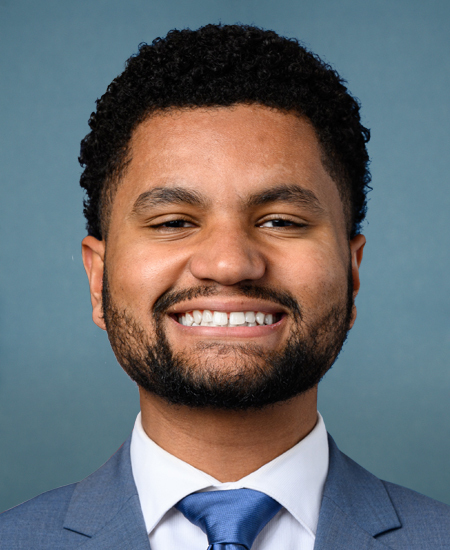
Rep. Maxwell Frost
Sponsored bills
Maddy summaryThe FABRIC Act amends the Fair Labor Standards Act to prohibit piece-rate pay for garment industry workers, requiring employers to pay them at least the federal minimum wage on an hourly basis while still allowing for incentive bonuses. The bill establishes joint and several liability for brand guarantors, meaning companies that contract for garment manufacturing can be held financially responsible for wage violations committed by their contractors or subcontractors. To improve oversight, the legislation mandates that all garment manufacturers and contractors register annually with the Department of Labor, providing detailed information about ownership, employees, and past legal violations. Additionally, the bill creates a new Office of the Garment Industry within the Department of Labor and authorizes $100 million in competitive grants to support domestic manufacturing, workforce development, and facility improvements.
Maddy summaryThe El Salvador TPS Act of 2026 requires the Secretary of Homeland Security to grant Temporary Protected Status (TPS) to individuals from El Salvador. This designation would remain in effect until a date 18 months after September 9, 2026. The bill directly affects eligible residents of El Salvador by providing them with legal protection and work authorization during this specified period.
Maddy summaryThe Launching with Healthcare Act extends the period during which young adults must be covered under their parents' health insurance plans from age 26 to age 31. This change directly affects individuals up to age 31 and the employers or insurers providing these family coverage plans. The bill amends the Public Health Service Act to implement this new age limit, with the provision taking effect for plan years that begin after December 31, 2026.
Maddy summaryThe No Homeless Detention Centers Act prohibits recipients of federal housing funds from forcing homeless individuals to live in government facilities or requiring them to perform labor in exchange for shelter. The bill also bans local and state authorities from punishing people for engaging in basic life-sustaining activities, such as sleeping or resting, on public property. These restrictions apply to actions taken by law enforcement officers or private contractors acting under federal authority. By tying these prohibitions to federal funding, the legislation aims to prevent the use of criminal penalties or involuntary confinement to address homelessness.
Maddy summaryThe L'Ouverture Economic Development Plan for Haiti Act of 2025 creates a Haitian American Enterprise Fund to support economic development in Haiti through private sector investments. The fund will finance projects in agriculture, manufacturing, tourism, and infrastructure, with special focus on empowering women and youth, and aims to create jobs to reduce migration from Haiti. It authorizes $1 billion annually from 2026-2031 to support these initiatives, managed by a private nonprofit organization with oversight from a diverse board. The legislation emphasizes building sustainable economic opportunities within Haiti to meet the country's development needs while strengthening ties with the Haitian-American diaspora.
Maddy summaryThe NSF REU Act of 2026 reauthorizes and expands the National Science Foundation's program that funds summer and academic-year research experiences for undergraduate students in STEM fields. The bill requires that at least half of the participants at each funded site be recruited from institutions with limited research opportunities, such as community colleges, minority-serving institutions, and rural schools. It authorizes $100 million annually for fiscal years 2027 through 2032 to support these grants, which must cover student stipends, travel, housing, and mentor training. Additionally, the legislation mandates that the NSF track student outcomes for at least three years after their degree and submit a report to Congress on program effectiveness and recruitment strategies.
Maddy summaryThe Green New Deal for Public Housing Act directs the Department of Housing and Urban Development to provide grants to public housing agencies and tribal entities for the comprehensive rehabilitation, energy upgrades, and modernization of public housing stock. These funds are intended to transform properties into zero-carbon homes by installing renewable energy systems, electrifying appliances, and repairing infrastructure, while also establishing workforce development programs that offer training, apprenticeships, and stipends to residents and local low-income workers. The bill mandates strict labor standards, including prevailing wages and the use of U.S.-made materials, and requires agencies to maintain or increase the total number of public housing units while prioritizing resident participation through elected councils and community engagement processes.
Maddy summaryThis bill directs the Government Accountability Office to conduct a comprehensive study on how federal workforce reductions impact the services provided to the public. The investigation will examine specific areas such as processing times, call center wait times, service backlogs, and the ability of agencies to respond to congressional inquiries. It aims to analyze the effects of staff cuts on high-volume agencies like those handling Social Security, veterans benefits, and immigration services, while also looking at the long-term costs and operational challenges faced by remaining employees. The resulting report, due within 18 months, will offer findings and recommendations to help Congress better understand and address potential disruptions to essential government services.
Maddy summaryThe FASTER Act of 2026 expands the list of major food allergens regulated by the FDA to include barley, rye, and oats alongside wheat. This change requires food manufacturers to clearly label these gluten-containing grains, helping consumers with allergies and Celiac disease identify potential triggers. The law also mandates that the FDA update its compliance guides within a year to reflect these new allergen categories. Additionally, the bill directs the Department of Health and Human Services to produce a comprehensive report on Celiac disease, covering data on prevalence, diagnostic methods, prevention strategies, and potential treatments. These provisions apply to all foods entering the market starting one year after the law is enacted.