

Maddy summaryThis bill temporarily suspends a hospital surcharge and establishes a new base year for setting payment rates under Minnesota's medical assistance program, effective July 1, 2026. It also authorizes the state health commissioner to grant rule waivers to specific nonstate government teaching hospitals that have level I trauma centers and high utilization of public funds, provided there is a unanimous request from the hospital's governing board and nursing union. These waivers are intended to provide financial stabilization for eligible facilities, while the new base year and surcharge suspension aim to adjust how hospitals are reimbursed for their services. The legislation directly affects Minnesota hospitals, particularly those designated as teaching institutions with major trauma capabilities, and modifies existing statutes governing health care funding and administrative rules.
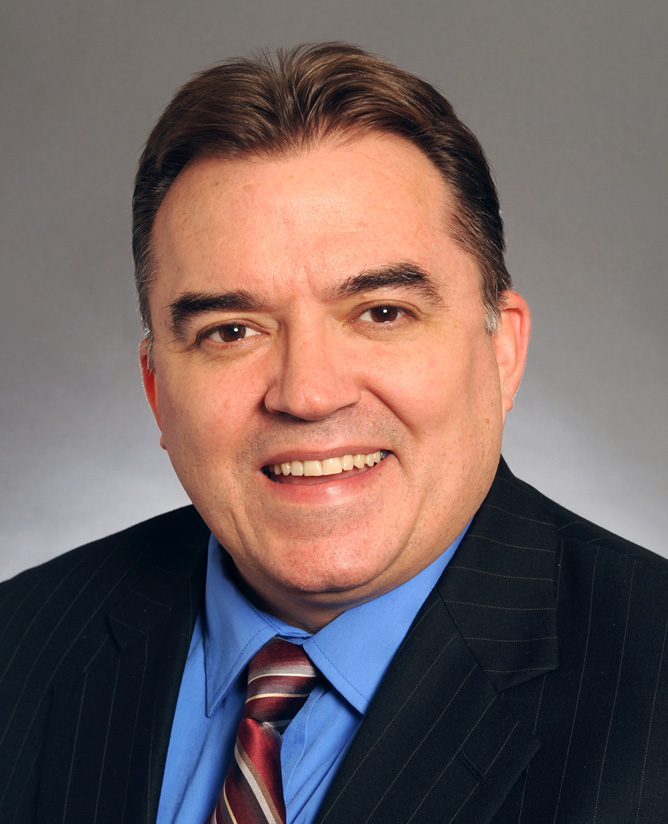
Sen. John Hoffman
Sponsored bills
Maddy summaryThis bill expands the scope of practice for pharmacists in Minnesota by authorizing them to initiate, prescribe, administer, and dispense medications for treating opioid use disorder. It directly affects licensed pharmacists and pharmacist interns, allowing them to work under protocols or collaborative agreements with other healthcare providers to manage opioid use disorder treatment. The legislation also updates the legal definition of "practitioner" to include pharmacists authorized to prescribe certain medications and modifies disciplinary grounds for pharmacists and interns. These changes aim to increase access to opioid use disorder treatment through pharmacies while maintaining oversight through established healthcare partnerships.
Maddy summaryThis bill (SF 3899) renames the state office building at 100 Rev. Dr. Martin Luther King Jr. Blvd. in St. Paul as the "Melissa Hortman State Office Building." It directly affects the building's official designation and all state documents referencing it. The bill requires the revisor of statutes to update "State Office Building" to "Melissa Hortman State Office Building" throughout Minnesota Statutes and Minnesota Rules.
Maddy summaryThis bill designates Minnesota's Trunk Highway 610 as "Hortman Memorial Highway" in honor of someone named Hortman. It requires the state transportation commissioner to install signs displaying this new name on all route markers, alongside or instead of the highway number. The bill does not change transportation policies or funding - it solely commemorates an individual through highway signage. This is a ceremonial designation with no substantive policy impact.
Maddy summarySF 1717 appropriates $68,000 from the general fund for fiscal year 2026 to the Minnesota Humanities Center, which will provide a one-time grant to Global Synergy Group, a 501(c)(3) nonprofit. The funds are designated to support the operation of the YouLead2025 program. This bill directly affects the nonprofit organization receiving the grant and the program it administers. It is a funding measure with no policy changes beyond the specified appropriation.
Maddy summaryThis bill prohibits homeowner's insurance policies in Minnesota from excluding coverage for property damage caused by peace officers using chemical irritants, smoke screens, or distraction devices. It applies to policies offered, issued, or renewed on or after January 1, 2027, and requires insurers to provide coverage when homeowners are entitled to compensation from local governments under existing state law. The legislation does not change the government's obligation to pay compensation but prevents insurance companies from denying claims related to this specific type of damage.
Maddy summaryThis Minnesota bill requires law enforcement agencies and local governments to disclose information about chemical irritants, smoke screens, and distraction devices used inside buildings during specific law enforcement activities. The disclosure must include the product names, numbers, and total quantities deployed when executing search warrants, apprehending suspects, or attempting to apprehend suspects. Upon request, this information must be provided to building owners, tenants, insurers, and cleaning or remediation service providers. The law applies to all buildings as defined in existing state statutes and overrides data classification rules that might otherwise keep such information confidential.
Maddy summaryThis bill modifies Minnesota's senior nutrition programs to better support older adults' physical and mental health by expanding funding and service options. It establishes a new food delivery support account to provide grants to nonprofit organizations for transporting home-delivered meals, groceries, and purchased food to older adults with limited mobility, disabilities, or resources. The legislation allows area agencies on aging to use funds for a broader range of services including transportation to grocery stores, medically tailored meals, nutrition counseling, and partnerships with community partners like schools and hospitals. Additionally, the bill permits unused nutrition support funds to be transferred to congregate dining and home-delivered meal programs, ensuring flexible use of resources to address local needs.
Maddy summaryThis bill authorizes the City of Champlin to impose a local sales tax of up to 0.5% if approved by voters in a future election. The collected tax revenue would be used to cover administrative costs and finance the construction of a new indoor athletic facility, with a maximum project cost of $18 million. To fund the project, the city is permitted to issue bonds secured by the tax revenue without needing a separate voter approval for the debt itself. The tax would automatically expire after 30 years or once the project and related bond costs are fully paid, with any remaining funds going to the city's general fund.
Maddy summarySF 3969 establishes a new rule requiring schools to ensure no school employee, independent contractor, or volunteer is ever alone with a student during any field trip, including overnight trips. It also amends teacher licensing laws to automatically revoke a teaching license if a licensed educator is convicted of "grooming" (inappropriate behavior to gain a minor's trust), adding this offense to the list of automatic license revocations. The policy takes effect July 1, 2026, and applies directly to all K-12 schools and educators in Minnesota who lead or supervise student field trips. The bill connects field trip safety requirements with stricter licensing consequences for certain offenses involving minors.