Maddy summaryHF 1186 appropriates $400,000 from the general fund for fiscal year 2026 to provide a grant to FilmNorth, a Minnesota film industry organization. The funds will support FilmNorth in developing statewide plans, programs, and resources to grow Minnesota's film industry. Key provisions focus on career-connected learning, workforce development, and business development, with specific emphasis on better supporting people from marginalized and rural communities. This bill directly affects FilmNorth and the broader Minnesota film industry workforce, particularly those in underserved areas.
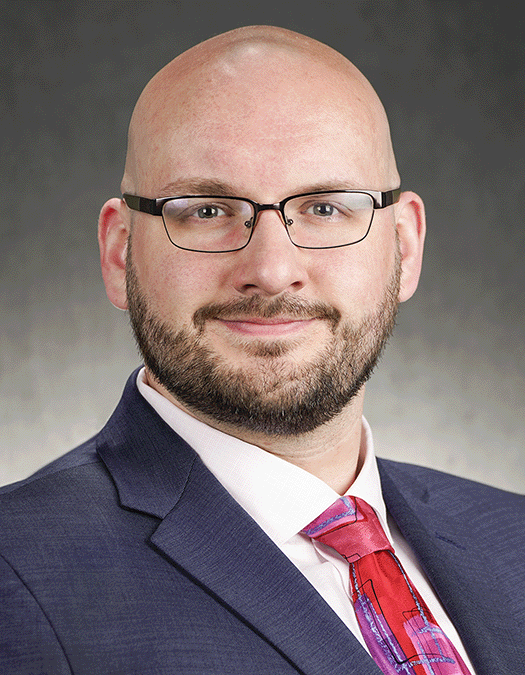
Rep. David Gottfried
Sponsored bills
Maddy summaryHF 1985 allocates $2.5 million for fiscal year 2026 and $2.5 million for fiscal year 2027 from the general fund to support employment programs for Minnesotans with mental illness. The funds must be used by the commissioner of employment and economic development to provide evidence-based job support services through existing or new programs, including expanding services to areas without current programs. This appropriation is specifically intended to sustain current services, grow access in underserved regions, and support programs that previously received no state funding. The bill directly affects service providers and individuals seeking employment assistance under Minnesota Statutes sections 268A.13 and 268A.14.
Maddy summaryHF 1589 establishes a three-year pilot program (2026-2027 to 2028-2029) in six Minnesota school districts or charter schools to increase access to advanced coursework. It requires participating schools to automatically enroll students who meet state assessment benchmarks or earn top grades in language arts, math, or science into advanced courses (like AP, dual credit, or honors), while allowing parents to opt their child out. The bill appropriates funds to cover AP exam fees, teacher training, textbooks, tutoring, and bonuses for teachers based on student AP exam pass rates. Participating districts must collect and report disaggregated data on student enrollment, retention, and outcomes, with a final report due to lawmakers by January 2030.
Maddy summaryHF 1771 appropriates $250,000 for fiscal year 2026 and $250,000 for fiscal year 2027 to the MacPhail Center for Music to expand its "Learning with Music" program. The funds require the center to create professional development training for early childhood educators statewide - both online and in person - based on the program's proven methods. Additionally, the grant will deepen direct programming at five early childhood centers in the Twin Cities metropolitan area, prioritizing children from families experiencing economic hardship. This bill directly affects early childhood educators and underserved young children through targeted educational support and expanded access to music-based learning.
Maddy summaryHF 1216 appropriates $400,000 for fiscal year 2026 and $400,000 for fiscal year 2027 from the workforce development fund to fund a statewide apprenticeship readiness program. The grant supports Building Strong Communities, Inc. to prepare women, Black, Indigenous, and People of Color, and veterans for careers in the building and construction industries. This one-time funding creates a targeted initiative to increase workforce diversity in skilled trades through program access and training. The bill directly affects the specified demographic groups and the organization administering the program.
Maddy summaryHF 61 requires Minnesota school districts and charter schools to provide approved mental health instruction for students in grades 4-12 starting in the 2026-2027 school year. It also mandates youth sports programs (for which fees are charged) to train coaches and officials on recognizing mental illness warning signs and suicide prevention. The bill modifies emergency intervention rules for schools, updating requirements for physical holding or seclusion. These changes directly affect public schools, charter schools, and youth sports organizations across Minnesota.
Maddy summaryHF 2591 establishes a new fifth tax bracket for Minnesota individual income tax, targeting high earners to replace revenue lost from federal Medicaid funding changes. The bill amends tax law to create a top income bracket (applying to income over $1.667 million for married couples filing jointly) with a rate set by the commissioner of revenue. This rate must be calculated to generate revenue equal to the amount of federal Medicaid funds Minnesota lost, as certified by the commissioner of management and budget. The new tax rate applies to taxable years 2026 and 2027, affecting only taxpayers in the highest income bracket.