Maddy summaryHF 445 appropriates $8,856,000 from the state general fund to provide a one-time grant to Union Gospel Mission, Inc. (a Duluth-based nonprofit) for the construction of a community engagement center. The center will serve people experiencing homelessness and include facilities like a commercial kitchen, warming center, health services, classrooms, and hygiene spaces. This funding is specifically for predesign, construction, and equipping the facility in Duluth.
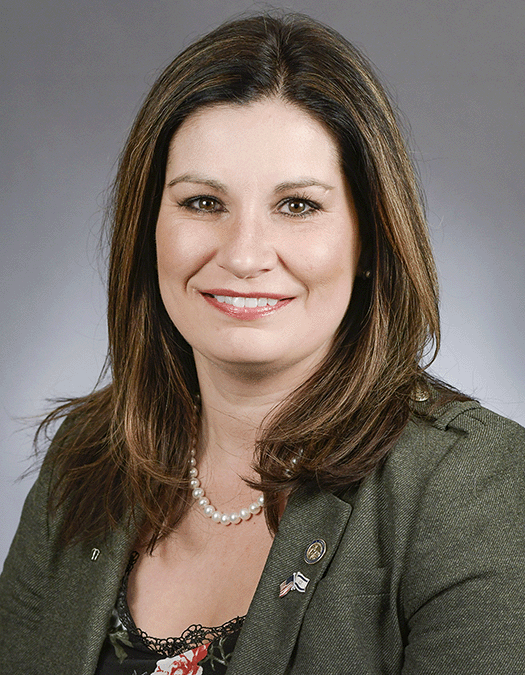
Rep. Mary Franson
Sponsored bills
Maddy summaryThis bill modifies the local sales tax authorization for the city of Sauk Centre, Minnesota, by increasing the maximum amount of bonds the city can issue from $10 million to $20 million to fund specific projects. The changes require voter approval at a special election before the increased bonding authority and tax collection limits take effect. The sales tax imposed to fund these projects will expire once $20 million has been collected for project costs and bond issuance, or by December 31, 2045, whichever comes first. Any remaining funds after paying all project costs and retiring the bonds will be transferred to the city's general fund. The bill also removes certain debt limitation requirements that would otherwise apply to the new bonds.
Maddy summaryHF 3748 appropriates $250 million from the general fund for grants to replace lead service lines in municipal water systems. This funding directly helps water utilities and homeowners affected by lead pipes, which pose health risks. The grants are administered by the Public Facilities Authority under Minnesota Statutes, section 446A.077, and are available until June 30, 2034. The bill provides one-time state funding to accelerate the replacement of hazardous lead pipes in drinking water infrastructure.
Maddy summaryThis bill requires Minnesota's social studies standards to include information about the dangers and perils of communism and socialism, specifically during the 2030-2031 review and revision of state academic standards. The legislation mandates that the state commissioner incorporate details about estimated lives lost and negative outcomes associated with these ideologies into the updated curriculum. It directly affects Minnesota public school systems by setting a specific requirement for future social studies education content. The bill takes effect on July 1, 2026, and does not change current curriculum requirements but establishes a mandate for future revisions.
Maddy summaryHF 16 prohibits Minnesota cities, counties, or local governments from passing laws that block law enforcement from sharing immigration status information with federal authorities. It requires county attorneys to notify federal immigration agencies when someone without legal status is arrested for a violent crime. The bill overrides any local "noncooperation" policies that would restrict this information sharing or federal immigration enforcement. It applies to all local law enforcement and government entities in Minnesota, ensuring consistent cooperation with federal immigration enforcement on specific matters.
Maddy summaryThis bill modifies the legal definitions for adult foster care licensing in Minnesota to clarify the services and responsibilities required. It updates the definition of "foster care for adults" to specify that programs must provide household management services alongside food, lodging, protection, supervision, and care according to individual service plans. The bill also revises the definition of a "family adult foster care home" to require that the license holder lives in the home and serves as the primary caregiver providing the listed services. These changes directly affect adult foster care providers and licensing requirements administered by the Minnesota Department of Human Services. The adjustments aim to ensure clearer standards for how adult foster care homes operate and deliver care to functionally impaired adults.
Maddy summaryHF 3322 proposes a 10-cent excise tax on plastic drink containers (under 3 liters) sold to retailers in Minnesota, paid by bottle distributors (like beverage sellers or producers). The tax applies to most plastic bottles containing beverages (excluding drugs and infant formula) and begins January 1, 2026, expiring December 31, 2030. Revenue from the tax will fund Minnesota's water infrastructure account, prioritizing projects like sewer systems, water treatment, and contaminant removal in communities with low tax base per capita. Funds are distributed to local governments for eligible capital projects related to drinking water, wastewater, and stormwater systems.
Maddy summaryHF 3562 modifies Minnesota's motor vehicle registration tax for passenger cars and hearses. It reduces the tax rate from 1.54-1.575% to 1.25-1.285% of a vehicle's manufacturer's suggested retail price (MSRP), depending on whether the vehicle was first registered in Minnesota before or on/after November 16, 2020. The tax amount decreases each year based on the vehicle's age (e.g., 100% of MSRP in year one, dropping to 10% in year ten), then becomes a flat $20 annually after the 10th year. This bill directly affects Minnesota vehicle owners paying registration fees for passenger cars and hearses, effective for registrations starting January 1, 2027.
Maddy summaryThis bill authorizes the city of Alexandria to impose a local sales and use tax of up to 0.25% if approved by voters in a special election. The tax revenue would be used to cover the costs of collecting the tax and to finance up to $30 million for expanding and renovating the PrimeWest Health Runestone Community Center. The city could issue bonds to help fund the project, and the tax would expire after 20 years or once the project costs are fully paid.
Maddy summaryThis bill clarifies milk options available in Minnesota schools participating in the federal National School Lunch Program. It requires schools to offer a variety of fluid milk (including flavored, organic, and nonorganic whole, reduced-fat, low-fat, and fat-free options) and nutritionally equivalent non-dairy beverages. The bill also mandates that schools provide lactose-reduced milk, lactase-fortified milk, or milk with added acidophilus for students with lactose intolerance upon a parent's written request. These changes apply directly to public and nonpublic schools receiving school lunch funding or participating in the breakfast program.