

Unauthorized Spending Accountability Act of 2021 This bill establishes a three-year budgetary level reduction schedule for unauthorized programs funded through the annual appropriations process. Under the bill, a budgetary level is an allocation provided to the congressional appropriations committees under Section 302(a) of the Congressional Budget Act of 1974 by a congressional budget resolution or a deeming resolution. The schedule applies to programs included in the Congressional Budget Office's annual report listing programs that are funded through the appropriations process and have an authorization of appropriations that has either expired or will expire during the year. For the first year after a program's authorization has expired, the bill requires the budgetary level to be reduced by 10% of the funds appropriated for the program in the expiring fiscal year. The bill then requires reductions of 15% in the second and third years before terminating the program at the end of the third unauthorized year. Programs that are reauthorized during the three-year period are exempt from the budgetary level reductions if the reauthorization contains a sunset provision limiting the authorization of appropriations period to no more than three years. The bill establishes the Spending and Accountability Commission to review all mandatory spending programs and submit to Congress a legislative proposal to establish an authorization cycle for discretionary spending programs. The commission may recommend legislation to replace the budgetary level reductions required by this bill with reductions in mandatory spending. The commission's reauthorization schedule must limit reauthorizations to three years, include the budgetary level reductions established by this bill, and establish a mechanism for replacing the budgetary level reductions with reductions to mandatory spending programs. The House of Representatives must consider the commission's proposal using specified expedited legislative procedures.
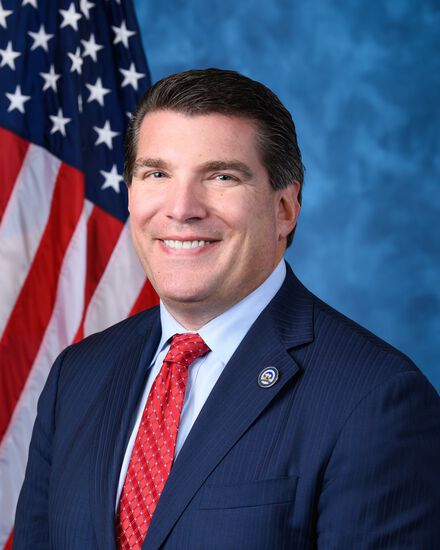
Rep. Jay Obernolte
Sponsored bills
Medicare Multi-Cancer Early Detection Screening Coverage Act of 2021 This bill provides for Medicare coverage and payment for multi-cancer early detection screening tests that are approved by the Food and Drug Administration and that are used to screen for cancer across many cancer types.
This bill directs the Speaker of the House and the President pro tempore of the Senate to arrange for the award of three Congressional Gold Medals to the U.S. Capitol Police (USCP) and other law enforcement agencies that protected the U.S. Capitol on January 6, 2021. Following the award of these medals, one medal shall be given to the USCP, one medal shall be given to the Metropolitan Police Department of the District of Columbia, and one medal shall be given to the Smithsonian Institution and displayed with a plaque listing all law enforcement agencies that participated in protecting the Capitol on January 6, 2021.
Global War on Terrorism Memorial Location Act This bill authorizes the establishment of a National Global War on Terrorism Memorial in the area of the National Mall.
RTP Full Funding Act of 202 1 This bill revises provisions regarding the recreational trails program of the Department of Transportation (DOT). Specifically, the bill requires DOT to estimate the total amount of nonhighway recreational fuel taxes received by the Department of the Treasury and transferred to the Highway Trust Fund; the Federal Highway Administration to establish financial management information system codes for certain motorized and non-motorized use projects, including single and diverse use projects; DOT to reserve amounts of the state-apportioned funds for administrative, research, technical assistance, and training expenses to carry out the recreational trails program; and states to obligate a specific amount of reserved funds each fiscal year for the recreational trails program.
QUEST Act of 2021 This bill directs the Department of Energy to establish and carry out a program (to be known as the Quantum User Expansion for Science and Technology program or the QUEST program) to encourage and facilitate access to U.S. quantum computing hardware and quantum computing clouds for research purposes in order to (1) enhance the quantum research enterprise of the United States, (2) educate the future quantum computing workforce, and (3) accelerate the advancement of U.S. quantum computing capabilities.
Passports for Purple Hearts Act This bill exempts Purple Heart recipients from fees associated with obtaining a passport.
Direct Hire To Fight Fires This bill provides direct-hire authority to the Department of Agriculture and the Department of the Interior for purposes of filling wildland and structural firefighting positions, including support positions, in the Forest Service and Interior agencies. Direct-hire authority is an expedited hiring authority that currently may be issued by the Office of Personnel Management (OPM) to fill positions in the competitive service for which there is a critical hiring need or severe shortage of candidates. The OPM may issue such authority to agencies upon written request or upon an independent assessment that there is a critical hiring need or severe shortage of candidates for specific positions.
This resolution honors Officers Brian Sicknick and Howard Liebengood of the U.S. Capitol Police, and it commends the bravery and service demonstrated by officers of the U.S. Capitol Police, the Metropolitan Police Department of the District of Columbia, and the other law enforcement agencies and protective entities that assisted in responding to the January 6, 2021, attack on the U.S. Capitol.
No Social Media Accounts for Terrorists or State Sponsors of Terrorism Act of 2021 This bill bars access to certain social media platforms by individuals designated as terrorists or senior officials of a government that is a state sponsor of terrorism. Specifically, the bill requires the President to prohibit providers of social media platforms (i.e., platforms that allow users to generate and share content and that have over 100,000 active users) from making such platforms available to barred individuals or officials. The bill does, however, allow officials to use these platforms solely for legitimate emergency alert purposes. Violations of this prohibition are subject to civil and criminal penalties. In addition, the President may waive the prohibition in the interests of U.S. national security. The Department of the Treasury must report to Congress on (1) the status and impact of the prohibitions of this bill, and (2) efforts to facilitate the free flow of information and access to communications technologies by civil society and democratic activists in Iran, Syria, North Korea, Cuba, and other countries controlled by authoritarian regimes.