Maddy summarySB 1005 amends the Michigan Vehicle Code to exempt Gold Star family members from the state parks recreation passport requirement. This change directly affects families who have lost a loved one in military service by removing the fee they must pay to access state parks. The bill does not alter any other provisions of the vehicle code or create new requirements for other drivers. It is a procedural amendment focused solely on this specific exemption for a designated group of individuals.
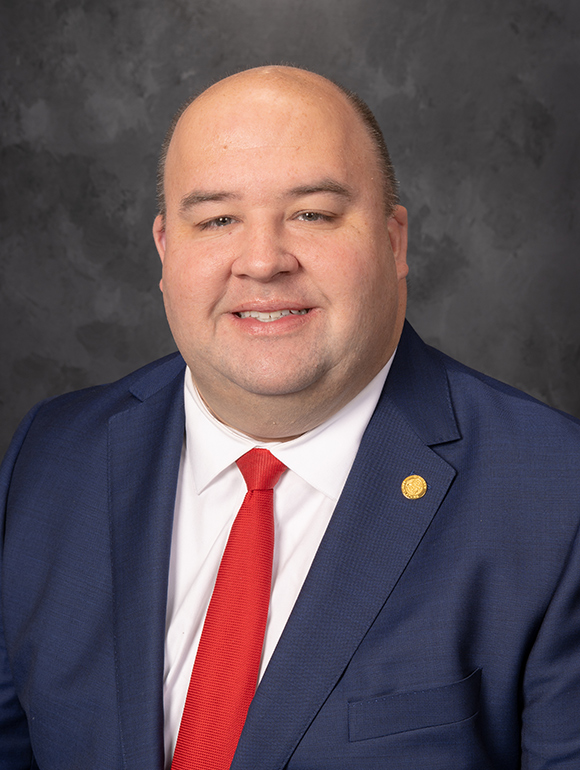
Sen. Michael Webber
Sponsored bills
Maddy summarySenate Bill 998 modifies Michigan's use tax law to clarify how credit for trade-in vehicles is calculated when determining the taxable amount of a purchase. The bill updates the definition of 'purchase price' to ensure that the value of a trade-in vehicle used as part payment is properly excluded from the tax base, aligning the rules with existing provisions for watercraft. This change directly affects vehicle dealers and consumers who trade in their current vehicles to buy new ones, ensuring the tax is applied only to the net cost rather than the full purchase price.
Maddy summaryThis bill amends Michigan's Natural Resources and Environmental Protection Act to require a valid recreation passport fee for residents and a specific park permit for nonresidents before entering state parks or designated public boating access sites with a motor vehicle. The legislation mandates that these fees be displayed on the vehicle's windshield or registration tabs, while explicitly exempting vehicles used for official state business, emergency services, federal highways, and designated free fishing days. Additionally, the bill clarifies enforcement procedures by establishing a $100 civil fine for violations and designating vehicle registration plates as prima facie evidence of ownership in parking infractions. A critical provision of this bill is the exemption of Gold Star family members from these recreation passport requirements, ensuring they can access state parks without paying the fee.
Maddy summaryThis bill amends Michigan's General Sales Tax Act to modify how sales tax is calculated on vehicle trade-ins. It updates the rules for determining the tax credit allowed when a customer uses an old vehicle to pay for a new one, ensuring the credit is based on the agreed-upon value of the trade-in rather than a fixed dollar limit. The changes apply to dealers selling new or used motor vehicles and recreational vehicles, requiring them to separately state the trade-in value on invoices to qualify for the tax credit. By clarifying these provisions, the legislation aims to standardize the process for calculating sales tax on vehicle purchases involving trade-ins.
Maddy summarySB 559 creates a new Revenue Sharing Trust Fund in Michigan's Department of Treasury, effective October 1, 2025. The fund will receive money from the general sales tax, donations, and investment earnings, with balances carrying over annually instead of lapsing. It mandates specific distributions: $299 million to cities, villages, and townships (based on prior eligibility regardless of new criteria), $261 million to counties (similarly based on prior eligibility), and remaining funds distributed through three formulas measuring taxable value, population type, and yield equalization. This directly affects all local governments in Michigan by changing how they receive state revenue-sharing payments.
Maddy summarySB 561 amends Michigan's sales tax law to change how revenue is distributed. It allocates 8.6% of the 4% general sales tax (starting October 1, 2025) to a new Revenue Sharing Trust Fund for distribution to cities, villages, townships, and counties. The bill also directs computer software sales tax revenue ($9-12 million annually) to the Michigan Health Initiative Fund and splits aviation fuel tax revenue (35% to the state aeronautics fund, 65% to airport funds). These changes affect local governments, public schools (via school aid fund allocations), airports, and health programs, without altering the overall tax rates.
Maddy summaryThis Senate resolution designates April 29, 2026, as "End Jew-Hatred Day" to formally recognize the Jewish community in Michigan. The measure directly affects the state legislature by adopting a symbolic declaration rather than enacting new laws or regulations. Key provisions include a statement condemning antisemitism and a call for unity among lawmakers to address discrimination against Jewish people. The resolution cites recent hate crimes and a specific synagogue attack as context for the observance. Ultimately, the bill serves as a commemorative gesture without altering existing legal frameworks or policies.
Maddy summaryThis bill establishes a new licensing framework for agencies that provide specialized transportation services for individuals experiencing mental health crises in Michigan. It defines specific criteria for who qualifies for these services, such as being medically stable and physically able to enter a vehicle, while mandating that those requiring medical intervention or restraints be transported by ambulance instead. The legislation requires licensed agencies to operate under medical direction, maintain detailed logs of each trip, and adhere to strict safety and hygiene protocols for their vehicles. Additionally, the bill mandates that agencies submit annual reports to the legislature detailing the number of transports, police interventions, and any investigations into staff misconduct.
Maddy summaryThis bill directs the state's medical assistance program to cover transportation costs for individuals with behavioral health needs. It requires the department to ensure that transport agencies follow existing mental health code regulations regarding these services. The legislation defines key terms such as behavioral health transport and eligible individuals by referencing current state laws. However, the bill will not become effective unless a companion bill, SB 0928, is also passed into law.
Maddy summaryThis Senate resolution urges the United States and Taiwan to sign additional trade agreements and an agreement to avoid double taxation. It also calls for Taiwan's inclusion in the Indo-Pacific Economic Framework for Prosperity. Additionally, the bill asks Michigan businesses to refer to the region as "Taiwan," citing the Taiwan Relations Act as legal justification. The measure is based on the significant economic ties between the two entities, including trade in goods, services, and agricultural products.