Maddy summarySB 1117 amends the Michigan Mental Health Code to update and clarify the definitions of key terms used in state psychiatric hospitals and related services. The bill directly affects individuals receiving mental health or substance use disorder services, as well as the facilities and staff that provide them. It revises definitions for categories such as serious emotional disturbance, serious mental illness, telemedicine, and transfer facilities to ensure consistency with current medical standards and operational realities. By standardizing these terms, the legislation aims to improve clarity in how services are delivered and funded across the state's mental health system.
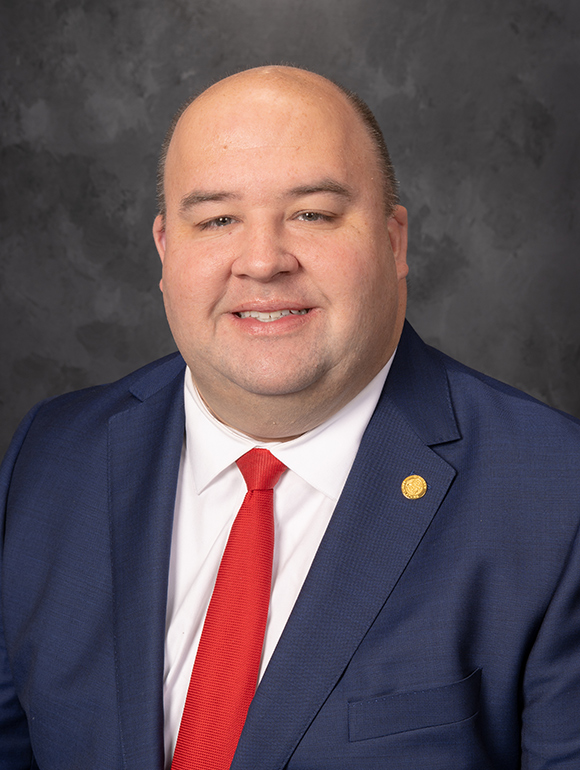
Sen. Michael Webber
Sponsored bills
Maddy summaryThis bill requires the Michigan Department of Health and Human Services to establish a State Office of Recipient Rights to protect the rights of individuals receiving mental health services. The new office will have direct access to all department programs, staff, and evidence to investigate suspected rights violations and ensure providers offer annual training on these protections. Additionally, the bill mandates that contact information for the office be prominently posted at all service sites and that staff and complainants are shielded from retaliation. The office director will be appointed with input from an advisory committee and cannot be dismissed without similar consultation, ensuring the office operates independently.
Maddy summaryThis bill updates Michigan state law to require the Department of Treasury to pay interest on tax refunds that are delayed beyond specific timeframes. It directly affects taxpayers who have filed complete and timely income tax returns and are awaiting refunds. Under the new rules, refunds for Michigan income taxes will automatically earn interest if they are not processed within 30 or 60 days of the department receiving the return, depending on when the return was filed. The bill also establishes a penalty of $100 for refunds delayed more than 90 days and sets a fixed 3% annual interest rate for a temporary period before switching to a variable rate tied to the prime rate. These provisions apply only to straightforward refunds without errors, audits, or suspected fraud, ensuring the state compensates citizens for administrative delays.
Maddy summaryThis bill is a memorial resolution honoring the life and public service of R. Robert Geake, a former Michigan legislator who served in both the House of Representatives and the Senate. The text details his extensive career, including his legislative work on committees focused on education, mental health, and children's welfare, as well as his later roles as an investigator and chair of the Office of the Children's Ombudsman and the Legislative Retirement System Board. The resolution formally expresses the Legislature's tribute to his dedication and instructs that copies of the document be sent to his family.
Maddy summarySB 1073 modifies the Michigan Trust Fund Act to adjust how money flows into and out of the 21st Century Jobs Trust Fund. The bill specifies that certain funds, including tobacco settlement revenues and amounts from the general fund, must remain in the trust fund rather than reverting to the general fund at the end of a fiscal year. It also clarifies that while the principal stays in the trust, any interest and earnings generated from investments must be deposited into the general fund. Additionally, the bill outlines that money from the trust can only be used to support specific programs under the Michigan Strategic Fund Act, such as those related to innovation and economic development. This legislation is contingent upon the simultaneous passage of Senate Bill 1072, which is tied to it in the legislative process.
Maddy summaryThis bill directs a portion of Michigan's individual income tax revenue to the 21st Century Jobs Trust Fund to support the Michigan Innovation Fund program. It establishes a mandatory deposit of $30 million annually into this fund for the 2026-2027 and 2027-2028 fiscal years, with ongoing contributions of $5 million per year beginning in 2029-2030. The legislation also updates the state's existing tax revenue distribution schedule to include these new allocations alongside contributions to other funds like those for housing, roads, and general operations. Importantly, the bill does not take effect unless a companion bill, SB 1073, is also passed into law.
Maddy summarySB 1060 updates Michigan's funeral director licensing laws by establishing a new "courtesy license" for professionals currently licensed in Indiana, Ohio, or Wisconsin, allowing them to transport and register deceased individuals without operating a funeral home or performing embalming. The bill also introduces mandatory continuing education requirements for all licensed funeral directors and mortuary science practitioners, ensuring they complete at least four hours of relevant training annually on topics like ethics, safety, and consumer protection. Additionally, the legislation clarifies definitions for key terms and sets a future deadline for new licensees to have completed a specific amount of resident training and hold an accredited associate degree. These changes directly affect funeral service professionals in Michigan by modifying how out-of-state workers are treated and by raising ongoing training standards for those already practicing in the state.
Maddy summarySB 1066 amends the Prepaid Funeral and Cemetery Sales Act to update definitions and registration requirements for businesses selling prepaid funeral plans in Michigan. The bill clarifies terms such as "funeral services" to explicitly include mortuary science licensees and revises the definition of "merchandise" to specify which items are covered under the law. It also sets specific fees and renewal procedures for companies that must register with the state department to legally offer these contracts. By updating these sections, the legislation ensures that regulatory language remains current while maintaining oversight of funds held by escrow agents.
Maddy summaryThis bill updates Michigan's insurance code to clarify rules about how life insurance companies can interact with funeral homes and cemeteries. It maintains a separation between insurers and funeral businesses by prohibiting insurance companies from owning funeral establishments and restricting how they can contract with funeral directors. The legislation also defines specific conditions under which funeral providers can be licensed to sell limited life insurance policies tied to funeral costs, while ensuring that policy proceeds can be assigned to pay for these services without creating a conflict of interest. Additionally, the bill requires clear disclosures when insurance benefits are insufficient to cover funeral expenses and allows for revocable pre-death assignments of insurance proceeds to pay for funeral services.
Maddy summaryThis bill amends the Michigan Cemetery Regulation Act to update the list of violations that allow the state commissioner to deny permits, revoke registrations, or take disciplinary action against cemetery operators. The key change involves clarifying and correcting references to existing laws, specifically ensuring that violations of Article 18 of the Occupational Code are properly listed as grounds for enforcement. It also retains provisions allowing the commissioner to impose fines of up to $5,000 for each violation and requires operators to fulfill existing contracts even if their permit is suspended or revoked. The legislation is tied to another bill, SB 1060, and will not take effect unless that companion bill is also passed into law.