Issue · Transportation

Transportation

Every transportation bill, vote, and legislator stance in Michigan, automatically classified by Maddy, our AI policy reader.

Total bills
125
119th Congress
Top supporter
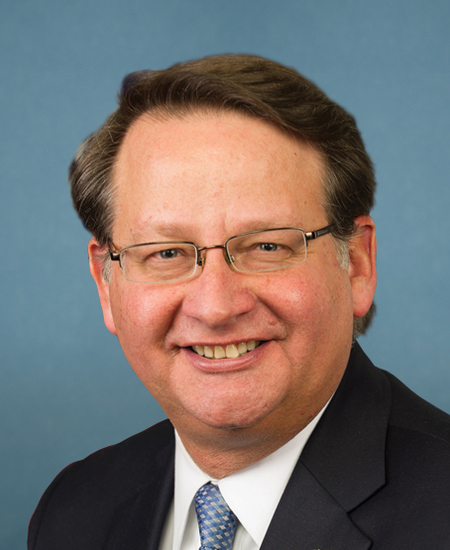
Gary C. Peters
67% support rate
Top opponent
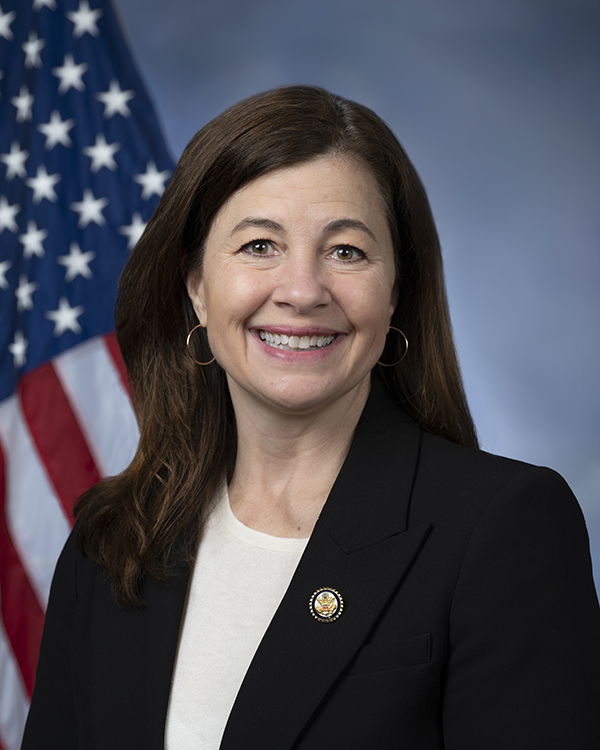
Kristen McDonald Rivet
33% support rate
Ranked legislators
8
5 support · 3 oppose
Key legislators

Who's moving transportation in Michigan

Legislators moving transportation in Michigan
Legislator Party Stance Support rate Votes
Gary C. Peters
Gary C. Peters Senate
D
Support
67% 152
Elissa Slotkin
Elissa Slotkin Senate
D
Support
63% 153
Jack Bergman
Jack Bergman House · District 1
R
Support
60% 120
John R. Moolenaar
John R. Moolenaar House · District 2
R
Support
60% 122
Tim Walberg
Tim Walberg House · District 5
R
Support
60% 122
Kristen McDonald Rivet
Kristen McDonald Rivet House · District 8
D
Oppose
33% 119
Hillary J. Scholten
Hillary J. Scholten House · District 3
D
Oppose
40% 121
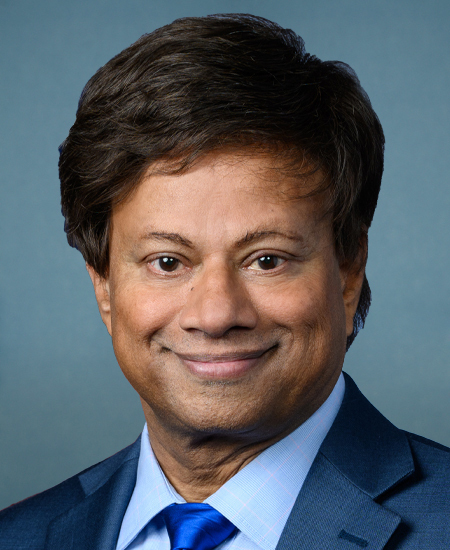
Shri Thanedar
Shri Thanedar House · District 13
D
Mixed −
47% 121
Showing 1–10 of 125 bills

All transportation bills

in committee · United States · House Sep 4, 2026

HR 10303: FLIGHT DECK Act

The FLIGHT DECK Act requires the Federal Aviation Administration to create a voluntary program that allows certified air traffic controllers to sit on the flight deck of commercial or general aviation aircraft during flights. This initiative is designed to help controllers better understand the onboard conditions and complex requirements faced by flight crews. Participation is limited to one round trip within the United States, its territories, Alaska, and Hawaii, with no government reimbursement for travel expenses. The FAA must consult with pilot and controller unions to establish safety policies and ticketing rules, and it must submit a report to Congress one year after the program begins detailing participation levels and any barriers encountered.
Sub-Topics Airports
in committee · United States · House Jul 23, 2026

HR 9898: Transportation for Reentry Act

The Transportation for Reentry Act requires transit agencies receiving federal funding to offer free public transportation to individuals released from prison after serving at least one year. Under this bill, these agencies must provide the service for one year starting from the person's release date and cover costs related to program setup, staff training, and outreach. To receive federal grants, transit recipients must establish enrollment systems, track usage data, and ensure compliance with the program's duration requirements. The legislation authorizes $40 million annually from 2027 to 2031 to support these efforts and mandates a final report on the program's impact five years after enactment.
in committee · United States · House Jul 9, 2026

HR 9620: Military Next-Gen Collision Avoidance Act of 2026

The Military Next-Gen Collision Avoidance Act of 2026 requires the Secretary of Defense to create and submit an action plan for deploying advanced airborne collision avoidance technology to military aircraft. This plan must outline a strategy for widespread adoption, detail necessary funding and research steps, and assess how the technology improves safety for various aircraft operators. Additionally, the bill mandates a briefing to congressional committees within 30 days of submitting the plan to discuss its contents and next steps. The legislation focuses on integrating new systems that help planes detect and avoid other aircraft using existing data broadcast equipment.
in committee · United States · House Jul 27, 2026

HRES 1464: Celebrating the opening of the Gordie Howe International Bridge and the friendship between the United States and Canada.

This resolution formally celebrates the opening of the Gordie Howe International Bridge and honors the partnership between the United States and Canada. It recognizes the economic benefits expected for the Detroit metropolitan area, including improved freight efficiency and job growth, while acknowledging the bridge's role as a symbol of cooperation. The document does not enact new laws or funding but serves as a ceremonial statement to acknowledge the project's completion and its positive impact on trade and community development.
Sub-Topics Bridges Freight
in committee · United States · House Jul 15, 2026

HR 9711: Autocycle Safety Act

The Autocycle Safety Act establishes a new legal definition for autocycles as three-wheeled motorcycles with front-wheel drive, a fully enclosed cabin, and a steering wheel. It requires manufacturers to build these vehicles to specific safety standards, mandating features like airbags, anti-lock brakes, and electronic stability control while allowing a mix of passenger car and motorcycle safety rules for other components. The Department of Transportation has three years to finalize detailed regulations that determine exactly which safety standards apply to different parts of these vehicles. This legislation directly affects vehicle manufacturers and regulators by creating a federal framework for producing and certifying three-wheeled enclosed motorcycles.
in committee · United States · House Jun 29, 2026

HRES 1395: Support for the designation of the week of June 29 through July 4, 2026, as "National Tire Safety Week" in the United States, and supporting the goals and ideals of National Tire Safety Week to educate American motorists about the importance of proper tire care and maintenance.

This resolution designates the week of June 29 through July 4, 2026, as National Tire Safety Week to raise awareness among American motorists about vehicle tire maintenance. The measure encourages drivers to inspect their tires for damage, check pressure monthly, and follow manufacturer recommendations for rotation and alignment to prevent accidents and improve safety. By promoting these specific maintenance habits, the bill aims to reduce tire-related injuries and fatalities on the road without imposing new legal requirements or funding changes.
Sub-Topics Roads & Highways
in committee · United States · House Jun 24, 2026

HR 9250: Great American Outdoors Act 250

This bill redesignates the existing National Parks and Public Land Legacy Restoration Fund as the America's Legacy Restoration Fund to address deferred maintenance on federal lands. It directs revenue from recreation fees and a portion of energy development income into the fund, which must be used primarily for repairing critical infrastructure like roads, trails, and buildings managed by agencies such as the National Park Service and the Forest Service. The legislation establishes strict rules requiring that most funds go toward non-transportation projects, mandates transparency through public dashboards tracking project status, and sets aside a small percentage for matching private donations. Additionally, the bill increases entrance fees for foreign visitors to ensure they contribute to the fund, while prohibiting the use of these specific funds for land acquisition or employee bonuses.
in committee · United States · Senate Jun 3, 2026

S 4669: A bill to exempt stinger-steered combinations from a requirement to include warning flags on projecting loads.

This bill exempts stinger-steered combinations transporting assembled highway vehicles from the requirement to display warning flags on projecting loads. It achieves this by removing the relevant regulation from the Code of Federal Regulations and directing the Secretary of Transportation to update the rules without a formal public comment period. The change directly affects trucking companies that use this specific type of vehicle to move complete highway vehicles, such as buses or semi-trailers.
in committee · United States · House May 14, 2026

HR 8835: Streamlined Apportionment, Flexibility, and Efficiency Transit Act

This bill, known as the Streamlined Apportionment, Flexibility, and Efficiency Transit Act, aims to reduce administrative burdens on public transit agencies by simplifying federal funding rules. Key provisions include requiring faster distribution of certain urban transit funds, extending the availability period for bus purchases from three to five years, and allowing agencies to retain leftover funds for future capital projects if they provide a specific certification. The legislation also directs the Department of Transportation to minimize documentation for environmental reviews, encourage early talks with historic preservation offices, and conduct a review to cut or combine unnecessary reporting requirements. Additionally, it modifies the triennial review process for transit grants to focus primarily on past deficiencies and randomly sample compliance in only up to five categories. These changes collectively seek to make federal oversight more efficient and less time-consuming for transit operators.
in committee · United States · House May 26, 2026

HR 9041: America Bikes Act

The America Bikes Act expands federal funding and flexibility for building and improving infrastructure for walking and bicycling, primarily affecting state and local transportation agencies. It allows the federal government to cover up to 100% of project costs for specific safety improvements and creates a new competitive grant program to fund large-scale networks connecting communities, schools, and workplaces. The legislation also introduces a new grant program to help integrate bicycle facilities with public transit systems and provides tax breaks for employers who reimburse employees for bicycle commuting expenses. Additionally, the bill requires the Department of Transportation to update safety guidelines for schools and set aside dedicated funding for active transportation projects on federal and tribal lands.
Showing 1 to 10 of 125 bills
1 2 3 13 Next