Issue · Healthcare

Healthcare (Prescription Drugs)

Every healthcare bill, vote, and legislator stance in Michigan, automatically classified by Maddy, our AI policy reader.

Total bills
26
2025-2026 Regular Session
Top supporter
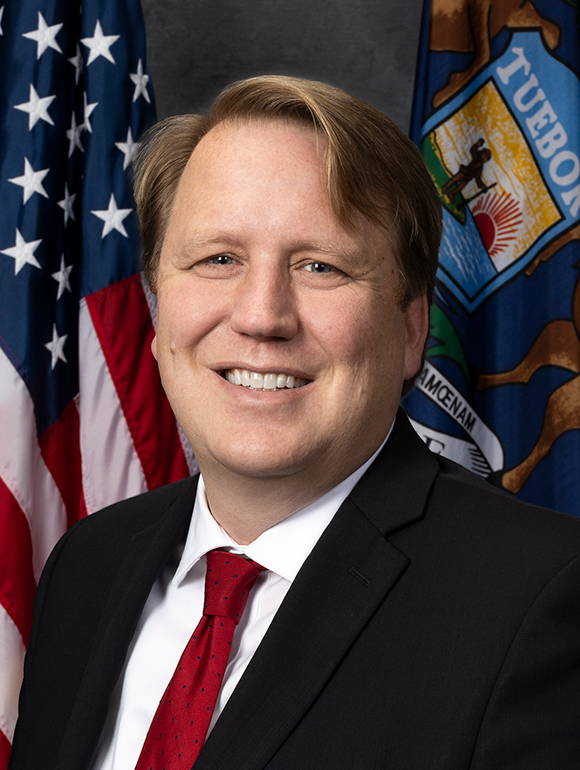
Darrin Camilleri
100% support rate
Top opponent
Aric Nesbitt
0% support rate
Ranked legislators
10
5 support · 5 oppose
Key legislators

Who's moving prescription drugs in Michigan

Legislators moving prescription drugs in Michigan
Legislator Party Stance Support rate Votes
Darrin Camilleri
Darrin Camilleri Senate · District 4
D
Strong +
100% 3
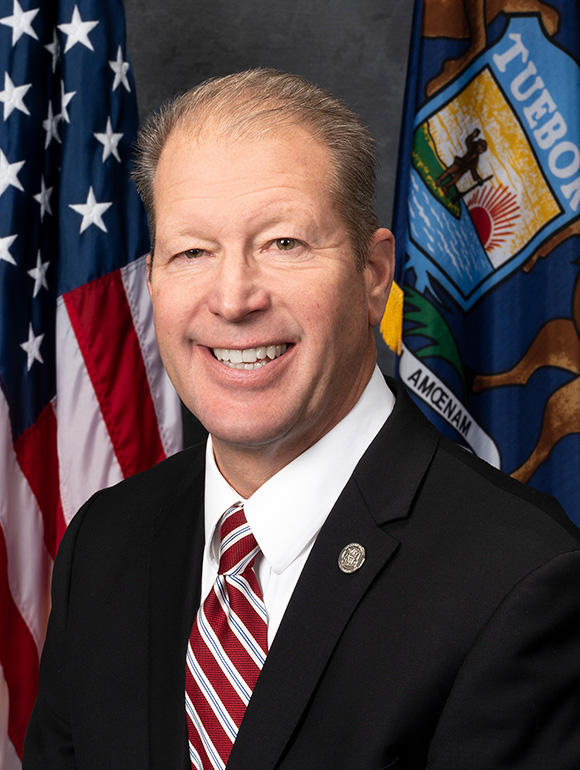
Dayna Polehanki
Dayna Polehanki Senate · District 5
D
Strong +
100% 3
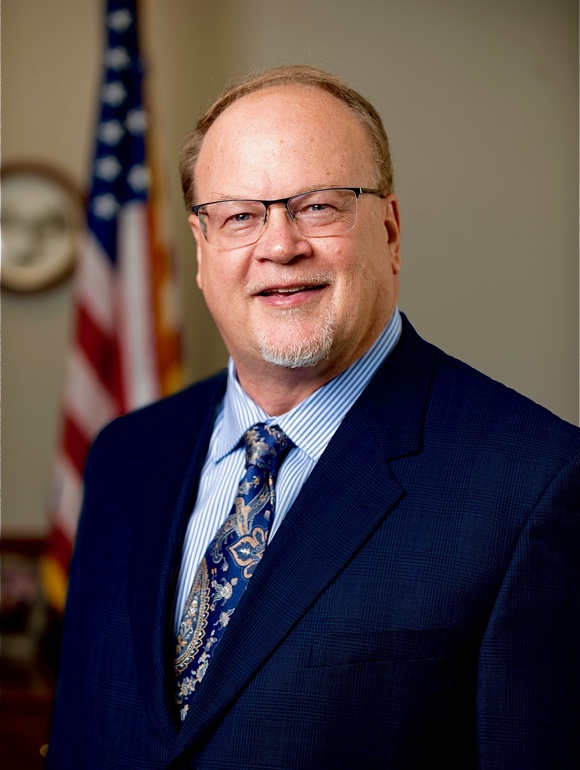
Erika Geiss
Erika Geiss Senate · District 1
D
Strong +
100% 3
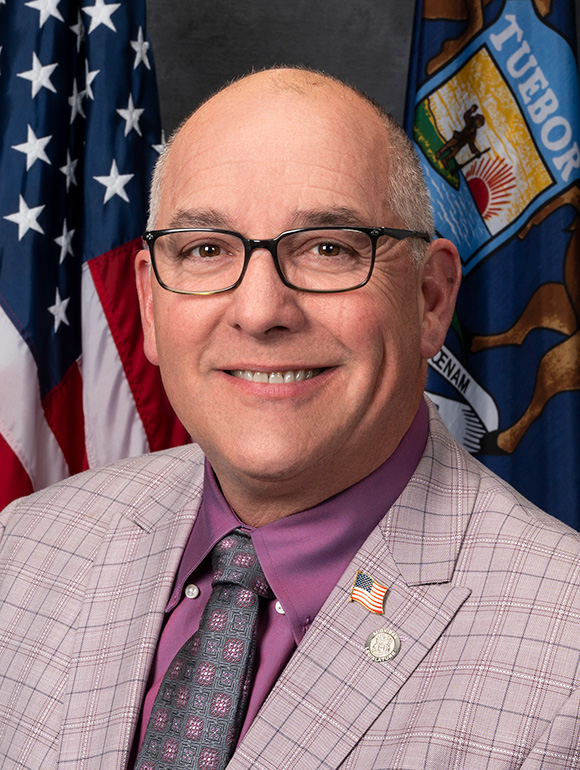
Jeff Irwin
Jeff Irwin Senate · District 15
D
Strong +
100% 3
Jeremy Moss
Jeremy Moss Senate · District 7
D
Strong +
100% 3
Aric Nesbitt
Aric Nesbitt Senate · District 20
R
Strong −
0% 3
Dan Lauwers
Dan Lauwers Senate · District 25
R
Strong −
0% 3
Ed McBroom
Ed McBroom Senate · District 38
R
Strong −
0% 3
Jim Runestad
Jim Runestad Senate · District 23
R
Strong −
0% 3
Joe Bellino
Joe Bellino Senate · District 16
R
Strong −
0% 3
Showing 1–10 of 26 bills

All healthcare bills

in committee · Michigan · House Jul 14, 2026

HB 6212: Insurance: health benefits; application of amount paid by the insured or other certain parties when calculating the insured’s co-pay for a prescription drug; require under certain conditions. Amends 1956 PA 218 (MCL 500.100 - 500.8302) by adding sec. 3406nn.

This bill requires health insurance plans in Michigan to count payments made by patients or on their behalf toward out-of-pocket maximums and cost-sharing requirements for prescription drugs. The rule applies to both standard plans and high-deductible plans, with a specific exception for high-deductible plans where counting such payments would disqualify a patient's health savings account. The legislation takes effect for policies delivered, issued, or renewed in the state after December 31, 2025.
in committee · Michigan · Senate Jul 15, 2026

SB 1098: Health occupations: pharmacists; continuing education requirements for pharmacists and pharmacy technicians; modify. Amends sec. 17731 of 1978 PA 368 (MCL 333.17731).

This bill updates Michigan's requirements for pharmacists and pharmacy technicians to renew their professional licenses. It mandates that pharmacists complete at least 30 hours of approved continuing education or pass a proficiency exam over a two-year period, while pharmacy technicians must complete at least 20 hours. A key provision requires that a portion of this training specifically covers pain and symptom management. Additionally, the bill allows licensees to fulfill all their continuing education hours through online or electronic courses, provided these programs meet state-approved standards.
Sub-Topics Prescription Drugs
in committee · Michigan · House Jun 18, 2026

HB 6101: Insurance: health insurers; limit amount on co-pay for prescription insulin; provide for. Amends 1956 PA 218 (MCL 500.100 - 500.8302) by adding sec. 3406qq.

This bill requires health insurance companies in Michigan to limit the co-pay or coinsurance for insulin to no more than $35 per 30-day supply. The rule applies to at least one product within each major type of insulin, including rapid-acting, long-acting, and premixed varieties, and prevents insurers from bypassing this limit by raising costs elsewhere or changing benefit categories. While the $35 cap is set as a maximum, insurers are allowed to charge less, and the limit only applies to insulin products; other medical costs can remain higher. The amount will be automatically adjusted each July starting in 2027 based on changes in the local Consumer Price Index.
in committee · Michigan · House Jun 30, 2026

HB 6132: Consumer protection: unfair trade practices; insulin drug pricing report; require by the department of attorney general. Amends 1976 PA 331 (MCL 445.901 - 445.922) by adding sec. 9b.

This bill directs the Michigan Attorney General to investigate how prescription insulin drugs are priced and sold within the state to ensure fair consumer protections. To conduct this study, the Attorney General will gather data from insulin manufacturers, pharmacy benefit managers, and other relevant parties, while explicitly protecting trade secrets from being disclosed. By October 1, 2027, the Attorney General must publish a public report summarizing pricing practices and offering policy recommendations to prevent overpricing or unfair trade methods. The findings will be shared with state leaders and legislative committees to inform future decisions on health policy and potential law changes.
Sub-Topics Prescription Drugs
in committee · Michigan · Senate Jun 11, 2026

SB 1033: Insurance: health insurers; cost-sharing for insulin coverage; eliminate. Amends 1956 PA 218 (MCL 500.100 - 500.8302) by adding sec. 3406qq.

This bill requires health insurance companies in Michigan to cover insulin and specific diabetes-related devices without charging patients any cost-sharing fees. The law explicitly removes deductibles, copayments, coinsurance, and other out-of-pocket expenses for these items, ensuring they are fully paid by the insurer. It applies to all policies that are delivered, issued, or renewed within the state, directly affecting both insurance providers and insured individuals with diabetes. The provision covers essential supplies such as blood glucose test strips, glucometers, lancets, and insulin syringes alongside insulin itself.
in committee · Michigan · Senate Apr 22, 2026

SB 914: Insurance: health benefits; application of amount paid by the insured or other certain parties when calculating the insured’s co-pay for a prescription drug; require under certain conditions. Amends 1956 PA 218 (MCL 500.100 - 500.8302) by adding sec. 3406nn.

This bill requires health insurance plans in Michigan to count payments made by patients or on their behalf toward meeting out-of-pocket maximums and cost-sharing limits for prescription drugs. It applies to both standard plans and high-deductible health plans, though it includes a specific rule for high-deductible plans to ensure compliance with federal health savings account regulations. The law takes effect for policies delivered, issued, or renewed after December 31, 2025, and explicitly defers to federal law if any conflict arises.
in committee · Michigan · House May 13, 2026

HB 5941: Health: pharmaceuticals; reports on certain costs and other information associated with prescription drugs; require manufacturers of prescription drugs to file with the department. Creates new act.

This bill requires prescription drug manufacturers in Michigan to submit detailed reports to the state Department of Insurance and Financial Services before raising drug prices by significant amounts. The reports must include data on research and development costs, government funding received, advertising and lobbying expenditures, and patent information for drugs costing more than $40 per treatment course. Additionally, companies must notify the department within three days of launching new high-cost specialty drugs, providing details on their development status and acquisition costs. The state will compile this information into an annual report for legislative review while keeping specific company data confidential to protect proprietary interests, with fines of up to $100,000 per month for non-compliance.
Sub-Topics Prescription Drugs
in committee · Michigan · House May 20, 2026

HB 5988: Insurance: health insurers; coverage for step therapy; modify. Amends sec. 3406t of 1956 PA 218 (MCL 500.3406t).

This bill requires Michigan health insurers and health maintenance organizations to offer a program that synchronizes multiple maintenance prescription drugs for patients with chronic long-term conditions, provided the patient, physician, and pharmacist agree it is in the patient's best interest. The law mandates that if a step therapy protocol is used to restrict drug coverage, the criteria for these protocols must be based on high-quality clinical practice guidelines developed by an unbiased, multidisciplinary panel that includes public review opportunities. Additionally, the bill establishes specific conditions under which a step therapy exception must be granted quickly, such as when a drug is contraindicated, ineffective, or causes harm, and it ensures that all relevant clinical review criteria are transparently available to patients and healthcare providers.
Sub-Topics Prescription Drugs
in committee · Michigan · House Dec 9, 2025

HB 5303: Human services: medical services; Medicaid managed care contract with pharmacy benefit manager; modify. Amends sec. 105i of 1939 PA 280 (MCL 400.105i).

HB 5303 modifies Michigan's Medicaid managed care contracts to ensure fair reimbursement for small pharmacies (with 7 or fewer retail outlets). It requires pharmacy benefit managers to use specific payment methods - such as the lesser of national average drug costs plus a professional fee or a pharmacy's usual charge - and prohibits them from taking part of that fee. The bill also mandates transparent pricing (disclosing administrative fees as a percentage) and bans new or excessive fee increases beyond inflation. These changes directly affect Medicaid managed care organizations and small pharmacies serving Michigan Medicaid patients.
passed both · Michigan · House Feb 26, 2026

HB 4932: Health occupations: pharmacists; continuing education requirements for pharmacists and pharmacy technicians; modify. Amends sec. 17731 of 1978 PA 368 (MCL 333.17731).

HB 4932 modifies Michigan's continuing education requirements for pharmacists and pharmacy technicians renewing their licenses. It adds a new requirement that 100% of the continuing education hours must include pain and symptom management content, as specified by the department. The bill also allows all continuing education to be completed online or electronically through department-approved programs. This applies directly to licensed pharmacists and pharmacy technicians seeking license renewal in Michigan, without changing the existing hour requirements (30 hours for pharmacists, 20 hours for technicians).
Sub-Topics Prescription Drugs
Showing 1 to 10 of 26 bills
1 2 3 Next