Issue · Environment

Environment

Every environment bill, vote, and legislator stance in Michigan, automatically classified by Maddy, our AI policy reader.

Total bills
194
2025-2026 Regular Session
Top supporter
Winnie Brinks
94% support rate
Top opponent
Jonathan Lindsey
6% support rate
Ranked legislators
10
5 support · 5 oppose
Key legislators

Who's moving environment in Michigan

Legislators moving environment in Michigan
Legislator Party Stance Support rate Votes
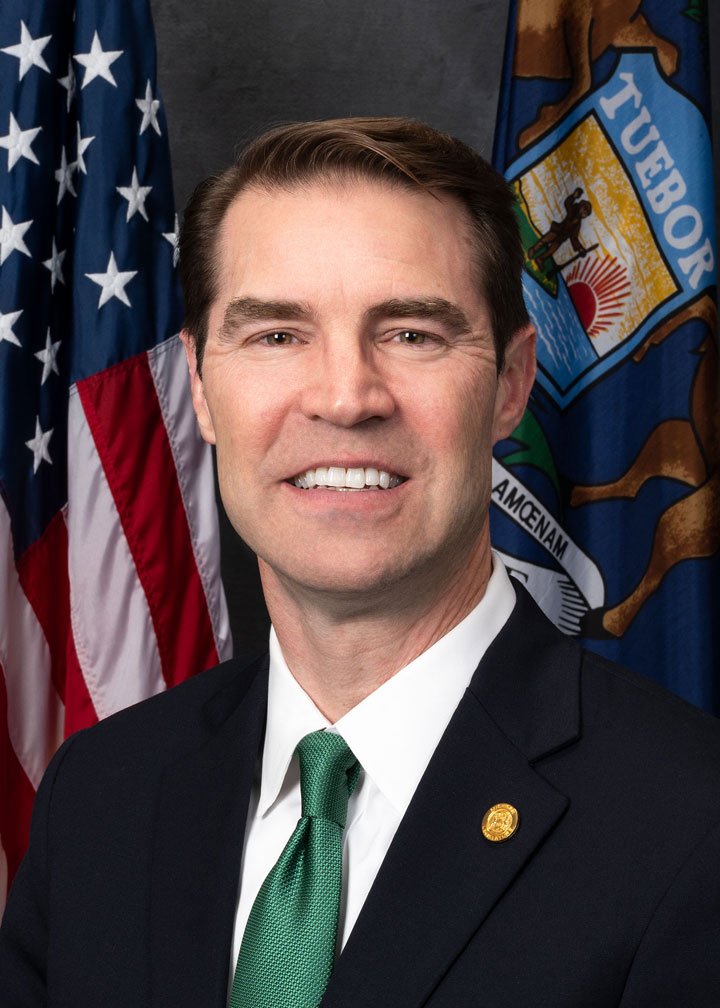
Winnie Brinks
Winnie Brinks Senate · District 29
D
Strong +
94% 29
Paul Wojno
Paul Wojno Senate · District 10
D
Strong +
94% 29
Sean McCann
Sean McCann Senate · District 19
D
Strong +
94% 29
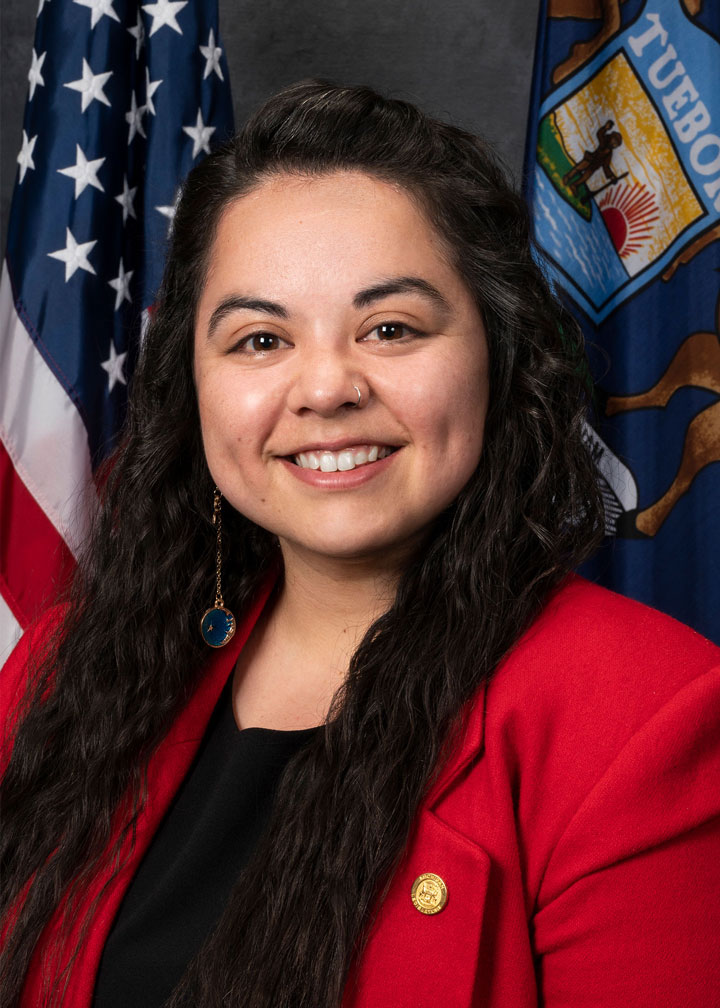
Sylvia Santana
Sylvia Santana Senate · District 2
D
Strong +
94% 29
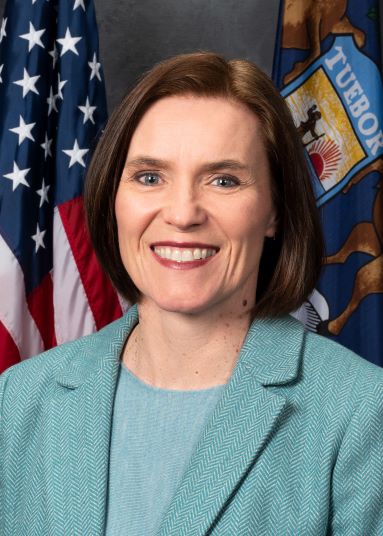
Mary Cavanagh
Mary Cavanagh Senate · District 6
D
Strong +
94% 29
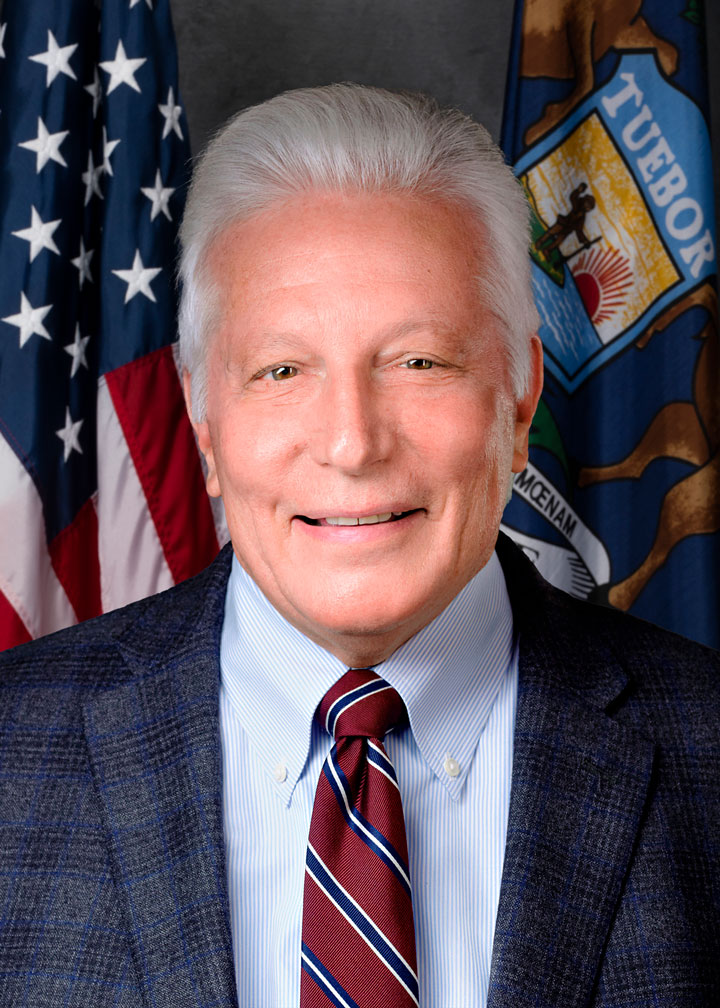
Jonathan Lindsey
Jonathan Lindsey Senate · District 17
R
Strong −
6% 28
Jim Runestad
Jim Runestad Senate · District 23
R
Strong −
17% 23
Lana Theis
Lana Theis Senate · District 22
R
Strong −
17% 29
Ed McBroom
Ed McBroom Senate · District 38
R
Strong −
20% 26
Thomas Albert
Thomas Albert Senate · District 18
R
Oppose
22% 29
Showing 171–180 of 194 bills

All environment bills

in committee · Michigan · House Aug 14, 2025

HB 4767: Environmental protection: hazardous products; Michigan statewide microplastics strategy; establish. Amends 1994 PA 451 (MCL 324.101 - 324.90106) by adding pt. 151.

HB 4767 requires Michigan's Department of Environment, Great Lakes, and Energy to develop a statewide research and monitoring plan focused on microplastics in the Great Lakes. The plan must assess microplastic impacts on health, ecosystems, and drinking water, establish baseline data, identify sources, and propose solutions like source reduction and public education. It mandates collaboration with universities (e.g., MSU, U of M) and adherence to federal standards, with the initial plan due to the legislature by July 2026 and full implementation by July 2028. This directly affects state agencies, research institutions, and Michigan residents through efforts to protect the Great Lakes ecosystem.
Sub-Topics Drinking Water
in committee · Michigan · House Aug 14, 2025

HB 4768: Water supply: quality and standards; testing and reporting of the amount of microplastics in public drinking water supplies; require. Amends sec. 5 of 1976 PA 399 (MCL 325.1005) & adds sec. 6a.

HB 4768 requires Michigan's environmental department to establish a program testing public drinking water for microplastics from 2027 to 2030. The program mandates quarterly testing using methods from agencies like the EPA, focusing on water sources such as Great Lakes tributaries, groundwater near landfills, and agricultural areas. By July 2031, the department must submit a report to the legislature detailing microplastic levels, testing methods, and recommendations for future action. This bill creates a baseline study to understand microplastic presence without setting immediate regulatory limits.
passed · Michigan · Senate May 14, 2025

SB 172: Appropriations: department of natural resources; appropriations for fiscal year 2025-2026; provide for. Creates appropriation act.

SB 172 is a funding bill that allocates over $636 million to Michigan's Department of Natural Resources (DNR) for the 2025-2026 fiscal year. It provides budget authority for DNR operations, including state parks, wildlife programs, and Great Lakes restoration, funded through state general funds, federal grants, and special revenue accounts like park fees and hunting licenses. The bill specifies exact funding amounts for key areas such as department administration, invasive species control, and public outreach programs. This is a routine budget appropriation, not a policy change, directly affecting DNR's ability to manage natural resources and public facilities.
in committee · Michigan · House May 1, 2025

HB 4411: Environmental protection: litter; removal of damaged vehicle and debris; provide for cost recovery. Amends sec. 8905a of 1994 PA 451 (MCL 324.8905a).

House Bill 4411 amends Michigan's Natural Resources and Environmental Protection Act to enhance cost recovery for littering violations. The bill mandates that courts order individuals convicted of littering to remove the debris and remediate any property damage, or reimburse railroads for these costs if the violation occurred on their property. It also allows courts to order violators to reimburse local community groups or government entities for cleanup and remediation expenses. Furthermore, the bill establishes that violators are civilly liable to property owners or vehicle removers for the reasonable costs of cleanup and property restoration.
Sub-Topics Recycling
in committee · Michigan · Senate Mar 11, 2026

SB 504: Water supply: quality and standards; testing and reporting of the amount of microplastics in public drinking water supplies; require. Amends sec. 5 of 1976 PA 399 (MCL 325.1005) & adds sec. 6a.

SB 504 requires Michigan to test public water supplies for tiny plastic particles (microplastics) starting in 2027, with quarterly sampling through 2030. It focuses testing on water sources near Great Lakes shorelines, agricultural areas, landfills, and groundwater systems, using methods aligned with federal or state standards. By July 2031, the state must report findings - including microplastic levels, sources, and potential health impacts - and recommend next steps for monitoring or regulation. This directly affects all public water systems in Michigan, including those serving communities near environmental justice concerns.
in committee · Michigan · Senate Mar 11, 2026

SB 505: Environmental protection: hazardous products; Michigan statewide microplastics strategy; establish. Amends 1994 PA 451 (MCL 324.101 - 324.90106) by adding pt. 151.

SB 505 requires Michigan's Department of Environment, Great Lakes, and Energy (DEGLE) to create a statewide research and monitoring plan focused on microplastics in the Great Lakes by July 2026. The plan must assess microplastic impacts on drinking water, human/animal health, and the Great Lakes ecosystem, establish baseline data, identify sources, and propose reduction strategies using federal standards (like EPA and NOAA guidelines). It mandates annual updates, public reporting, and requires DEGLE to collaborate with universities and leverage existing federal efforts. The bill directly affects state agencies, researchers, and Great Lakes water quality management, with implementation deadlines set for 2026 and 2028.
in committee · Michigan · Senate Jun 10, 2025

SB 392: Environmental protection: cleanups; cleanup to residential and safe drinking water standards; require unless technically infeasible. Amends secs. 20118, 20120a, 20120b, 20120e & 20121 of 1994 PA 451 (MCL 324.20118 et seq.). TIE BAR WITH: SB 391'25, SB 385'25

SB 392 amends Michigan's Natural Resources and Environmental Protection Act to require cleanup of contaminated sites to meet residential and safe drinking water standards, unless technically infeasible. It directly affects property owners, developers, and environmental remediation companies responsible for cleaning up hazardous substance releases at contaminated sites. The bill mandates that cleanup efforts must restore affected aquifers to drinking water standards where possible, stop contamination spread, and comply with state/federal environmental laws. Exceptions allowing less stringent cleanup are only permitted if the Department of Environment, Great Lakes, and Energy documents technical infeasibility and confirms the alternative approach still protects public health and the environment. This bill updates existing cleanup standards (sections 20118, 20120a, and related sections) to strengthen residential and water quality protections.
passed both · Michigan · House May 27, 2026

HB 4192: Environmental protection: permits; groundwater discharge permit requirements; modify. Amends sec. 3122 of 1994 PA 451 (MCL 324.3122).

HB 4192 updates the requirements for obtaining permits to discharge pollutants into groundwater. It directly affects businesses, industries, or facilities that discharge wastewater or pollutants into groundwater sources, such as manufacturing plants or wastewater treatment systems. The bill modifies existing permit rules under Michigan law to clarify or adjust the application and compliance standards for these discharges. This change aims to streamline or strengthen oversight of groundwater protection without altering the fundamental permit framework. The legislation passed the Michigan House on June 12, 2025, with 65 votes in favor.
passed both · Michigan · House May 13, 2025

HB 4007: Energy: alternative sources; clean energy system; expand definition of. Amends sec. 3 of 2008 PA 295 (MCL 460.1003).

HB 4007 amends Michigan's Clean and Renewable Energy Act (2008 PA 295) by expanding the definition of "clean energy system" to include natural gas plants using carbon capture and storage (at least 90% effective) and certain existing natural gas facilities that can meet clean energy standards by 2030 through carbon capture and removal technologies. This change directly affects electric providers required to meet the state's clean energy standard, as it broadens the types of energy sources that qualify toward their compliance targets. The bill specifies that carbon capture must permanently store carbon dioxide (excluding enhanced oil recovery), and permits for new facilities may require higher capture rates if deemed necessary under federal standards. This definition update provides additional pathways for natural gas projects to count toward Michigan's clean energy goals.
in committee · Michigan · Senate May 21, 2025

SB 322: Energy: alternative sources; energy waste reduction and electrification standards, renewable energy goals, and MPSC certification preempting local zoning; reverse changes made by 2023 public acts 229, 235, and 233, respectively. Amends title & heading subpt. A of pt. 2 & secs. 1, 3, 5, 7, 9, 11, 13, 22, 28, 29, 39, 45, 47, 49, 71, 73, 75, 77, 78, 91, 93, 173, 177 & 191 of 2008 PA 295 (MCL 460.1001 et seq.); repeals secs. 32, 51, 53, 72, 80, 80a, 101 & 103 & pt. 8 of 2008 PA 295 (MCL 460.1032 et seq.). TIE BAR WITH: SB 0323'25

Senate Bill 322 amends Michigan's "Clean and Renewable Energy and Energy Waste Reduction Act," specifically reversing changes made by three 2023 public acts. The bill requires electric and natural gas providers to implement renewable energy, clean energy, and energy waste reduction programs, aiming to return cost savings to customers. It establishes a goal for 35% of the state's electricity to be met through a combination of energy waste reduction and renewable energy by 2025. A key provision authorizes state certification for wind, solar, and energy storage facilities, which can preempt local zoning ordinances.
Showing 171 to 180 of 194 bills
Previous 1 17 18 19 20 Next