Issue · Budget & Taxes

Budget & Taxes

Every budget & taxes bill, vote, and legislator stance in Michigan, automatically classified by Maddy, our AI policy reader.

Total bills
639
2025-2026 Regular Session
Top supporter
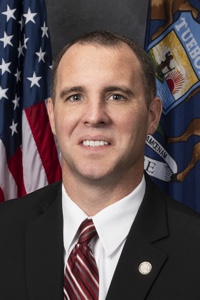
Chedrick Greene
100% support rate
Top opponent
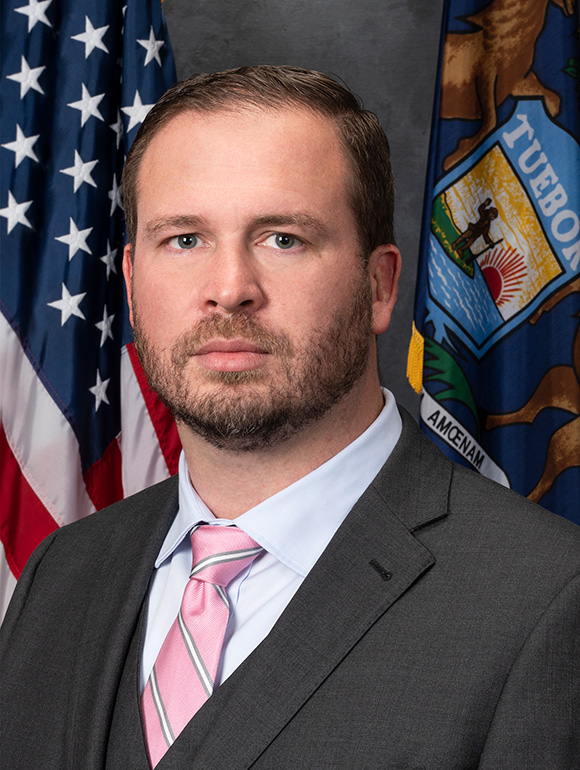
Jim Runestad
6% support rate
Ranked legislators
10
5 support · 5 oppose
Key legislators

Who's moving budget & taxes in Michigan

Legislators moving budget & taxes in Michigan
Legislator Party Stance Support rate Votes
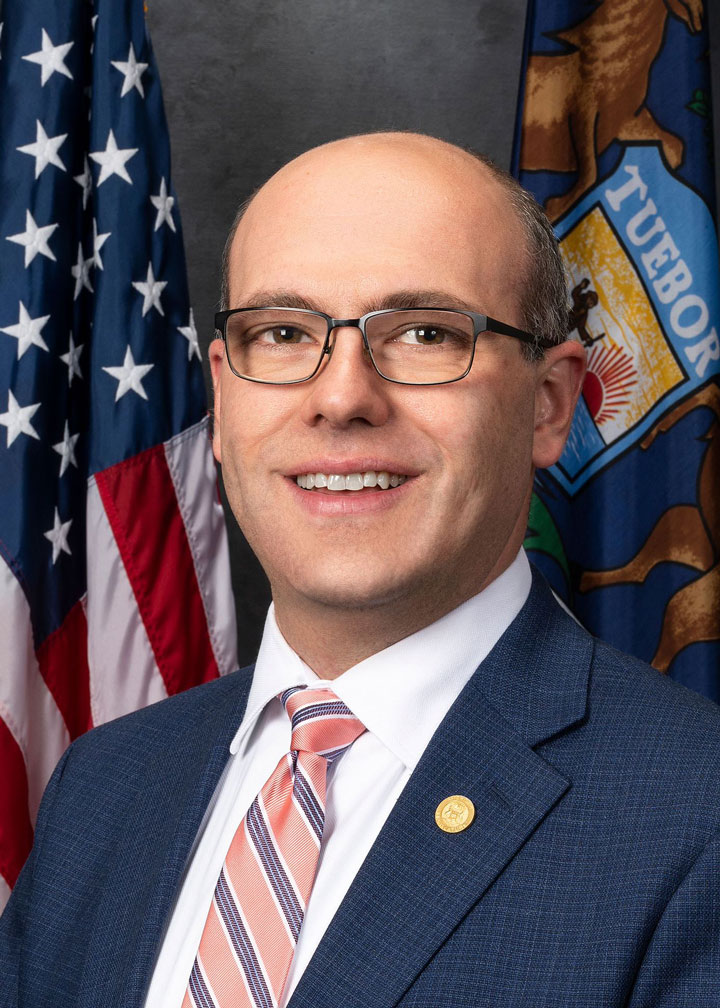
Chedrick Greene
Chedrick Greene Senate · District 35
D
Strong +
100% 17
John Cherry
John Cherry Senate · District 27
D
Strong +
97% 95
Paul Wojno
Paul Wojno Senate · District 10
D
Strong +
97% 94
Dayna Polehanki
Dayna Polehanki Senate · District 5
D
Strong +
97% 93
Sarah Anthony
Sarah Anthony Senate · District 21
D
Strong +
95% 97
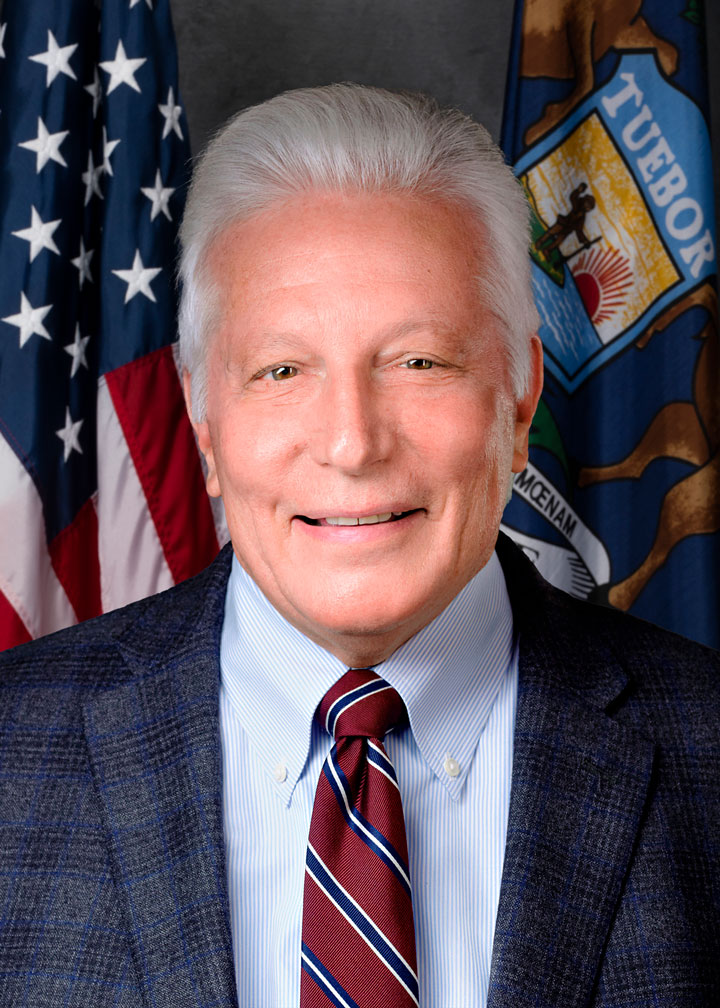
Jim Runestad
Jim Runestad Senate · District 23
R
Strong −
6% 73
Lana Theis
Lana Theis Senate · District 22
R
Strong −
10% 94
Thomas Albert
Thomas Albert Senate · District 18
R
Strong −
11% 95
Jonathan Lindsey
Jonathan Lindsey Senate · District 17
R
Strong −
11% 94
Michele Hoitenga
Michele Hoitenga Senate · District 36
R
Strong −
11% 92
Showing 411–420 of 639 bills

All budget & taxes bills

in committee · Michigan · House Jun 18, 2026

HB 5169: Sales tax: exemptions; large agricultural processing facility project exemption; provide for. Amends 1933 PA 167 (MCL 205.51 - 205.78) by adding sec. 4mm.

HB 5169 creates a sales tax exemption in Michigan for materials and equipment used in qualifying large agricultural processing projects. It directly affects businesses investing $100 million or more in constructing, expanding, or retooling agricultural facilities that process livestock, crops, or plant products (excluding forest products). The exemption applies only to tangible property that becomes a permanent, structural part of the facility or its infrastructure. This change modifies Michigan's General Sales Tax Act to reduce costs for significant agricultural development projects meeting specific investment and scope criteria.
Sub-Topics Tax Incentives
in committee · Michigan · House Nov 4, 2025

HB 5194: Appropriations: supplemental; funding for food pantries; provide for. Creates appropriation act.

HB 5194 is a supplemental appropriations bill for Michigan's fiscal year 2026, providing additional state funding to various departments and agencies. It specifically allocates funds for food pantries, ensuring state resources support organizations distributing food assistance. The bill creates a new budget allocation to supplement existing funds, with conditions on how the money can be spent. This directly affects state agencies managing food assistance programs and community food pantries serving residents in need.
Sub-Topics Appropriations
passed · Michigan · House Jun 16, 2026

HB 5214: Individual income tax: credit; credit for eligible family caregivers; provide for. Amends 1967 PA 281 (MCL 206.1 - 206.847) by adding sec. 277.

HB 5214 creates a new tax credit for Michigan family caregivers, allowing eligible taxpayers to claim up to $2,000 (30% of qualified expenses, whichever is less) against their state income tax for care provided to qualifying family members. It directly affects Michigan residents who provide unpaid care for family members living at home (not in facilities) with specific health needs, such as inability to perform two or more daily activities or requiring supervision due to cognitive impairment. Qualified expenses include respite care, assistive devices, home modifications, and transportation, but exclude general household maintenance. To claim the credit, caregivers must document expenses, provide family member details, and meet income limits ($50,000 single / $100,000 joint). The credit applies to tax years beginning January 1, 2026.
Sub-Topics Income Tax Tax Credits
in committee · Michigan · House Nov 6, 2025

HB 5225: Property tax: payment and collection; eligibility for a summer property tax deferment; modify. Amends sec. 51 of 1893 PA 206 (MCL 211.51).

HB 5225 modifies Michigan's property tax deferment program for summer property taxes, primarily affecting eligible homeowners aged 62+ or with specific disabilities (like blindness or veterans' status) and agricultural property owners. It updates income thresholds for deferment eligibility - current limits cap household income at $60,000 (adjusted annually for inflation after 2026) - and requires agricultural owners to meet gross receipts criteria. The bill mandates local treasurers to publish deferment notices, provide form assistance, and include deferred tax amounts in December tax statements, with payments due by February 15 without penalties. It also clarifies that agricultural deferment eligibility requires prior qualification before forming business entities like LLCs.
Sub-Topics Property Tax
in committee · Michigan · House Nov 6, 2025

HR 212: A resolution to urge the United States Congress to adopt the language of Section 143 of House Bill 3838 of the 119th Congress, the Streamlining Procurement for Effective Execution and Delivery and National Defense Authorization Act for Fiscal Year 2026, to strengthen protections against the early retirement of the A-10 Thunderbolt II aircraft fleet.

This resolution (HR 212) requests that the U.S. Congress adopt Section 143 from H.R. 3838 (the 2026 National Defense Authorization Act). Section 143 would require the Air Force to maintain at least 162 A-10 aircraft until 2029 and mandate reports to Congress about transition plans before retiring the fleet. It specifically aims to prevent an operational gap at Michigan's Selfridge Air National Guard Base, where A-10s were scheduled for retirement in 2026 but replacement F-15EX fighters won't arrive until 2028. The resolution does not change policy itself but urges Congress to incorporate these protections into law.
Sub-Topics Procurement
in committee · Michigan · Senate Nov 5, 2025

SB 250: Human services: services or financial assistance; water rate affordability program; create. Amends 1939 PA 280 (MCL 400.1 - 400.119b) by adding secs. 14n, 14o, 14p, 14r, 14s & 14u. TIE BAR WITH: SB 0248'25, SB 0249'25, SB 0252'25

SB 250 creates a new program to provide financial assistance for water bills to low-income households. It adds specific provisions to the state’s human services law (MCL 400.1-400.119b) to establish eligibility criteria and program administration. The policy directly affects residents struggling to afford basic water services, aiming to reduce financial strain through state-funded support. This change modifies existing law to integrate water affordability into human services programs.
in committee · Michigan · Senate Nov 12, 2025

SR 85: A resolution to urge Michigan’s United States Senators Elissa Slotkin and Gary Peters to vote in support of H.R. 5371 to reopen the federal government and resume funding for critical government programs, such as the Supplemental Nutrition Assistance Program, that are essential for many Michigan families.

This resolution urges Michigan Senators Elissa Slotkin and Gary Peters to support H.R. 5371, a bill to reopen the federal government and restore funding for critical programs. It specifically highlights the risk of SNAP benefits (serving nearly 1.5 million Michiganders) being frozen starting November 1, 2025, which would disrupt food assistance for families and programs like Double Up Food Bucks. The resolution emphasizes that continuing the shutdown would worsen impacts on federal workers missing paychecks and Michigan residents relying on these services. It does not create new law but formally requests the senators’ support for H.R. 5371.
in committee · Michigan · House Nov 13, 2025

HB 5277: State management: purchasing; competitive solicitation for state purchases; modify exemptions for. Amends sec. 261 of 1984 PA 431 (MCL 18.1261).

HB 5277 amends Michigan's state procurement rules to prioritize Michigan-based businesses, biobased products, and qualified disabled veteran-owned businesses in state contracts. It requires state agencies to give up to 15% preference to disabled veteran businesses when they are the lowest bidders and sets a goal for 5% of annual state spending on goods/services to go to these businesses. The bill mandates annual reporting on disabled veteran contracting progress and includes new requirements for state contracts to include anti-boycott clauses regarding strategic partners. These changes directly affect all state agencies purchasing goods/services and businesses seeking state contracts.
passed · Michigan · House Nov 6, 2025

HR 214: A resolution to urge the United States Senate to immediately pass a clean continuing resolution to reopen the federal government.

This Michigan House resolution urges the U.S. Senate to immediately pass an unconditional government funding bill (a "clean continuing resolution") to end the ongoing federal shutdown. It criticizes Senate Democrats for blocking votes on such a bill, which would restore critical services like Medicare, VA benefits, and food assistance for Michiganders affected by the 35-day shutdown. The resolution rejects the Senate's alternative proposal, calling it fiscally irresponsible due to projected $1.5 trillion in added debt. The Michigan House adopted the resolution with 54-46 support on November 6, 2025.
Sub-Topics Medicare
in committee · Michigan · House Dec 2, 2025

HB 5287: Economic development: brownfield redevelopment authority; environmental brownfield redevelopment program; modify. Amends sec. 8a of 1996 PA 381 (MCL 125.2658a). TIE BAR WITH: HB 5286'25

HB 5287 creates a revolving "state brownfield redevelopment fund" within Michigan's Department of Treasury to support cleanup and redevelopment of contaminated or underused industrial sites (brownfields). The fund receives tax revenues from brownfield projects (construction, income, sales taxes) and uses these funds to provide grants and loans through the Michigan Strategic Fund for eligible cleanup activities on brownfield properties. It also allocates up to 15% of annual deposits for administrative costs and directs specific revenue streams to the Clean Michigan Initiative and housing development funds. This bill directly affects property developers, local governments, and the Michigan Strategic Fund by establishing a dedicated funding mechanism for brownfield redevelopment.
Showing 411 to 420 of 639 bills
Previous 1 41 42 43 64 Next