Maddy summaryThe Affordable Electricity Rates Act of 2026 amends the Federal Power Act to require the Federal Energy Regulatory Commission (FERC) to evaluate whether electricity rates are affordable for consumers when determining if they are "just and reasonable." The bill establishes a presumption that rates are unaffordable if they are likely to cause retail electricity prices to increase by 5 percent or more. If FERC determines that a rate is unaffordable under these criteria, it cannot be approved as just and reasonable. This legislation directly affects electric consumers by introducing affordability as a mandatory factor in federal rate-setting decisions for wholesale electricity markets.
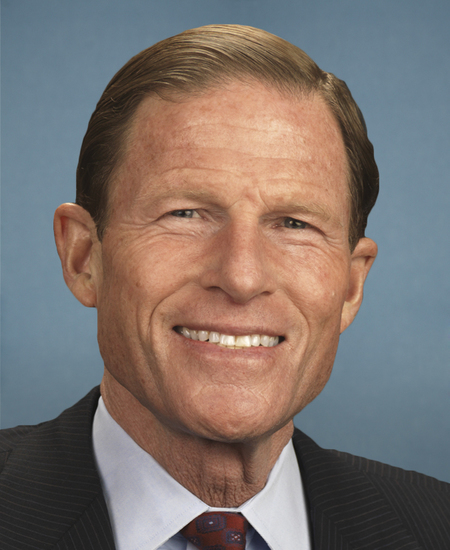
Sen. Richard Blumenthal
Sponsored bills
Maddy summaryThe Fairness for Farm Workers Act amends the Fair Labor Standards Act to extend overtime protections to agricultural workers, who are currently largely exempt from these requirements. The bill establishes a phased schedule requiring employers to pay farm workers time-and-a-half for hours worked beyond a threshold that decreases from 55 hours per week in 2027 to the standard 40 hours by 2030. Small farms with 25 or fewer employees are granted an additional three-year grace period, reaching full compliance by 2033. Additionally, the legislation removes several existing exemptions that allow agricultural employers to bypass federal wage and hour standards, ensuring broader coverage for workers in the sector.
Maddy summaryThis bill prohibits the Department of Defense from reclassifying or renaming ongoing military contingency operations if troops are still engaged in hostilities against the same enemy, even during ceasefires or diplomatic negotiations. It requires that casualty records and statistics remain permanently attributed to the original operation, preventing administrative changes from obscuring the human cost of war or resetting cumulative counts. Additionally, the legislation ensures that service members and civilian employees retain eligibility for deployment-related benefits, awards, and leave based on the original operation designation rather than any subsequent administrative redesignation. The bill also mandates the immediate restoration of casualty records and benefits for personnel involved in operations against Iran since February 28, 2026, and requires written notice to affected families and individuals regarding these restorations.
Maddy summaryThe Pathways to Health Careers Act establishes a federal grant program effective October 1, 2026, to train low-income individuals for careers in health professions such as nursing, emergency medical services, and allied health fields. The legislation allocates $435 million annually from fiscal years 2027 through 2031 to fund these initiatives, with specific requirements ensuring that at least two grants are awarded in each state and the District of Columbia, along with dedicated funding for tribal entities and U.S. territories. Key provisions mandate that grant recipients provide comprehensive support services, including adult basic education, childcare, transportation assistance, and cash stipends, while also requiring rigorous evaluations of demonstration projects focused on individuals with criminal records and maternal health career pathways.
Maddy summaryThe Protecting Pentagon Press Access Act directs the Secretary of Defense to restore physical access for credentialed journalists to the Pentagon, specifically returning them to the Correspondents' Corridor and other designated workspaces that were accessible prior to May 2025. The bill mandates that reporters regain unescorted entry to these areas and establishes a security credentialing process managed by career officials within the Pentagon Force Protection Agency, explicitly prohibiting political interference or delays in the review. Additionally, it requires the Department of Defense to consult with congressional Armed Services Committees before making any future changes to press access policies, workspaces, or credential requirements.
Maddy summaryThe Green New Deal for Public Housing Act directs federal funds to public housing agencies and tribal entities to rehabilitate, modernize, and electrify the nation's public housing stock into zero-carbon homes within ten years. The bill establishes grant programs that require recipients to conduct deep energy retrofits, install renewable energy systems, upgrade water quality infrastructure, and provide high-speed internet access to residents. In exchange for these funds, agencies must commit to maintaining their total number of housing units, ensuring displaced residents can return to their original projects, and adhering to strict labor standards that prioritize hiring low-income individuals and supporting resident-owned businesses. Additionally, the legislation strengthens tenant participation by mandating the formation of elected resident councils in larger developments and providing stipends for volunteer officers who help manage community operations.
Maddy summaryThe Momnibus Act is a comprehensive legislative package designed to address maternal health disparities by expanding access to care, improving data collection, and funding community-based interventions for pregnant and postpartum individuals. Key provisions include extending WIC nutrition benefits for new mothers from six months to two years, establishing a federal task force to coordinate efforts across government agencies, and creating grant programs to support social determinants of health such as housing, transportation, and mental health services. The bill also mandates respectful maternity care training for hospital staff, requires states to restrict the shackling of pregnant individuals in prison to maintain federal funding eligibility, and authorizes significant research funding through the National Institutes of Health to study maternal mortality causes and climate change impacts on pregnancy outcomes.
Maddy summaryThe Consumer Advocacy and Protection Act of 2026 amends the Consumer Product Safety Act to increase the maximum civil penalty for individual violations from $100,000 to $250,000. The bill removes the previous statutory cap that limited total penalties for related series of violations to $15 million, allowing for higher cumulative fines in cases involving multiple infractions. Additionally, it requires the Consumer Product Safety Commission to adjust these penalty amounts annually based on inflation using the Consumer Price Index. These changes directly affect manufacturers and distributors of consumer products by raising the financial stakes for non-compliance with safety regulations.
Maddy summaryThe Fisheries Science Modernization Act of 2026 directs the National Oceanic and Atmospheric Administration (NOAA) to integrate environmental DNA (eDNA) sampling into federal fishery stock assessments through a multi-year pilot study and subsequent implementation plan. To support this transition, the bill establishes the National Aquatic Biomolecular Coordination Network, a multi-agency body tasked with developing national standards for eDNA collection, analysis, and data sharing across various aquatic environments. Additionally, the legislation authorizes funding to expand NOAA’s workforce and laboratory capabilities, encourages partnerships with private-sector technology developers, and amends the Magnuson-Stevens Act to formally incorporate eDNA methods into fisheries management.
Maddy summaryThis legislation directs the United States Postal Service to create unique ZIP Codes for 75 specific communities located across multiple states. The bill requires the Postal Service to finalize these designations within one year after the law is enacted. Communities affected by this requirement include towns and neighborhoods in states such as California, Colorado, Florida, and others. Ultimately, the measure ensures that each listed location has its own distinct postal code for mailing purposes.