Maddy summaryThis resolution designates the week of August 22 through August 30, 2026, as "National Park Week." It directly affects the public by encouraging responsible visits and support for the National Park System, which includes parks, battlefields, and historical sites located across the United States and its territories. The measure serves as a formal declaration to highlight the parks' role in recreation, education, and economic activity without altering any laws or funding.
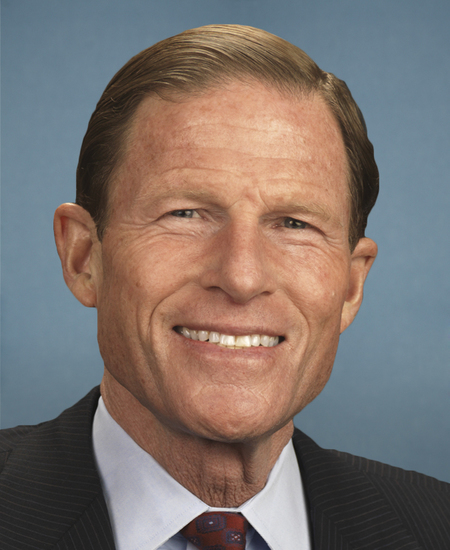
Sen. Richard Blumenthal
Sponsored bills
Maddy summaryThis resolution designates August 16, 2026, as National Airborne Day to honor the history and contributions of U.S. airborne military forces. The bill calls on the American people to observe the day with programs and ceremonies celebrating the bravery and achievements of paratroopers and air assault units. It highlights the legacy of these forces, which began with the first official Army parachute jump on that date in 1940 and have since served in numerous conflicts worldwide. The measure serves as a commemorative recognition rather than a change to federal law or military operations.
Maddy summaryThe No Bonuses for Utility Executives Act restricts performance bonuses for top executives at state-regulated electric utilities starting in 2027. A utility is only permitted to pay a bonus if its average customer rate increases do not exceed the annual inflation rate, and any allowed bonus is capped at 25 percent of the median salary of non-executive employees. The Federal Energy Regulatory Commission must review reported data on rates and compensation to approve bonuses before they are paid. If a utility violates these rules or fails to report accurately, the bonus is forfeited to the U.S. Treasury, and the recovered funds are distributed directly to the utility’s customers as individual payments.
Maddy summaryThe Strengthening Coast Guard Communities Act of 2026 transfers specific intergovernmental support agreement authorities from the Secretary of Defense to the Commandant of the Coast Guard. This change allows the Commandant to directly manage agreements that provide services and infrastructure support to Coast Guard communities, rather than requiring approval through the Department of Defense. To ensure transparency, the bill requires the Commandant to notify the relevant Senate and House committees in writing within 60 days of exercising this new authority.
Maddy summaryThe Protect American Values Act of 2026 prohibits the use of federal funds to implement or enforce a specific Department of Homeland Security rule regarding the "Public Charge" ground of inadmissibility. This legislation directly affects immigrants and their families by preventing the government from using financial resources to carry out policies that could restrict access to essential services like food, medical care, and housing. The bill includes a statement of congressional intent arguing that the targeted rule would harm community health, increase poverty, and circumvent established immigration laws. By blocking funding for this specific regulatory action, the act aims to maintain current eligibility standards for public assistance without altering the underlying statutory framework.
Maddy summaryThe Empowering States to Serve Veterans Act requires the Department of Veterans Affairs to share veterans' contact information with state veterans agencies at least quarterly for statistical analysis and outreach purposes. The bill strictly limits the shared data by excluding protected health information, Social Security numbers, dates of birth, and any financial or claims-related details. To protect privacy, the legislation mandates that veterans receive clear notice of this sharing and provides an accessible process for them to opt out at any time, which requires state agencies to immediately destroy any previously received data. State agencies must also implement federal-standard cybersecurity measures and demonstrate compliance before receiving any information.
Maddy summaryThe HCBS Access Act would require states to cover home and community-based services (HCBS) as a mandatory benefit under Medicaid, effectively eliminating waiting lists for individuals with disabilities and older adults who need support to live in their communities rather than institutions. To fund this expansion, the bill provides a 100% federal matching rate for these services if states meet specific requirements, such as improving workforce wages, removing access barriers, and establishing infrastructure to support self-directed care models. Additionally, the legislation creates a national technical assistance center and authorizes grants to recruit, train, and retain direct care workers, while also prohibiting states from placing liens on the assets of Medicaid recipients for medical assistance correctly paid.
Maddy summaryThe Summer Meals and Learning Act of 2026 authorizes the Department of Education to provide competitive grants to state library agencies, which then distribute subgrants to local school districts for summer early reading programs. These funds are specifically targeted at schools that operate summer meal sites and have a significant portion of their young students struggling with or at risk of falling behind in reading. The bill requires participating schools to offer at least six weeks of literacy activities and expanded learning opportunities, including access to the school library, while encouraging collaboration with community partners. Appropriations for this initiative are authorized at $5 million annually from fiscal years 2027 through 2031.
Maddy summaryThe PROTECT Act directs the Centers for Disease Control and Prevention to launch a new initiative aimed at reducing e-cigarette and tobacco use among youth and young adults. The bill authorizes $100 million annually from 2027 through 2031 to fund research on product usage patterns, health impacts, and cessation behaviors, as well as the development of guidance for healthcare providers and schools. Additionally, it requires the creation of public education campaigns and continued funding for state and local health departments to improve access to quit services.
Maddy summaryThe Cabin Air Safety Act of 2026 mandates that commercial airlines install real-time air quality monitoring equipment on their aircraft to detect engine oil or hydraulic fluid fumes, while also requiring annual safety training for pilots, flight attendants, and mechanics. The bill establishes a standardized reporting system for these events, allowing the Federal Aviation Administration (FAA) to investigate incidents where medical attention is required and to share aggregated data with the public through a searchable website. Additionally, it requires aircraft manufacturers to include procedures for responding to air quality alerts in their flight manuals and directs the FAA to continue researching technologies that prevent cabin air contamination.