

Maddy summaryThis bill modifies tax credit rules to help businesses recover after disasters. It allows businesses operating in designated disaster areas to treat certain unused tax credits (carryforwards) as transferrable credits against current tax liability, rather than letting them expire. Specifically, it applies to taxpayers making eligible expenditures for business operations in areas with a major disaster declaration after December 31, 2023, or a state-declared disaster meeting specific criteria. The change affects businesses in affected zones by providing immediate tax relief for qualifying expenses incurred within two years of the disaster declaration. It does not involve energy policy or new funding, but adjusts existing tax credit rules for disaster recovery.
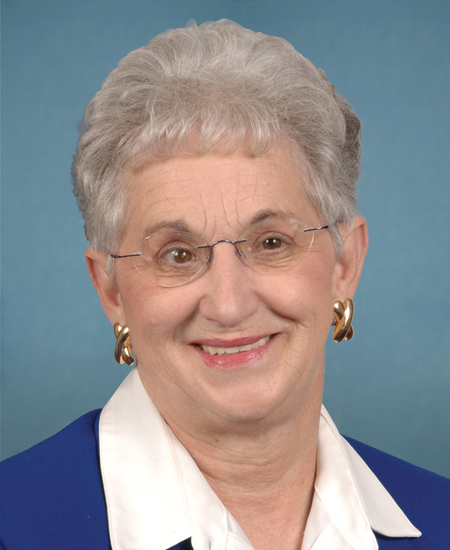
Rep. Virginia Foxx
Sponsored bills
Maddy summaryThis bill modifies federal budget rules for unspent agency funds. It requires federal agencies to allocate 49% of unused funds to the next fiscal year, 49% toward paying the national debt, and 2% for retention bonuses (capped at 10% of an employee's base pay). Agencies must also limit future budget requests to the previous year's amount adjusted for inflation. The bill directly affects all executive branch agencies (excluding the Red Cross), altering how they manage leftover budget authority. It does not create new savings programs for individuals but changes government fiscal management procedures.
Maddy summaryThis bill prevents state or local governments from banning or restricting energy connections (like installation, modification, or access) based on the type or source of energy, such as electricity, natural gas, or renewable fuels. It directly affects consumers choosing energy providers and energy companies seeking to offer services. The key provision prohibits local laws, regulations, or policies that limit energy services sold in interstate commerce, covering all energy types listed in the bill’s definitions. It does not create new programs but limits regulatory authority at the state or local level. The law aims to ensure open access to diverse energy sources without source-based restrictions.
Maddy summaryThe Make Elections Great Again Act (HR 7300) would require voters to present photo identification to cast ballots in person or by mail for federal elections, with limited exceptions for religious objections or military voters. It would establish new requirements for proving U.S. citizenship during voter registration, including documentary proof of citizenship and proof of state residency. The bill would change mail-in ballot procedures by requiring voters to request mail-in ballots (rather than universal mail-in voting), implementing barcode tracking for mail-in ballots, and setting strict deadlines for ballot receipt. These provisions would apply to all states for federal elections held in 2027 or later, affecting how voters register, vote in person, and submit mail-in ballots for federal office elections.
Maddy summaryThis resolution (HRES 1014) establishes procedural rules for the House of Representatives to consider two separate appropriations bills (H.R. 7148 and H.R. 7147) funding the federal government for fiscal year 2026. It sets strict time limits for debate (one hour total), waives objections to the bills, and specifies how amendments may be offered and debated under a five-minute rule. The resolution also requires H.R. 7147 to pass before H.R. 7148 can be sent to the Senate and mandates technical formatting changes to the bills' engrossed versions. This is a procedural step affecting only the House floor process for these specific spending bills, not the funding policies themselves.
Maddy summaryThis symbolic resolution expresses the U.S. House of Representatives' support for Iranian protesters demanding democracy and human rights. It condemns the Iranian regime's violent suppression of demonstrations, calls for the release of political prisoners, and urges expanded internet access for Iranian citizens. The resolution specifically demands an end to regime violence, recognizes the Iranian people's right to free elections, and asks the U.S. government to coordinate with allies on deterring further brutality. As a non-binding resolution, it does not create new laws but formally states congressional support for the protesters' cause.
Maddy summaryHRES 992 is a procedural resolution that establishes rules for debating and voting on H.R. 7006, the main government funding bill for fiscal year 2026. It sets a one-hour debate limit, waives most objections to the bill or its amendments, and specifies how amendments may be offered and considered. This resolution directly affects the House of Representatives' process for advancing the appropriations bill, which funds federal agencies and programs through September 2026. It does not change funding levels or policy but streamlines the legislative procedure.
Maddy summaryThis symbolic House resolution expresses U.S. congressional support for Iranian protesters demanding democracy and human rights. It condemns the Iranian regime's violent suppression of protests, including killings, mass arrests, and internet restrictions, while urging the regime to release political prisoners and restore communication access. The resolution reaffirms the Iranian people's right to self-determination through free elections and echoes a 2023 resolution (HCR 7) that similarly praised protesters. As a non-binding expression of support, it does not impose new policies or alter U.S. government actions.
Maddy summaryHR 909, the Crime Victims Fund Stabilization Act of 2025, modifies how funds from the False Claims Act are deposited into the Crime Victims Fund. It specifies that from 2025 through 2029, certain False Claims Act proceeds (specifically those for qui tam plaintiff payments and government damage reimbursements) cannot be deposited into the fund. This change directly affects the composition of the Crime Victims Fund by excluding these specific revenue streams during the specified period. The bill does not create new benefits or alter victim services; it only adjusts fund allocation rules for existing False Claims Act revenues.
Maddy summaryHR 580 amends the 1995 Unfunded Mandates Reform Act to strengthen requirements for federal agencies issuing significant regulations. It requires agencies to conduct detailed cost-benefit analyses for "major rules" (those costing $100 million annually or more) before finalizing them, including assessing impacts on state/local governments and small businesses. The bill mandates agencies to consult with affected state/local officials and private sector stakeholders early in the rulemaking process and select the regulatory alternative that maximizes net benefits. These changes directly affect federal agencies, state/local governments, and businesses, particularly small enterprises, by increasing transparency and accountability for major federal regulations.