

Maddy summarySB 685 requires Maryland local election boards to provide language assistance to voters with limited English proficiency in counties meeting specific census-based thresholds. If a county has more than 2% of its voting-age population (with at least 100 people) sharing a non-English language and having limited English proficiency, the State Board of Elections must mandate assistance in that language. Local boards must then provide translated voting materials (forms, ballots, notices), multilingual signage at polling places, and recruit bilingual election judges. This applies to all elections starting January 1, 2026, and requires materials to be of equal quality and available simultaneously with English versions. The law does not require assistance for languages without sufficient voter demand as defined by the thresholds.
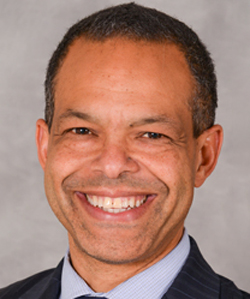
Sen. Malcolm Augustine
Sponsored bills
Maddy summarySB 789 modifies Maryland's Hunger-Free Campus Grant Program by requiring the Higher Education Commission to designate certain private colleges as "hunger-free campuses" while explicitly prohibiting those same private institutions from receiving grant funding. The bill adds specific requirements for designation, including establishing a hunger task force, designating staff to assist students with SNAP enrollment, providing campus food pantries, and conducting annual hunger surveys. It also adjusts funding levels, mandating $150,000 annually for fiscal years 2023-2026 and $250,000 for fiscal years 2027 onward in the state budget. This bill directly affects private higher education institutions by creating eligibility for designation but blocking their access to program grants.
Maddy summarySB 378 establishes a Family Literacy Pilot Program through the Maryland State Library Agency, allowing incarcerated individuals to record themselves reading children's books to their children. The program directly affects incarcerated parents, their children, and correctional facilities participating in the pilot. Key provisions include selecting four facilities (representing Maryland's regions and including both male and female facilities), providing free children's books in multiple languages, securing parental permission, and enabling incarcerated individuals to prepare and share recordings. The State Library Agency must report on the program's results to the General Assembly by December 1, 2028, and the program expires automatically on December 31, 2028.
Maddy summaryThis bill requires Maryland public school systems to issue simultaneous bids for boys' and girls' high school sports officiating services for "similar" sports (defined as those with comparable rules, season, official count, and competition time). It prohibits schools from awarding contracts where officials for girls' sports receive different pay rates or fees than those for boys' sports in comparable events. The law applies to new procurement contracts starting July 1, 2025, with existing contracts allowed to be extended until 2029. It directly affects all local school systems purchasing officiating services for high school athletic events.
Maddy summarySB 491 defines "honorable discharge" for Maryland state benefits to include discharges solely based on sexual orientation or gender identity, discharges related to statements/acts about orientation/identity (if prohibited at the time), or discharges tied to PTSD/TBI diagnoses or disclosed sexual trauma at VA facilities. This change directly affects veterans applying for Maryland state programs like housing, education, or employment benefits. Veterans must now submit documentation explaining their discharge basis to qualify under this expanded definition. The law takes effect October 1, 2025.
Maddy summarySB 456 updates eligibility for Maryland's Dent-Care Program, requiring dentists and dental hygienists to treat at least 30% of patients as Maryland Medical Assistance Program (Medicaid) recipients annually while working in private practice or clinics. It allows part-time employment for program participants (previously required full-time) and establishes prorated grant amounts for part-time providers. The bill also mandates a study by Maryland Insurance Administration on whether dental insurance carriers use online credentialing systems, with findings due to legislative committees by December 2025. These changes directly affect dentists and dental hygienists seeking loan assistance under the program.
Maddy summarySB 43 requires Maryland's Department of Health to establish a Forensic Review Board at every facility housing individuals committed as not criminally responsible for crimes due to mental illness. The board, composed of licensed health care providers, must review each person's case annually to determine eligibility for release and recommend discharge or conditional release to the court. The board's written findings and recommendations become part of the individual's medical record. Additionally, the bill creates a Community Forensic Aftercare Program to monitor individuals released on conditional terms.
Maddy summarySB 608 amends Maryland law to update how local authorities certify victims' helpfulness for U Nonimmigrant Status (U visa) petitions. It expands who can certify these petitions to include more agencies like child/adult protective services and the Commission on Civil Rights, beyond just police and prosecutors. The bill requires certifying officials to include specific details about the crime, the victim’s past/present cooperation, and evidence of harm in the certification form. This directly affects victims of qualifying crimes (like trafficking or domestic violence) seeking U visas to stay in the U.S. while assisting law enforcement. The changes align Maryland’s process with federal U visa rules and streamline certification for victims and advocates.
Maddy summarySB 36 amends Maryland law to allow the 9-1-1 Trust Fund to cover costs related to the 9-8-8 suicide prevention hotline that are shared with 9-1-1 operations, such as software interfaces and joint staff training. Previously, the fund could not support any costs "solely" for the 9-8-8 hotline, but this bill removes that restriction. The change directly affects how the state allocates funds for public safety communications systems, enabling shared expenses between 9-1-1 services and the suicide hotline. The bill does not fund the hotline independently but permits cost-sharing for operational integration.
Maddy summarySB 431, the Registered Apprenticeship Investments for a Stronger Economy (RAISE) Act, creates new programs to expand apprenticeships in Maryland. It allows the State Board of Plumbing to waive journey plumber license exams for those completing approved apprenticeships and authorizes the Secretary of Labor to waive exams for other licenses after approved training. The bill establishes the Maryland Apprenticeship Incentive Pay Per Apprentice Program, which provides payments to employers for each apprentice they train, funded by a new nonlapsing special fund. These changes directly affect apprentices, employers offering training, and licensing boards by reducing barriers to entry and incentivizing employer participation in registered apprenticeship programs.