Issue · Transportation

Transportation (Bicycle Infrastructure)

Every transportation bill, vote, and legislator stance in Maryland, automatically classified by Maddy, our AI policy reader.

Total bills
14
2026 Regular Session
Top supporter
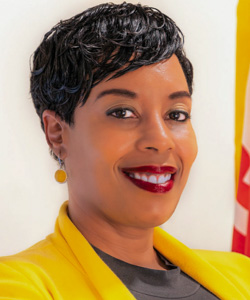
Courtney Watson
100% support rate
Top opponent
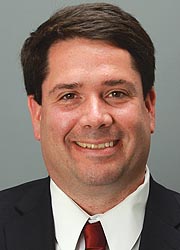
Brian Chisholm
0% support rate
Ranked legislators
10
5 support · 5 oppose
Key legislators

Who's moving bicycle infrastructure in Maryland

Legislators moving bicycle infrastructure in Maryland
Legislator Party Stance Support rate Votes
Courtney Watson
Courtney Watson House · District 9B
D
Strong +
100% 6
Guy Guzzone
Guy Guzzone Senate · District 13
D
Strong +
100% 6
Pam Guzzone
Pam Guzzone House · District 13
D
Strong +
100% 6
Ron Watson
Ron Watson Senate · District 23
D
Strong +
100% 6
Stephanie Smith
Stephanie Smith House · District 45
D
Strong +
100% 6
Brian Chisholm
Brian Chisholm House · District 31
R
Strong −
0% 4
Chris Adams
Chris Adams House · District 37B
R
Strong −
0% 4
Jesse Pippy
Jesse Pippy House · District 4
R
Strong −
0% 4
Kathy Szeliga
Kathy Szeliga House · District 7A
R
Strong −
0% 4
LaToya Nkongolo
LaToya Nkongolo House · District 31
R
Strong −
0% 4
Showing 1–10 of 14 bills

All transportation bills

in committee · Maryland · Senate Mar 9, 2026

SB 743: Workgroup to Study State Laws on Electric Bicycles - Establishment

SB 743 establishes a temporary workgroup to study Maryland's current laws governing electric bicycles. The workgroup, including transportation officials, law enforcement representatives (rural, suburban, urban), county and municipal leaders, will review existing road rules, safety data from studies, and consider other micro-mobility devices like e-scooters. Its goal is to make recommendations to improve public safety for electric bike riders, pedestrians, and drivers by 2028. The bill expires automatically after the workgroup submits its report on January 1, 2028, with no new laws enacted by this bill itself.
in committee · Maryland · House of Delegates Feb 13, 2026

HB 1421: Task Force to Study Pedestrian and Bicyclist Injuries and Fatalities

HB 1421 establishes a Maryland task force to study pedestrian and bicyclist injuries and fatalities. The task force, composed of state transportation officials and legislative appointees, will examine specific issues like pedestrian visibility challenges (including dark clothing at night), weather impacts on cyclists, and safety actions pedestrians/bicyclists can take. It must submit recommendations to the Governor and legislature by October 1, 2027, on making roadways safer. The bill does not enact new safety laws but creates a study mechanism to inform future policy. The task force expires automatically on September 30, 2028.
passed · Maryland · House of Delegates Mar 25, 2026

HB 1381: Vehicle Laws - Stopping, Standing, or Parking in a Bike Lane or Bicycle Path - Prohibition

HB 1381 prohibits drivers from stopping, standing, or parking vehicles in bike lanes or bicycle paths in Maryland, directly affecting all drivers using public roads. The bill adds a new provision (Section 21-1003(gg)) to Maryland law, allowing exceptions for emergency vehicles, transit buses, vehicles assisting people with disabilities, disabled vehicles, and delivery vehicles under specific conditions (e.g., 30-minute limit with hazard lights or a local permit). It amends existing transportation code sections to clarify these restrictions and exceptions. The law takes effect October 1, 2026, and aims to improve safety for cyclists by keeping bike lanes clear of parked vehicles.
in committee · Maryland · House of Delegates Feb 26, 2026

HB 1491: Education - Interjurisdictional Safe Pathways Commission - Establishment

HB 1491 establishes the Interjurisdictional Safe Pathways Commission to coordinate and secure funding for safe routes for Maryland public school students traveling to and from school. The commission, made up of state education and transportation officials, school system representatives, local government members, students (including those with IEPs), parents, and infrastructure experts, will identify gaps in existing pathways, evaluate funding options, and develop strategic plans. It must submit annual reports to the governor and legislative committees by December 1st, detailing current conditions, funding opportunities, and recommendations for infrastructure improvements. This bill directly affects public school students, their families, school systems, and local governments responsible for transportation infrastructure.
in committee · Maryland · House of Delegates Feb 17, 2026

HB 1296: Preliminary Subdivision and Site Plans – Safe School Route Reports – Requirement

HB 1296 requires developers of new residential projects with at least five homes located within walking distance of a public school to submit a "Safe School Route Report" as part of their preliminary subdivision or site plan. The report must identify affected schools, assess existing pedestrian/bicycle infrastructure, propose safe routes, and detail gaps or hazards like missing sidewalks. This applies to most new housing developments but excludes projects intended as housing for older persons under federal law. Local governments cannot approve such plans without this report, aiming to improve safety for students walking or biking to school.
passed · Maryland · House of Delegates Mar 24, 2026

HB 1567: Vehicle Laws - Bicycles, Motor Scooters, and EPAMDs - Audible Warnings (Pass Pedestrians Safely Act)

HB 1567, the "Pass Pedestrians Safely Act," requires bicycle, motor scooter, and electric personal assistive mobility device (EPAMD) operators to maintain at least 3 feet of distance when passing pedestrians or vehicles if practicable, and to give an audible warning (like a bell or horn) before passing pedestrians. It directly affects riders of these devices in Maryland by adding specific safety obligations to existing traffic laws. Violations are treated as secondary offenses (only enforceable if another traffic violation is suspected) and carry a $25 civil penalty. The bill amends Maryland’s vehicle code to prioritize pedestrian safety during overtaking maneuvers.
signed · Maryland · House of Delegates May 12, 2026

HB 1504: Highways - Sidewalks and Bicycle Pathways - Construction and Reconstruction (The Honorable Anne Healey Pedestrian Safety Act of 2026)

HB 1504 requires Maryland's State Highway Administration to prioritize funding for sidewalk and bicycle pathway construction/reconstruction on highways with "complete streets" policies or Vision Zero programs. It mandates that local governments request such projects through annual funding letters, with costs typically shared 50-50 between state and local governments unless the project is in a sustainable community (100% state-funded) or addresses a public safety risk (100% state-funded). The bill specifically applies to urban highways defined as those in urban areas with high pedestrian traffic, curb/gutter systems, or within municipal boundaries. This directly affects local governments seeking infrastructure funding and the State Highway Administration managing transportation budgets.
signed · Maryland · Senate Apr 28, 2026

SB 487: Motor Vehicles - Speed Monitoring Systems - Safety Corridors (Vulnerable Road User Protection Act of 2026)

SB 487 authorizes Maryland’s State Highway Administration and local jurisdictions to install speed monitoring systems in designated "safety corridors" - areas identified as high-risk for pedestrians, cyclists, and other vulnerable road users. It updates existing traffic laws to clarify that penalties from speed monitoring citations (e.g., for speeding in these corridors) must be paid directly to local political subdivisions for uncontested cases or to District Courts for contested cases. The bill amends multiple sections of Maryland’s Transportation and Courts codes to integrate these systems into standard traffic enforcement procedures. It directly affects drivers receiving citations in monitored corridors, local governments implementing the systems, and courts handling related cases. The law focuses on operational details of speed monitoring, not broader safety outcomes.
passed · Maryland · House of Delegates Mar 19, 2026

HB 256: Motor Vehicles – Speed Monitoring Systems – Safety Corridors (Vulnerable Road User Protection Act of 2026)

HB 256, the "Vulnerable Road User Protection Act of 2026," authorizes Maryland’s State Highway Administration and local jurisdictions to install speed monitoring systems in designated "safety corridors" to protect pedestrians, cyclists, and other vulnerable road users in high-risk areas. It amends traffic code provisions to create a new category for "safety corridor speed monitoring systems," requiring citations for violations to direct fines to the District Court (not local agencies) and mandating that collected funds support public safety programs like pedestrian safety initiatives. The bill specifies that local governments may recover implementation costs from fines but must use remaining funds exclusively for public safety, not general revenue. This directly affects drivers in safety corridor zones and local governments managing such systems.
in committee · Maryland · House of Delegates Feb 3, 2026

HB 394: Counties - Construction of Sidewalks and Crosswalks - Safe Alternative Routes to Public Schools

HB 394 requires Maryland county school boards to annually identify areas where students live too far from school for bus transportation and list safe walking/biking routes (with sidewalks, crosswalks, or paths) for those students. County governments must then review these reports and construct necessary sidewalks and crosswalks to create these safe routes. The bill applies to all counties and mandates coordination with other entities if county-owned roads aren't sufficient. It directly affects public school students living beyond bus service distance and county governments responsible for infrastructure. The law takes effect July 1, 2026.
Showing 1 to 10 of 14 bills
1 2 Next