Issue · Technology

Technology (Data Privacy)

Every technology bill, vote, and legislator stance in Maryland, automatically classified by Maddy, our AI policy reader.

Total bills
30
2026 Regular Session
Top supporter
Kevin Hornberger
100% support rate
Top opponent
Jack Bailey
0% support rate
Ranked legislators
10
5 support · 5 oppose
Key legislators

Who's moving data privacy in Maryland

Legislators moving data privacy in Maryland
Legislator Party Stance Support rate Votes
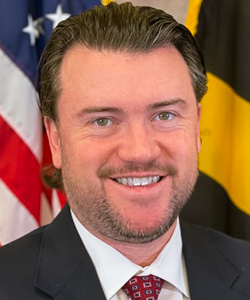
Kevin Hornberger
Kevin Hornberger House · District 35B
R
Strong +
100% 6
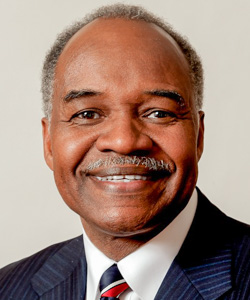
Ben Brooks
Ben Brooks Senate · District 10
D
Strong +
100% 4
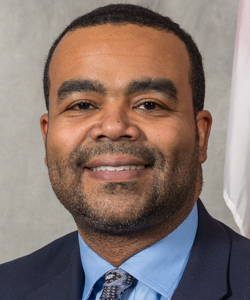
Brian Feldman
Brian Feldman Senate · District 15
D
Strong +
100% 4
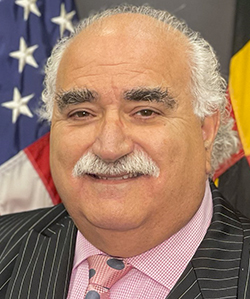
Charles Sydnor
Charles Sydnor Senate · District 44
D
Strong +
100% 4
Cheryl Kagan
Cheryl Kagan Senate · District 17
D
Strong +
100% 4
Jack Bailey
Jack Bailey Senate · District 29
R
Strong −
0% 4
Jason Gallion
Jason Gallion Senate · District 35
R
Strong −
0% 4
Johnny Salling
Johnny Salling Senate · District 6
R
Strong −
0% 4
Paul Corderman
Paul Corderman Senate · District 2
R
Strong −
0% 4
Ric Metzgar
Ric Metzgar House · District 6
R
Strong −
0% 4
Showing 11–20 of 30 bills

All technology bills

in committee · Maryland · House of Delegates Feb 18, 2026

HB 1220: Business Regulation - Data Broker Registry

HB 1220 establishes a mandatory annual registry for data brokers operating in Maryland. It requires businesses that collect, sell, or license "brokered personal data" (such as names, addresses, biometric information, or Social Security numbers) to register with the Comptroller each year. The bill excludes credit reporting agencies, financial institutions under federal law, and certain nonprofit organizations assisting law enforcement or emergency responders. This registry aims to increase transparency about how personal data is collected and shared by businesses that sell it.
died · Maryland · Senate Feb 23, 2026

SB 591: National Public Safety Alliance for Individuals With Disabilities - Maryland Chapter - Establishment

SB 591 establishes the Maryland Chapter of the National Public Safety Alliance for Individuals with Disabilities within the Department of State Police. It creates a secure, voluntary online system allowing individuals with disabilities to share personal information (like contact details, physical descriptions, and disability-related needs) with law enforcement for emergency response. The bill requires the Department of State Police and Department of Disabilities to develop mandatory training and guidelines for law enforcement agencies, and it creates a commission to study protocols and public engagement strategies. This directly affects individuals with disabilities who choose to participate and all local law enforcement agencies required to implement the new protocols.
passed · Maryland · Senate Mar 24, 2026

SB 932: Consumer Protection - Social Media Platforms - Display of User Location

SB 932 requires social media platforms operating in Maryland to display the city and country (derived from IP address) of each adult user whose account is visible to a Maryland user. It applies to platforms like Facebook or Instagram, directly affecting both the platforms (which must implement this display) and Maryland users (who gain visibility into the general location of other users they interact with). The law explicitly excludes minors' locations from display and defines "general geographical location" to exclude precise GPS data. This is a consumer protection measure focused on transparency, not data collection or sharing.
signed · Maryland · House of Delegates Apr 28, 2026

HB 895: Food Retailers and Third-Party Delivery Service Providers - Dynamic Pricing and Personal Data (Protection From Predatory Pricing Act)

HB 895 prohibits large food retailers (defined as those with at least 15,000 square feet selling tax-exempt food) from using dynamic pricing (real-time price changes based on demand or AI) or consumer surveillance data to set prices for individual shoppers. It also bans retailers from using data about protected characteristics (like race or gender) to deny discounts or services to specific customers. The bill further protects union rights by preventing retailers from weakening employee benefits under existing collective bargaining agreements without negotiation. Violations would be treated as unfair trade practices under Maryland’s Consumer Protection Act, subject to enforcement and penalties.
in committee · Maryland · House of Delegates Feb 17, 2026

HB 1089: Consumer Protection - Data Broker Registry - Establishment

HB 1089 requires data brokers operating in Maryland or collecting data on Maryland residents to register annually with the Attorney General’s Office starting January 31, 2028. Data brokers must submit details about the personal data they collect, sources, third parties they share with, consumer contact information, and opt-out methods. The Attorney General will maintain a public, searchable database of registered brokers (excluding trade secrets) and set tiered fees based on the broker’s annual revenue. The law aims to increase transparency for consumers about data practices without restricting lawful data collection, with enforcement including civil penalties for non-compliance. It takes effect October 1, 2026, and requires the Attorney General to report compliance metrics and consumer complaints to the legislature by December 2029.
in committee · Maryland · House of Delegates Feb 13, 2026

HB 1032: Prekindergarten Programs and Primary and Secondary Schools - Student Privacy Policy Requirements and Discrimination Reporting

HB 1032 requires all public and nonpublic primary and secondary schools in Maryland to adopt written policies protecting student privacy, including procedures for parents to access records, limits on sharing personal information without consent, and documentation of record reviews. It also mandates that nonpublic prekindergarten programs and schools report annually (starting September 1, 2027) the number of alleged discrimination incidents based on race, religion, sexual orientation, gender identity, or other protected characteristics. These provisions directly affect all K-12 schools, with specific exemptions for religiously affiliated schools that meet existing legal standards under federal law. The bill updates privacy requirements and adds new reporting obligations without altering existing anti-discrimination protections.
in committee · Maryland · House of Delegates Feb 16, 2026

HB 1475: Consumer Protection - Dynamic Pricing Disclosure and Prohibition on Rent-Setting

HB 1475 requires merchants selling goods or services to disclose when prices are set using algorithms that analyze personal data, mandating a clear statement: "THIS PRICE WAS SET BY AN ALGORITHM USING YOUR PERSONAL DATA." It also prohibits residential landlords or property managers from using software, data analytics, or algorithms to coordinate rent adjustments or lease terms across multiple properties. Violations are treated as unfair trade practices under Maryland’s Consumer Protection Act, subject to enforcement and penalties. The bill directly affects businesses using dynamic pricing and rental property owners/managers utilizing algorithmic tools for pricing decisions.
in committee · Maryland · House of Delegates Feb 18, 2026

HB 1250: Consumer Protection and Product Liability - Chatbots

HB 1250 regulates how chatbots are designed, operated, and made available to users in Maryland. It requires developers and operators to obtain clear user permission before collecting data, display specific safety warnings (especially for minors), and follow strict privacy rules for handling personal information. The bill also treats chatbots as "products" for liability purposes, meaning users can pursue legal claims if chatbots cause harm, and mandates that state agencies develop educational materials about behavioral health services. These rules apply to all chatbots used in Maryland, including those operated by government entities.
Sub-Topics Data Privacy
in committee · Maryland · House of Delegates Feb 13, 2026

HB 1295: Vehicle Laws - Fully Autonomous Vehicles

HB 1295 establishes new rules for fully autonomous vehicles (Level 4/5 systems) operating on Maryland highways without human drivers. It requires these vehicles to achieve a "minimal risk condition" (like safely stopping) if their automated system fails, and mandates compliance with Maryland's vehicle laws unless exempted by regulations. The bill also explicitly states that data collected by these vehicles (e.g., location, sensor data) falls under the state's Online Data Privacy Act, requiring protection similar to other personal information. This directly affects manufacturers, operators, and passengers of fully autonomous vehicles operating in Maryland.
signed · Maryland · House of Delegates Apr 14, 2026

HB 293: Maryland Longitudinal Data System Center - External Data Sharing With Third-Party Data Centers for Multistate Reporting - Authorization

HB 293 authorizes Maryland’s Longitudinal Data System Center to share student and workforce data with external third-party data centers for multistate reporting, while requiring these centers to meet strict privacy and security standards. The bill repeals the Center’s prior authority to share data with the U.S. Census Bureau under certain circumstances and mandates written agreements with third parties before sharing. It directly affects the Center, state education agencies (like the State Department of Education), and external data platforms used for cross-state education and workforce analysis. The key change is establishing formal, secure protocols for sharing data beyond Maryland’s borders, ensuring compliance with privacy laws like FERPA. This focuses on data-sharing mechanisms, not new data collection or program changes.
Sub-Topics Data Privacy
Showing 11 to 20 of 30 bills