Issue · Labor & Employment

Labor & Employment (Collective Bargaining)

Every labor & employment bill, vote, and legislator stance in Maryland, automatically classified by Maddy, our AI policy reader.

Total bills
25
2026 Regular Session
Top supporter
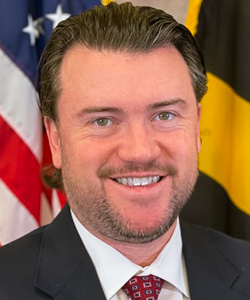
Kevin Hornberger
100% support rate
Top opponent
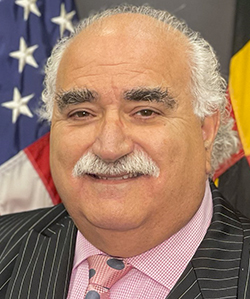
Ric Metzgar
0% support rate
Ranked legislators
10
5 support · 5 oppose
Key legislators

Who's moving collective bargaining in Maryland

Legislators moving collective bargaining in Maryland
Legislator Party Stance Support rate Votes
Kevin Hornberger
Kevin Hornberger House · District 35B
R
Strong +
100% 15
Cheryl Pasteur
Cheryl Pasteur House · District 11A
D
Strong +
100% 12
Jennifer White Holland
Jennifer White Holland House · District 10
D
Strong +
100% 12
Sarah Wolek
Sarah Wolek House · District 16
D
Strong +
100% 12
Caylin Young
Caylin Young House · District 45
D
Strong +
100% 11
Ric Metzgar
Ric Metzgar House · District 6
R
Strong −
0% 9
J.B. Jennings
J.B. Jennings Senate · District 7
R
Strong −
0% 7
Jack Bailey
Jack Bailey Senate · District 29
R
Strong −
0% 7
Jason Gallion
Jason Gallion Senate · District 35
R
Strong −
0% 7
Johnny Mautz
Johnny Mautz Senate · District 37
R
Strong −
0% 7
Showing 21–25 of 25 bills

All labor & employment bills

signed · Maryland · House of Delegates Apr 28, 2026

HB 604: Arbitration Reform for State Employees Act of 2026

HB 604, the Arbitration Reform for State Employees Act of 2026, changes how state employees negotiate contracts at institutions like the University System of Maryland and the Maryland Environmental Service. It requires a neutral arbitrator to help resolve bargaining impasses if negotiations stall by September 1, with the arbitrator chosen from a national panel by September 15; the arbitrator’s recommendations would be advisory, not binding. The bill also mandates that each annual budget must include full funding for all terms in existing labor agreements, such as written contracts between the state and employee representatives. This directly affects state employees covered by collective bargaining and their representatives in negotiations.
passed · Maryland · Senate Mar 26, 2026

SB 84: State Personnel - Collective Bargaining - Graduate Assistants

SB 84 would grant graduate assistants at Maryland's public universities (including the University System of Maryland, Morgan State University, and St. Mary’s College of Maryland) the right to form a separate collective bargaining unit. The bill amends state law to explicitly include "all eligible graduate assistants" as a distinct bargaining group, meaning they would negotiate contracts separately from other university employees like faculty or staff. This change takes effect on July 1, 2026, and directly affects graduate students working as teaching, research, or administrative assistants in these institutions. The policy creates a formal structure for graduate assistants to collectively address employment terms like pay, benefits, and working conditions.
signed · Maryland · House of Delegates May 26, 2026

HB 141: State Personnel - Collective Bargaining - Graduate Assistants

HB 141 grants collective bargaining rights to graduate assistants at Maryland's public universities (including the University System of Maryland, Morgan State University, and St. Mary’s College of Maryland). It directly affects graduate students working as teaching, research, or administrative assistants in these institutions by creating a separate bargaining unit for them. The bill amends state law to explicitly include graduate assistants in eligible bargaining units, allowing them to negotiate wages, work conditions, and benefits as a distinct group. This change takes effect July 1, 2026, and applies to all graduate assistants not previously excluded under the law.
signed · Maryland · Senate May 26, 2026

SB 6: State Personnel - Collective Bargaining - Nontenure Track Faculty

SB 6 would extend collective bargaining rights to nontenure track faculty at Maryland's public universities, including the University System of Maryland, Morgan State University, and St. Mary’s College of Maryland. The bill creates a separate bargaining unit for these faculty members - defined as full-time, part-time, or adjunct employees with academic responsibilities like teaching or research - removing them from the previous exclusion under "faculty" in collective bargaining rules. It amends state law to require each institution to establish this distinct unit alongside other employee groups, ensuring nontenure track faculty can negotiate wages, hours, and working conditions. The law would take effect on July 1, 2026.
signed · Maryland · Senate May 26, 2026

SB 253: Baltimore County Public Library - Collective Bargaining - Supervisory Employees

SB 253 authorizes supervisory employees at Baltimore County Public Library to form unions, join collective bargaining efforts, and participate in related activities. It reclassifies certain supervisory staff as "management employees" if they exercise independent judgment (e.g., resolving grievances or making hiring decisions beyond routine tasks), rather than automatically excluding them from unionization. The bill establishes two fixed bargaining units: one for non-supervisory staff and one for supervisory staff, while preserving existing union agreements in place before June 30, 2026. This change directly affects library supervisors who may now engage in collective bargaining under specific conditions.
Showing 21 to 25 of 25 bills